
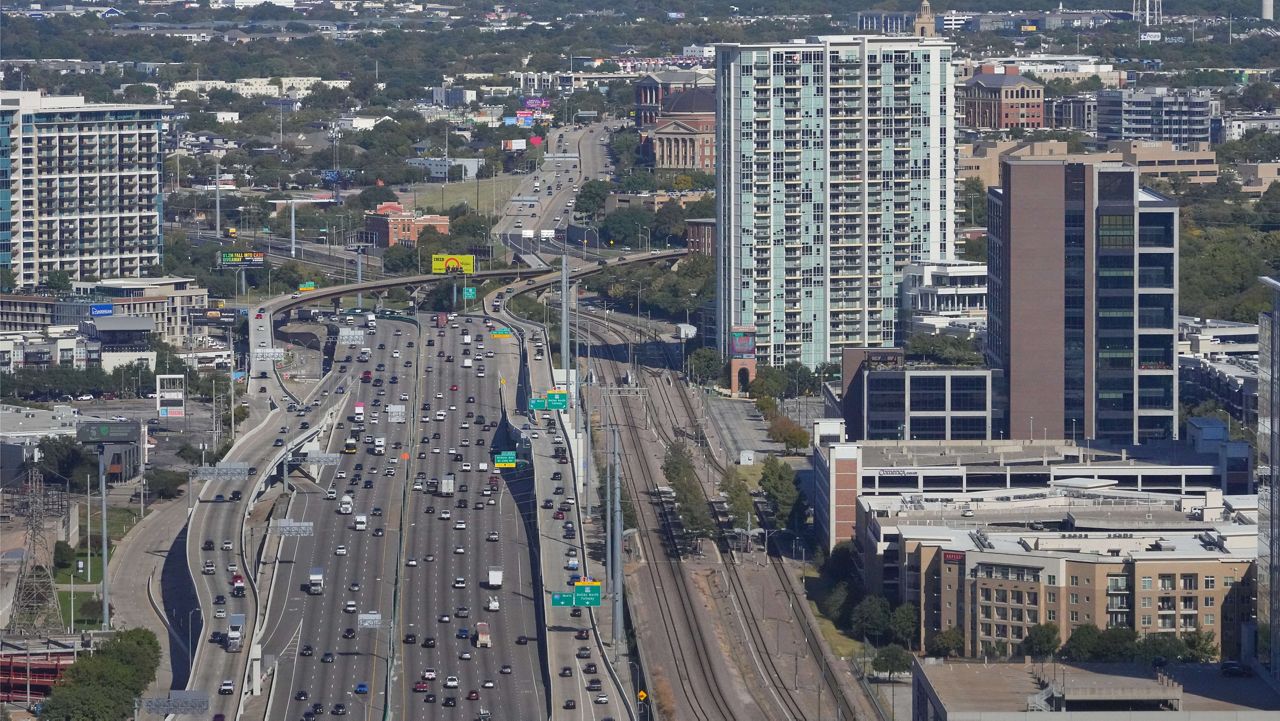
ARLINGTON, Texas — Upwards of 3.8 million people are traveling through North Texas for the FIFA World Cup over the next few weeks. Researchers at the University of Texas at Arlington saw it as a unique opportunity to study air quality.
As a sea of orange blankets the outside of Arlington’s AT&T Stadium, Dr. Yunyao Li watches that orange not just on the ground, but in the air. Li is an assistant professor in UT Arlington’s department of earth and environmental sciences.
“Traffic will increase, air flight will increase, buses will increase, and all this increase will help us understand what may happen in the future,” said Li.
Before noon, a storm gave North Texas a clean air quality slate for the Sunday match.
“Transport the surface pollution to the upper troposphere, like a giant vacuum,” said Li.
On her computer, which is recording data on air quality in Dallas-Fort Worth, the region is a blue-green color, meaning levels of pollution are low.
Then, fans start showing up to the stadium. The map shows spots near the stadium and Dallas-Fort Worth International Airport turn from blue-green to a yellow-orange as fan events kick off.
“At around 1 p.m., we start to see the pollution increase, and after the game around 6 p.m., another peak,” said Li.
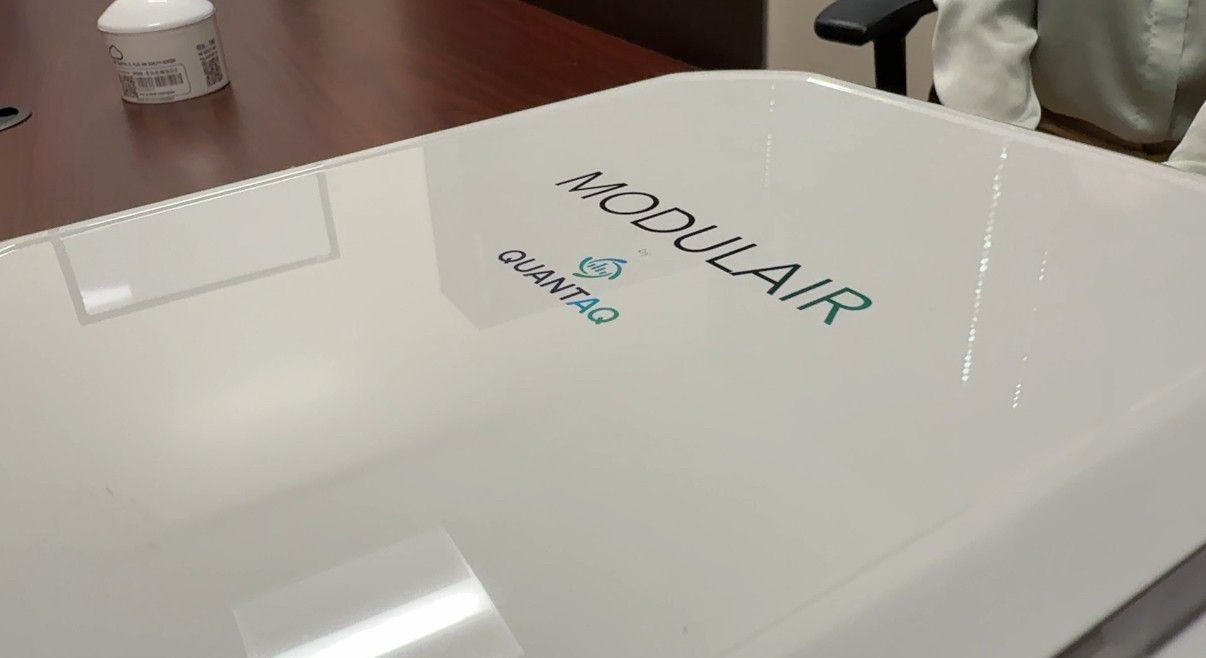
An air quality monitor. (Spectrum News 1/Lauren Rangel)
These air quality monitors are tracking pollutants that are tied to health concerns.
“All these air pollutants, they can lead to lung issues and heart issues,” said Li.
Li has several of the monitors across DFW. One is at Dallas-Fort Worth International Airport, another at AT&T Stadium and one at the University of Texas at Arlington.
“The World Cup is actually a very good example,” said Li. “It gives us a real world stress test because we don’t know what we’re having as a future if more people come into this region.”
Growth is moving quickly in DFW. The North Central Texas Council of Governments expects the region to pass 9 million people next year. In March, the U.S. Census Bureau reported Texas gained more residents than any other state.
Li’s goal is that this data can help prepare for that.
“We want to help the local agencies and governments to find what’s the major source of the pollution, where are these pollutions, where are the hot spots and how can we find a target solution to reduce air pollution,” said Li.
UT Arlington is looking for around 40 additional people to volunteer to put smaller pollution sensors on their property. Li asks those interested to email her at yunya.li@uta.edu.