
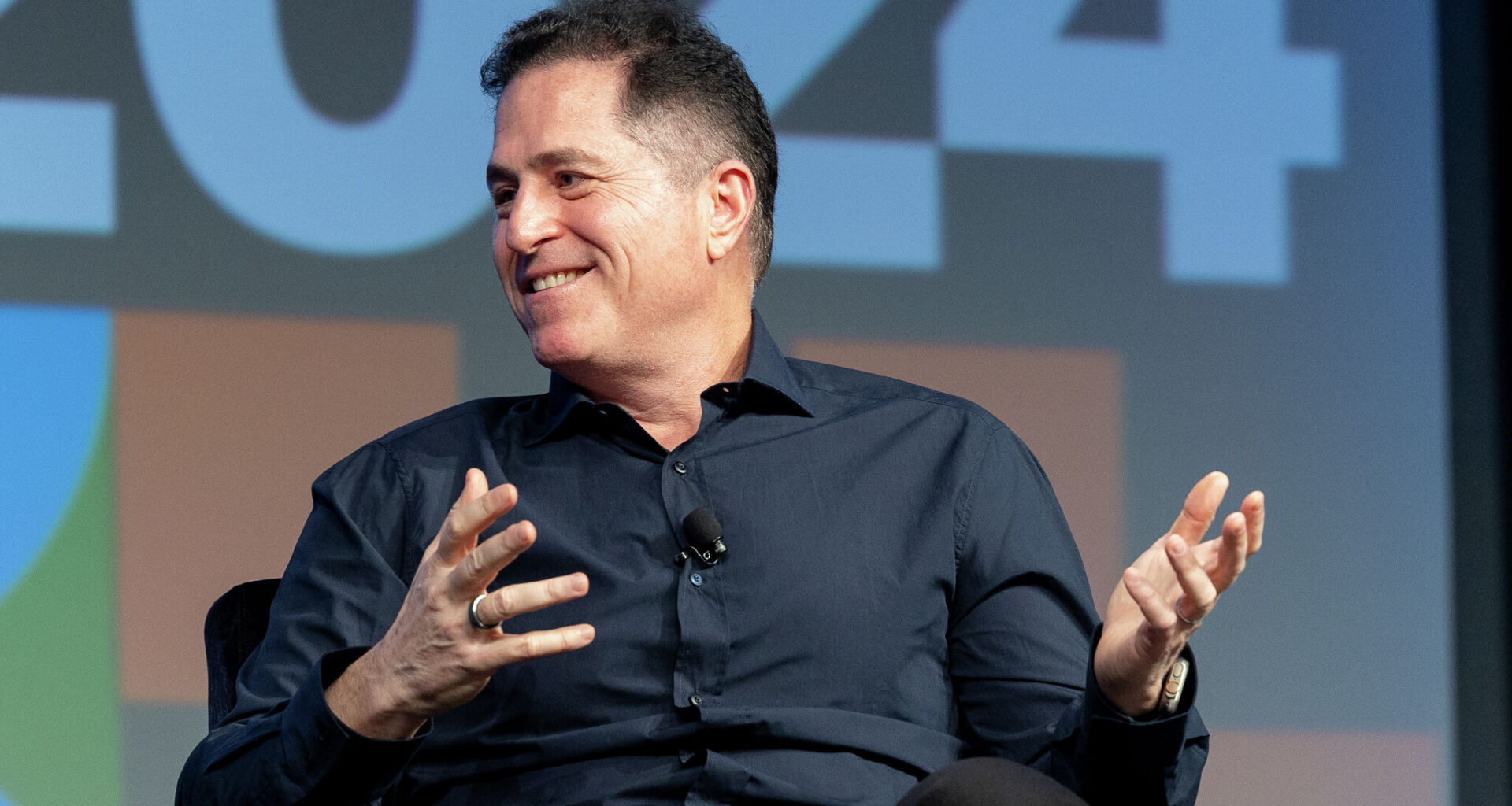
Michael Dell, chairman and CEO of Dell Technologies, purchased a 10% stake in the San Antonio Spurs in 2021. His net worth is estimated at $245.9 billion.
Errich Petersen/SXSW Conference & Festivals via
Mayor Gina Ortiz Jones has been critical of financial arrangements for a new $1.3 billion downtown arena for the Spurs. She’s calling on tech billionaire Michael Dell, a part-owner of the Spurs, to pay part of the city’s $489 million share.
Sam Owens/San Antonio Express News file photo
Michael Dell, chairman and CEO of Dell Technologies, purchased a 10% stake in the San Antonio Spurs in 2021. His net worth is estimated at $245.9 billion.
Austin American-Statesman/Hearst/Austin American-Statesman via Ge
Mayor Gina Ortiz Jones wants the world’s sixth-richest person to help pay for the Spurs’ planned $1.3 billion downtown arena.

Jones has asked Austin billionaire Michael Dell to consider paying some — if not all — of the city’s pledged $489 million contribution to the project.
Article continues below this ad
The chairman and CEO of Dell Technologies purchased a 10% stake in the San Antonio Spurs in 2021. His net worth is $245.9 billion, according to Forbes.
Bexar County is contributing $311 million to the arena. Spurs Sports & Entertainment agreed to kick in the remaining $500 million and cover any cost overruns.
“I think it’s only fair,” Jones said of her request to Dell. “Normal folks in the community have routinely asked, be it at public comment or at other forums, ‘Why can’t we ask them (the Spurs) to pay more.’ So, I in fact did that.”
The Spurs, the city and county officials largely hashed out the arena financing plan before Jones took office last June.
Article continues below this ad
Bexar County’s share was narrowly approved by voters in a November referendum. The city’s was not. Instead, the City Council in August approved a non-binding financial framework by a 7-4 vote. Jones cast one of the “no” votes, arguing that the deal needed further analysis. She has since pushed to reduce the cost to taxpayers.
‘Challenging’ economic environment
San Antonio’s contribution would come from city-issued bonds. These would be repaid with rent from the Spurs for their lease on the arena, rent paid by developers leasing city-owned property around the arena, state hotel taxes and property tax revenue from a special taxing zone.
In a May 21 letter to the Austin-based Michael & Susan Dell Foundation, Jones cited the “challenging” economic conditions caused by the Trump administration’s 2025 tax and spending bill, tariffs and inflation. She reminded Michael Dell of “San Antonio’s status as the third most impoverished major city in the country.”
Article continues below this ad
“As the City’s Chief Elected Officer, I do not take these circumstances lightly, which is why I respectfully submit this request for your consideration,” she wrote.
The city faces a $131 million budget deficit for fiscal years 2027 and 2028. The 2027 fiscal year starts Oct. 1, and the council is weighing whether to raise the city’s property tax rate for the first time in three decades to help close the gap between expenses and revenue.
Jones said that Dell has not responded to her overture.
“This request is not to Michael Dell purely as an investor; this is a request to somebody who might, as a billionaire, want to make a charitable contribution to the community,” said Roger Noll, a Stanford University professor emeritus who specializes in the economics of sports.
Article continues below this ad
That’s because ponying up $500 million toward the facility wouldn’t be a sound business decision on its own.
“The incremental benefits of having a new arena are not as big as the cost,” Noll said.
A $4.5 billion family business
The Spurs are privately owned and provide little financial information about the team’s operations or its investor equity, so it’s difficult to determine whether the franchise could foot the entire bill for a new arena.
Article continues below this ad
Peter J. Holt, who is chairman and managing partner of Spurs Sports & Entertainment, has said the team does not generate enough revenue to build its own arena because it plays in one of the NBA’s smallest television markets.
Since 2002, the Spurs have played in a county-owned arena on the East Side, originally the SBC Center but known since 2023 as the Frost Bank Center.
Holt has said arenas have a roughly 30-year life cycle and that NBA-commissioned surveys show Spurs fans want more dining, drinking and entertainment options near the team’s home court.
City officials and Spurs executives began negotiating for a new playing venue in 2023. The planned arena at Hemisfair is envisioned as the centerpiece of a downtown sports and entertainment district known as Project Marvel. It would include retail and residential development in the vicinity of the city-owned Convention Center and Alamodome.
Article continues below this ad
The Holt family acquired its stake in the Spurs in 1996 for $76 million. The franchise is now valued at $4.5 billion, according to Sportico. The Holts remain the largest shareholder with a 40% stake valued at $1.8 billion.
Peter J. Holt’s net worth is unknown, and he has not been asked to contribute personally to any of the arena’s cost. He and his sister Corinna Holt Richter own San Antonio-based Holt Cat, the nation’s largest Caterpillar equipment dealership. Much of their worth, however, is tied to their ownership of the Spurs.
Under the Holt siblings’ leadership, SS&E shook up its ownership group to bring in new capital. The team’s traditional base of primarily San Antonio investors shrunk as minority stakeholders sold their shares to Dell and other prominent out-of-town investors including San Francisco-based global investment firm Sixth Street Partners and billionaire Joe Gebbia, who co-founded Airbnb and lives in Austin.
“In recent years, the main source of financial benefit to ownership of a sports team is the growth in the value of the franchises,” Noll said.
Article continues below this ad
NBA teams are now worth more than $1 billion each, partly because of publicly financed arenas that generate revenue and thus boost valuation, Noll said.
NBA arenas that have been built since 2020 or are in the works have received a median $300 million in public subsidies, J.C. Bradbury, a Kennesaw State University economics professor who studies stadium deals, told the San Antonio Express-News last year.