
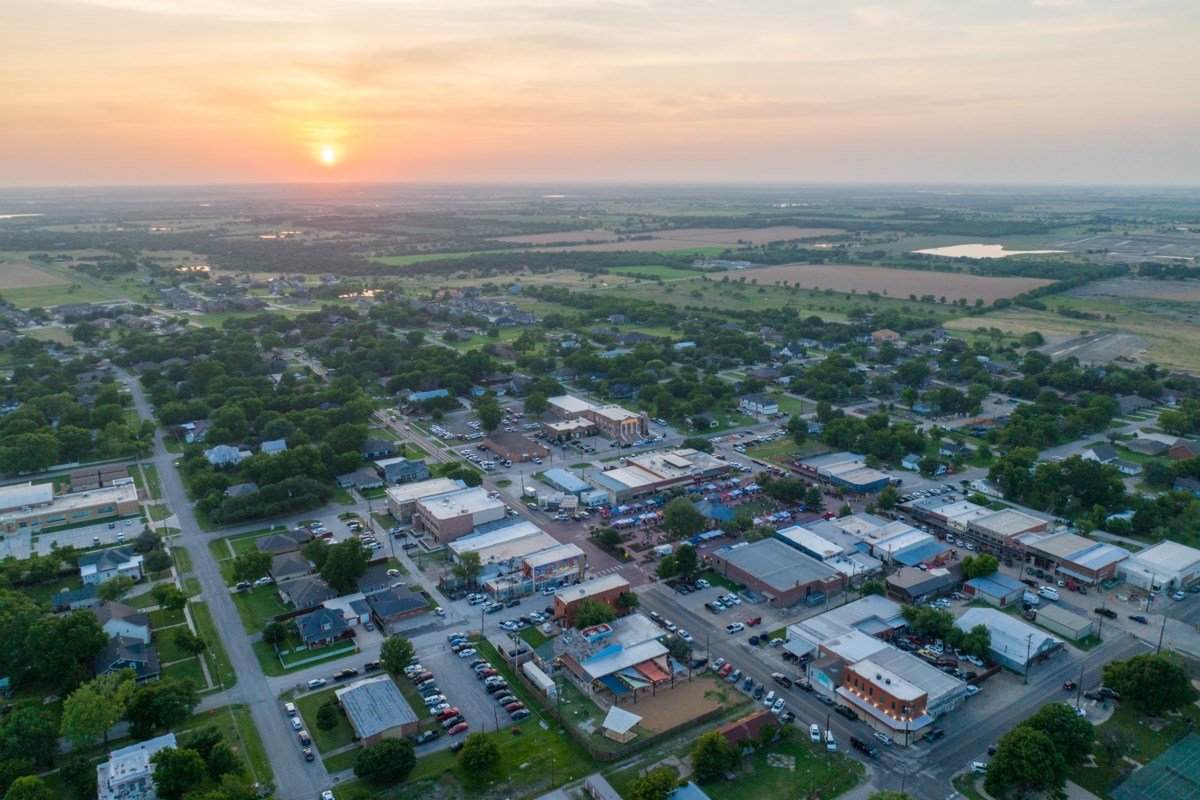
As Texas adds more people than any other state, Celina and Princeton are leading the way
While Texas added more residents than any other state between July 2024 and July 2025, Collin County was among the biggest beneficiaries of that growth. According to recent U.S. Census data, Texas gained 391,243 residents over the year, bringing its population to 31.7 million and growing at a rate of 1.2%, more than double the national growth rate of 0.5%.
A recent analysis by World Atlas found that much of that growth is occurring on the outer edges of major metro areas, particularly around Dallas-Fort Worth, Houston and Austin. While urban counties such as Dallas and Travis continue to see residents relocate elsewhere in the state, fast-growing suburban communities are attracting newcomers in large numbers.
Among the standouts are Celina and Princeton, two Collin County cities that ranked near the top of World Atlas’ list of Texas boomtowns. Their rapid growth mirrors a broader trend reshaping North Texas as homebuyers and businesses increasingly look beyond the region’s urban core.
Celina Tops The National List
Celina has overtaken every other city in the country for population growth. Between July 2024 and July 2025, the city’s population climbed 24.6%, reaching 64,427 residents and adding more than 12,000 new people in a single year, based on the Census Bureau’s latest count. That figure looks even more dramatic next to the 2020 Census tally of 16,739 residents, meaning Celina has grown nearly fourfold, or 285%, in five years.
Two forces are pulling people toward Celina: home prices that remain within reach for many buyers, and school districts with strong reputations. Both Celina ISD and Prosper ISD serve the city and rank among the most in-demand systems in North Texas. At the same time, median household income in Celina hit $170,894 in 2024.
Builders have kept pace with demand: from 2010 through June 2024, Celina issued 15,062 permits for single-family homes, with big-name developers behind the city’s master-planned subdivisions. Celina ISD is already preparing for the next wave of growth. The district is projected to double in size within the next five years and could potentially quadruple its student population over the next decade.
Princeton’s Price Advantage
Just south of Celina, Princeton has followed a similar but distinct path. The city topped national growth rankings in the 2024 population estimates with a 30.6% jump, then slipped to third place nationally in the latest data with an 18.1% increase. Even so, Princeton has more than doubled its population since the 2020 Census, when roughly 17,000 people called it home.
IRS migration records show most newcomers aren’t arriving from out of state. They’re relocating from elsewhere within Collin County and the broader DFW region, with neighboring Collin County ZIP codes supplying the heaviest inflows.
Cost is the clearest explanation for the shift. Zillow’s 2024 estimates put the typical Princeton home value around $325,000, compared with more than $500,000 in McKinney and $685,000 in Frisco, a gap wide enough to steer buyers who want to stay close to the metro without paying metro prices.
School enrollment in Princeton has risen alongside the population, and new subdivisions keep breaking ground on what used to be farmland, gradually folding the city into the residential network that feeds Collin County’s job centers.
Growing Pains Reach The State Capitol
Princeton’s expansion came with friction. City officials at one point approved a development moratorium, hoping to buy time for utilities, roads and emergency services to catch up with the wave of new subdivisions.
That pause stretched on for months rather than years, and it eventually ran into pushback from the state level. Texas lawmakers passed House Bill 2559, which now places stricter limits on how cities across the state can use development moratoriums, narrowing the tool Princeton had relied on to slow things down.
A County Still Filling In
The growth around Celina and Princeton isn’t expected to level off soon. Long-range projections suggest Collin County could more than double its 2020 population, climbing past 2.2 million residents by 2060 if current trends hold. That trajectory keeps pressure on roads, schools and city budgets even as it cements Collin County’s reputation as one of the state’s strongest draws for new residents.
For now, local leaders are left balancing two realities that don’t always pull in the same direction: a county booming with opportunity, and a county trying to keep up with itself.
Don’t miss anything Local. Sign up for our free newsletter.