
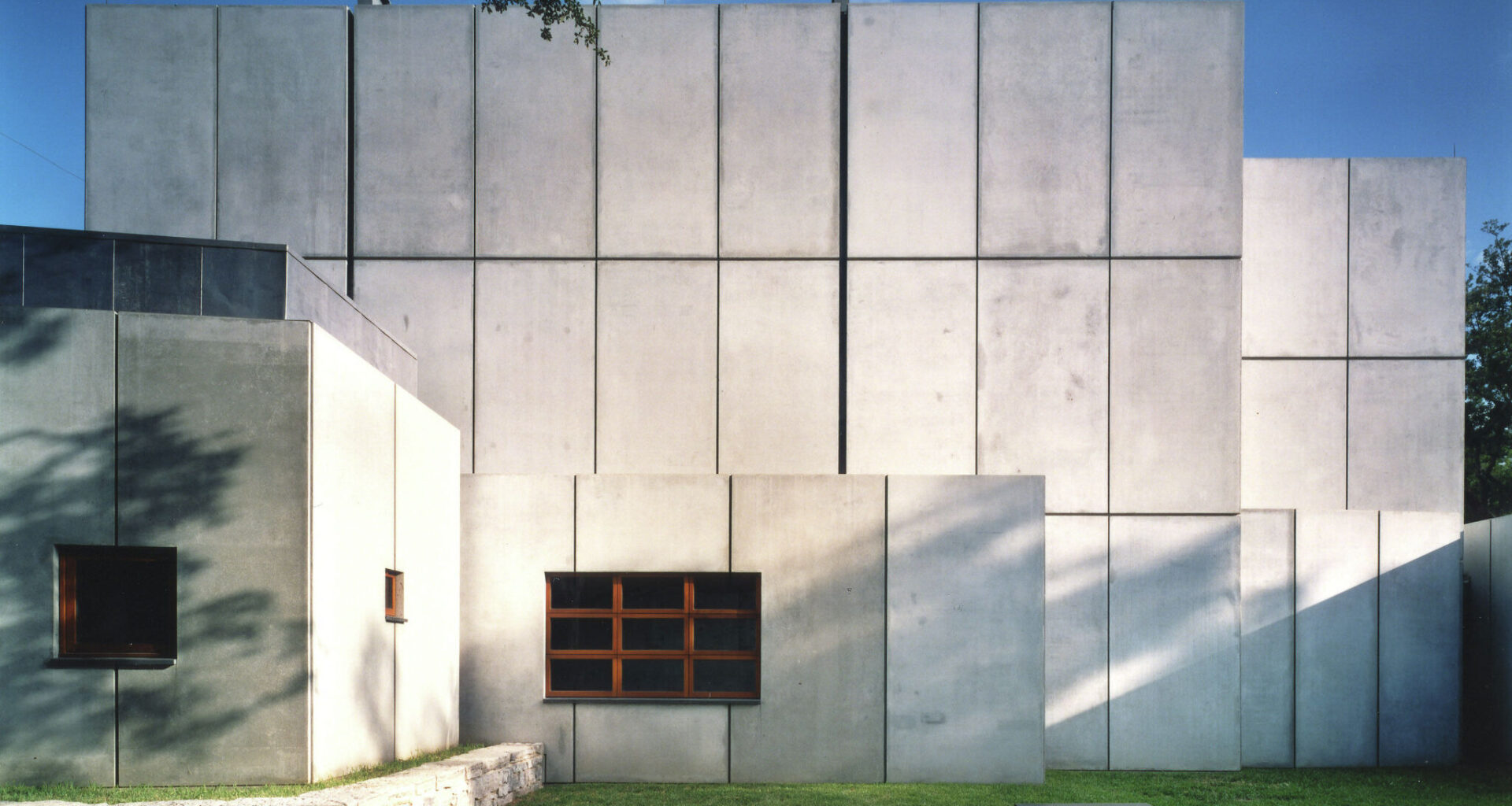
The Fresco Building, which opened its doors initially in 1997, has been repurposed and reimagined by Brooklyn-based artist Teresita Fernández. Her work explores expansive interpretations of what constitutes landscape, in various forms, such as the subterranean and the cosmic. She will create a monumental, immersive work for the occasion.
Future programming for the space will include semi-permanent, site-specific commissions.
“The Menil Collection has programmed its 40th anniversary year with strong exhibitions that explore the museum’s past, present and future,” said Menil Director Rebecca Rabinow via statement. “As one of the highlights, Teresita Fernández’s extraordinary installation at the Fresco Building will join the Menil’s other single-artist buildings, the Cy Twombly Gallery and the Dan Flavin Installation at Richmond Hall. In recognition of the Fresco Building’s origins, her ambitious, site-specific artwork will address themes of spirituality and the human condition.”
Restoration of the landmark Menil House, the de Menil’s former residence designed by architect Philip Johnson on San Felipe in River Oaks, is also slated for completion in 2027, as is the renovation of the Menil Bookstore on the museum’s campus in Montrose.
The Menil Foundation was established by the de Menils in 1954 to foster greater public understanding and appreciation of art, architecture, culture, religion and philosophy. The museum’s main building opened in 1987, and today consists of five buildings, various green spaces and signature, gray bungalows to accommodate artists in residence, staff and administrative operations, plus various non-profit tenants.
The Fresco Building first opened in 1997 — then called the Byzantine Fresco Chapel Museum — under the auspices of the Byzantine Fresco Foundation, displaying the only intact Byzantine frescoes of comparative size and significance in the Western hemisphere. The structure, designed by architect François de Menil, who is also the son of John and Dominique de Menil, is located near the University of St. Thomas and the Rothko Chapel.
The building was initially configured to house two restored, 13th-century frescoes on extended loan from the Holy Archbishopric of Cyprus. That long-term agreement was concluded in 2012, after which the chapel was deconsecrated and transferred to the Menil Foundation under secular status. A series of installations were subsequently on view before the building closed in 2018. An educational display is planned for the future foyer to detail the space’s history.
Fernández participated in the Menil Drawing Institute’s 2025 exhibition “What drawing can be: four responses.” Her visit provided an opportunity to tour the Fresco Building’s renovations with Rabinow. And the rest is history.
“It is an immense honor to have been chosen to reimagine the Fresco Building within the prestigious context of the Menil’s campus,” Fernández said via statement. “Creating an immersive, site-specific installation for this building is especially meaningful to me because of the Menil’s deep commitment to artists and the transformational power that contemplative art experiences can offer.”