
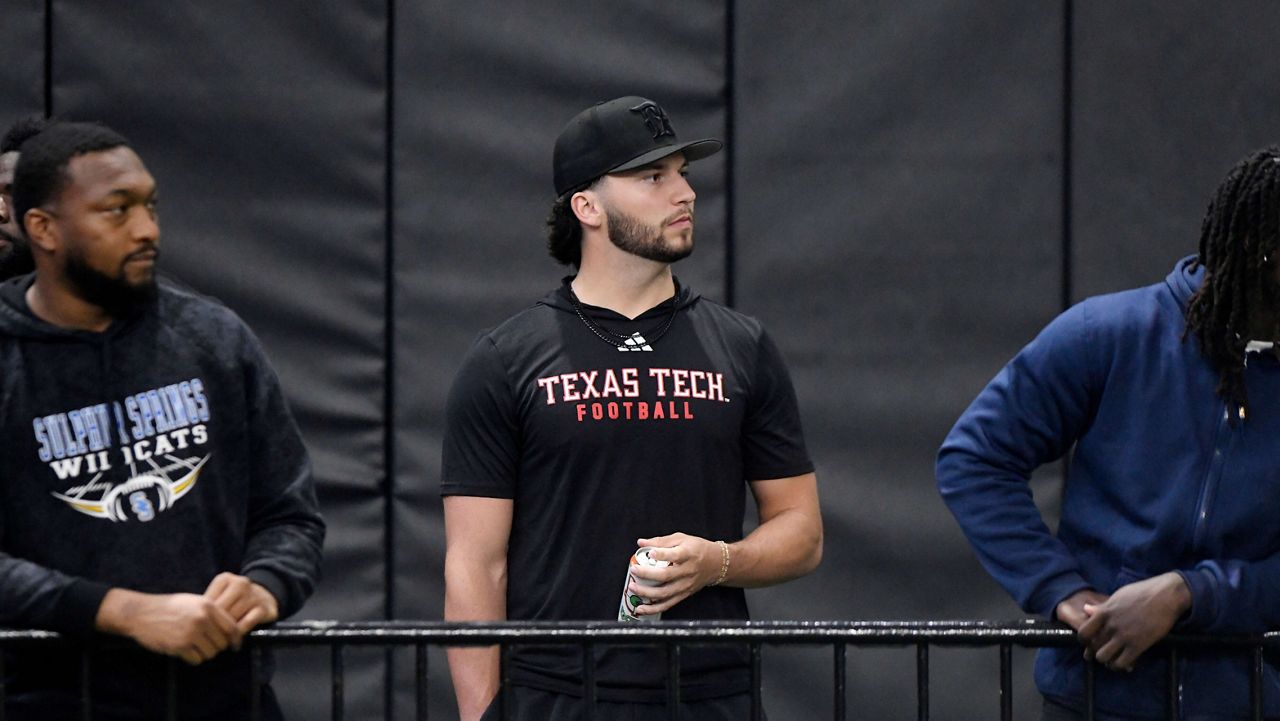
TEXAS — Transfer quarterback Brendan Sorsby will not play for Texas Tech this fall and instead plans to enter the NFL supplemental draft, ending an unprecedented legal fight over the college eligibility of a player who had acknowledged betting on college and pro sports, including some wagers on his own team while at Indiana four years ago.
Cody Campbell, the billionaire booster who is chairman of the Texas Tech regents, wrote in an open letter Monday night that Sorsby will not be part of the team.
“This decision was made with Brendan and his family and is purely an output of practical analysis of the situation,” Campbell wrote. “Brendan and Texas Tech stand on very solid and legitimate legal ground, but he faces a June 22nd deadline to be eligible to enter the NFL’s supplemental draft, and there is no practical way to resolve all the various pending legal disputes and ensure his eligibility prior to this date. This is the only viable and fair path for Brendan and his future, as well as for his teammates, and our university.”
That came exactly one week before the deadline for Sorsby to apply for the NFL supplemental draft.
“I am grateful for the support from my family, my Tech coaching staff, teammates, the community, and so many others who have encouraged me to address and learn more about this important issue,” Sorsby wrote in a social media post Monday night. “As my journey continues, I remain fully committed to and focused on being the best I can be, both on and off the field.”
The Big 12 sued Texas Tech and Texas Attorney General Ken Paxton over its ability to sanction Texas Tech and Sorsby, who admitted to breaking NCAA rules and betting thousands of times on professional and college sports.
Last week, the Big 12 received a notice from Paxton’s office saying that the conference could face potential legal action if it pursued any sanctions against Texas Tech. The lawsuit filed on Monday was in direct response to the letter.
The letter from the Texas AG’s office said that any sanctions against Texas Tech would be a violation of state and federal antitrust laws, a breach of contract and tortious interference.
The Big 12’s lawsuit in U.S. District Court in Dallas was seeking declaratory and injunctive relief claiming that the First Amendment allows the conference to sanction Texas Tech for its handling of the Sorsby situation. One of the Big 12’s potential sanctions that the conference alluded to in its filing is barring Texas Tech from playing in the conference championship game if they had chosen to play Sorsby.
“The Big 12 and its Member Institutions (apparently save TTU) have no interest in being required to endorse or even appearing to endorse unethical and indeed unlawful conduct that strikes at the heart of athletic integrity,” the filing says.
After the news broke of Sorsby’s gambling, the NCAA placed a permanent ban on the quarterback. Sorsby then brought the issue before a Texas district court judge, who granted a temporary injunction, keeping the NCAA from enforcing its ban. The court did order that Sorsby be suspended for the first two games of the season, if he chose to play. The NCAA appealed the ruling on Monday.
In documents filed with the Court of Appeals for the Seventh District of Texas at Amarillo, the NCAA asked for an emergency motion to stay the June 8 injunction granted by a Lubbock County court in favor of Sorsby.
The NCAA has long banned players for gambling, but Texas Tech says Sorsby, who transferred there in January after the past two seasons at Cincinnati, would be better off on the team for his mental health and well being.
“The trial court’s temporary injunction sweeps beyond anything Texas law permits,” attorneys for the NCAA wrote. “It undermines the integrity of college sports, rewrites member-adopted rules of the National Collegiate Athletic Association, immunizes Brendan Sorsby from discipline for admitted and serial violations of NCAA anti-gambling rules, incentivizes a run on courthouses across the country to challenge even the most obvious and straightforward student-athlete eligibility decisions and demolishes the status quo.”
Texas Tech officials have defended playing Sorsby next season, saying they support the quarterback’s recovery from his gambling addiction.
The lawsuit from the Big 12 commended Texas Tech for supporting Sorsby’s recovery, but it says the conference draws the line at allowing him to play.
“Though the Conference does not fault TTU for supporting Sorsby’s recovery, if TTU decides that support is going to extend to playing Sorsby in Coference competitions, the Member Institutions—acting through their respective Board members—have the right and authority to determine whether certain sanctions against TTU for its decisions are appropriate or necessary,” the filing said.
Other college athletic directors reacted to the hot-button issue with some pledging not to schedule Texas Tech in any sports if Sorsby was allowed to play.
Another state attorney general also weighed in on the issue. Kansas Attorney General Kris Kobach, a Republican, said that his office reviewed the letter sent by Paxton’s office, and he said that the claims made in the letter are “incorrect.”
“To assert that the Big 12 may not convene and sanction a Conference member’s actions determined to be in violation of Conference rules undermines the contractually agreed purpose of being a member of the Big 12 Conerence. It also is not consistent with legal precedent,” Kobach said in a letter to the Big 12 posted on X.
Kobach continued by saying that his state and others are “concerned about integrity of conference competition.”
“If the Texas Attorney General’s Office takes any action beyond its poorly reasoned letter, my office stands ready to assist the Conference with amicus support or other assistance, as appropriate,” Kobach said. “The Big 12 Conference is an association that adopts and enforces its own rules. Conference, consistent with established precedent, routinely have taken action to enforce their rules and bylaws when players, coaches, or a university have allegedly violated the rules.”
Kansas has two Big 12 members in its state, Kansas State and the University of Kansas. In total, 16 schools are members of the Big 12.
On Monday, the Big 12 board of directors met to discuss the issue. The board is made up of presidents and chancellors from all the conference’s schools.
In a statement by the board after that meeting, the Big 12 said it “has long spoken out about the dangers of sports wagering by student-athletes and remains committed to protecting the competitive integrity of conference competition. Universities should not field players who have bet on their own team’s games in college athletics.”