
BRYAN, Texas (KBTX) – Texas is drawing a surge of interest from data center developers, attracted by the state’s relatively low electricity costs, available land and business-friendly reputation. But the rush has also raised familiar concerns among residents. From noise and light pollution to the strain on water and power supplies, as state leaders and grid officials weigh how to manage rapid growth without shifting costs onto homeowners.
Gov. Greg Abbott this month called for new protections aimed at ensuring data centers and other energy-intensive facilities pay for the infrastructure needed to serve them and do not increase costs for residential customers.
“Data centers must operate in ways that reduce costs for residential electricity customers, do not drain water needed for our communities, and take into consideration the needs of our neighborhoods,” Abbott said in a press release.
In a letter to Public Utility Commission of Texas Chairman Thomas Gleeson and Electric Reliability Council of Texas CEO Pablo Vegas, Abbott directed regulators to require data centers to cover the cost of new power lines, substations and other grid upgrades tied to their projects so those expenses are not passed on through customer electric rates.
Abbott also instructed the PUC and ERCOT to draft additional protections for residential and small-business customers and submit a joint memo to the governor’s office by July 17, 2026. He further directed the commission to begin taking steps by July 31, 2026, to reduce the “transmission” portion of Texans’ electric bills — the fees associated with moving power over high-voltage lines.
Abbott said he plans to work with lawmakers next session to write those protections into state law and to ensure data centers “add to Texas’ electric capacity rather than merely increasing demand.”
What ERCOT does and doesn’t do
As the debate over data center growth intensifies, Texas A&M University researcher Dr. Jonathan Snodgrass said the public often misunderstands ERCOT’s role.
“ERCOT is the Electric Reliability Council of Texas and ERCOT, contrary to popular belief, actually doesn’t own the electric grid,” Snodgrass said. “They operate the electric grid.”
ERCOT works with utilities such as Bryan Texas Utilities and College Station Utilities to run the system efficiently while maintaining reliability for Texans.
A growing line to plug in
The immediate issue is not simply how much electricity Texas will need in the future, but how many proposed projects are trying to get in line to connect.
Recent planning forecasts have sparked alarm, including projections that Texas could need to dramatically expand power production in the coming years to avoid higher prices and potential blackouts. But ERCOT officials and grid analysts have said the spike in forecasted demand has accelerated in part because of a flood of “large load” interconnection requests, including from data centers, cryptocurrency mines and other industrial facilities.
Some of those proposals may never be built, but they still enter the queue early and can inflate demand projections while engineers study what infrastructure would be needed in a given area.
Snodgrass said connecting a data center to the grid is not an overnight decision.
“It’s actually a multi-year process… they would submit what’s called a load interconnection request,” Snodgrass said. “Then, ERCOT would evaluate it to make sure that the grid has available capacity before saying yes. ERCOT and the local utilities study every data center in extreme detail before they approve it.”
That rigorous review is designed to ensure reliability, but it has become harder to manage as the number of requests has surged. ERCOT’s planning system was originally built to handle a far smaller “large load” queue. Now, with hundreds of proposals being submitted, including many that are speculative, it can be difficult to plan transmission upgrades because conditions can change as new projects are proposed nearby.
ERCOT’s proposed fix: studying projects in batches
To keep up, ERCOT has begun shifting toward a “batch” study approach that groups projects together rather than evaluating each request one-by-one.
Under the initial plan, ERCOT’s first combined study, informally known as “Batch Zero” would focus on data center proposals that have already secured land and financing, a move intended to distinguish mature projects from speculative “paper” proposals.
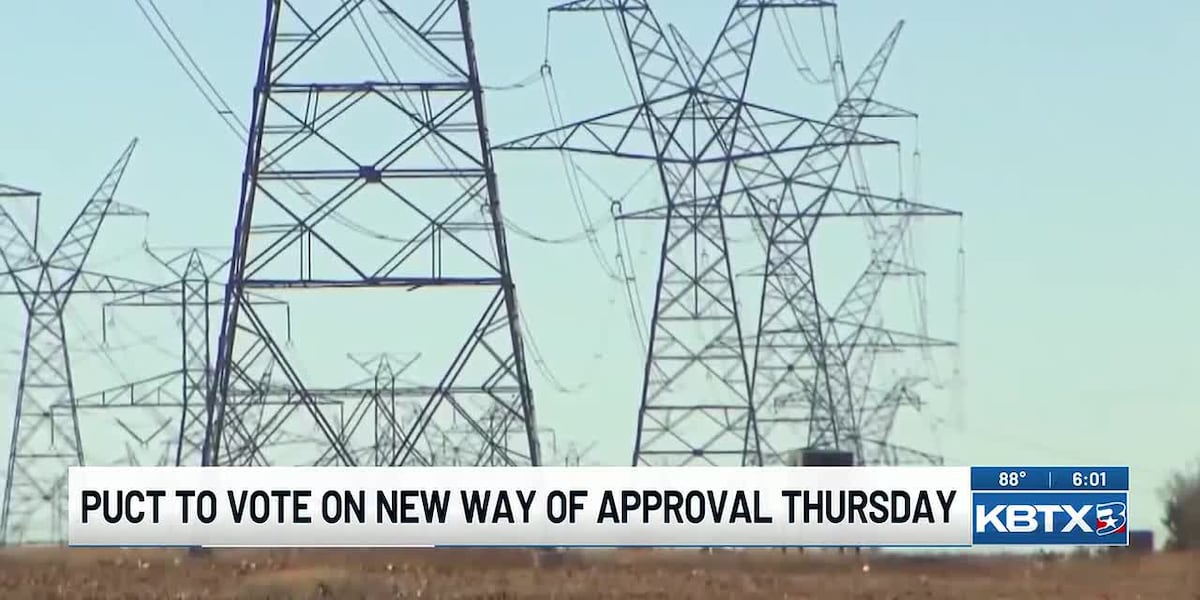
The Public Utility Commission of Texas is expected to vote soon on whether to approve ERCOT’s updated approach.
Local impact questions remain
Beyond grid planning, residents have raised concerns about where data centers are built and how communities are included in those decisions.
Snodgrass, who also serves as an assistant director of the Texas A&M Smart Grid Center, said public pushback can grow when neighbors feel projects are introduced late in the process.
He pointed to debate in his own neighborhood after a company explored building a data center within about a half mile of his home.
“The big concern was that the data center developers didn’t reach out to the neighbors and the neighborhood at the beginning of the process,” Snodgrass said. “They kind of sprung it on them last minute.”
Snodgrass said data centers can bring jobs and investment, but he believes projects are more likely to succeed when developers work with communities early.
What happens next
As regulators weigh ERCOT’s interconnection reforms and Abbott’s directives, the outcome could shape how quickly large power users can connect — and who ultimately pays for the grid upgrades needed to support them.
For residents watching their monthly electric bills, the central question is whether Texas can capture the economic benefits of data center growth while protecting reliability and keeping costs from shifting onto everyday customers.
Copyright 2026 KBTX. All rights reserved.