
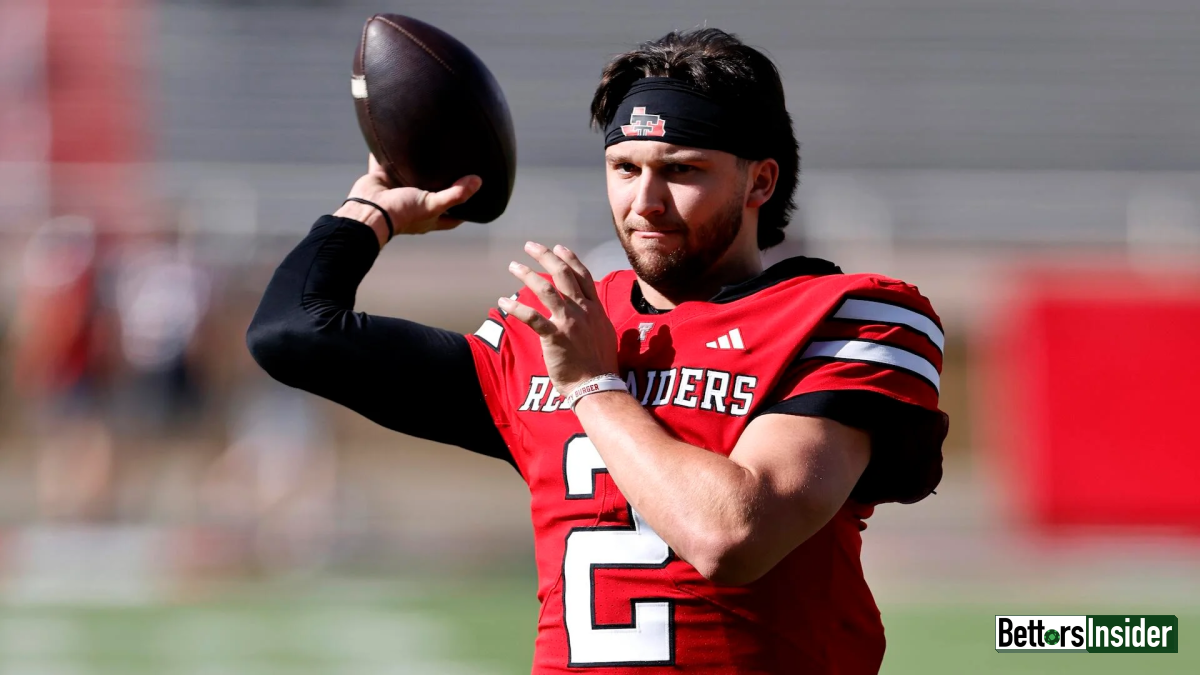
The Big 12 Conference filed a federal lawsuit in Dallas Sunday against Texas Tech University, its system officials, and Texas Attorney General Ken Paxton, seeking a court declaration that would allow the conference to sanction the school over its plans to field quarterback Brendan Sorsby — a player who has admitted to placing roughly $90,000 in sports bets over his college career, including wagers on his own team. Within 24 hours, Texas Tech announced that Sorsby had withdrawn from the program, citing an NFL supplemental draft deadline that made it impossible to wait out the legal proceedings.
The lawsuit represents an unprecedented step in college sports governance: the first time a major conference has filed legal action against one of its own member institutions. The 47-page complaint, filed in the Northern District of Texas, asks the court to confirm that the Big 12 has the right to enforce its bylaws without interference from the state of Texas or Paxton’s office, which had threatened legal action if the conference attempted to sanction Texas Tech for playing Sorsby.
The Gambling Violations at the Heart of the Case
Sorsby’s admitted gambling activity is the foundation of everything that followed. Over the course of his college career — spanning Indiana, Cincinnati, and Texas Tech — the 22-year-old quarterback placed thousands of sports bets totaling approximately $90,000. Most critically, he placed dozens of bets on Indiana football games while he was an active member of the Hoosiers’ roster. Sorsby entered a rehabilitation facility for gambling addiction treatment in April after the NCAA began investigating him.
The NCAA permanently banned Sorsby from college athletics, but a Lubbock County district judge granted a temporary injunction blocking the ban, ruling on contract law grounds rather than on the validity of the NCAA’s rules themselves. Sorsby was required to sit out the first two games of the season under the terms of that ruling. Texas Tech announced it would welcome Sorsby back into the program, prompting the Big 12 to begin moving toward sanctions against the school.
Paxton’s office sent a letter to the Big 12 warning that any effort to disadvantage Texas Tech would violate antitrust law. The conference responded by filing suit, arguing that the First Amendment protects its right to enforce its own bylaws as a private organization and that Paxton’s threatened legal action amounts to unconstitutional interference with the conference’s internal governance.
Sorsby Announces Departure Amid Legal Chaos
The lawsuit became moot almost as quickly as it was filed. Texas Tech’s Board of Regents Chair Cody Campbell announced Monday that Sorsby had decided to leave the program, citing a June 22 deadline to declare for the NFL’s supplemental draft. With no way to resolve the legal dispute before that deadline, continuing to fight for his eligibility while remaining at Texas Tech was no longer viable. Sorsby’s departure effectively ends the immediate legal standoff, though the underlying questions about conference authority, state interference, and gambling integrity remain unresolved.
“Brendan and Texas Tech stand on very solid and legitimate legal ground, but he faces a June 22nd deadline to be eligible to enter the NFL’s supplemental draft,” Campbell said. “There is no practical way to resolve all the various pending legal disputes and ensure his eligibility prior to this date.”
The Broader Stakes for Sports Betting Integrity
Beyond the specifics of Sorsby’s case, the episode has sharpened the debate over how college sports should handle athletes who bet on their own games. The Big 12’s complaint argued that betting on one’s own team or sport is one of the clearest bright lines in sports integrity — a line that Sorsby’s actions plainly crossed. Multiple state attorneys general, apart from Paxton, backed the Big 12’s position.
The case also exposes a tension between gambling addiction as a medical issue and sports integrity enforcement. Sorsby’s legal team positioned his gambling disorder as a disability that warranted protection rather than punishment, a framing that succeeded in state court but failed to persuade the conference or most of the broader college sports community.
The rules around athlete gambling continue to evolve as sports betting expands across the country. Sportsbooks and Fanatics Sportsbook are among the platforms with strict policies prohibiting any player or team employee from betting on the sports in which they participate. The Sorsby case is likely to accelerate conversations about how both the NCAA and the states regulate athlete exposure to legal sports betting platforms going forward.
Subscribe for NCAAF updates
Join our newsletter to get the latest straight to your inbox!