
By Anne Cosgrove
From the May/June 2026 Issue
For Texas, a combination of scale, population growth, infrastructure, tax policies, and project recruitment continues to attract investment across manufacturing, semiconductors, energy, aerospace, data infrastructure, and corporate headquarters operations.
And Texas in 2026 is evolving beyond traditional oil-and-gas economics or low-tax branding. Over the past year, Governor Greg Abbott’s administration has accelerated efforts to position Texas as a leader in semiconductors, artificial intelligence infrastructure, advanced manufacturing, and critical mineral supply chains.
That approach is producing measurable results. Texas led the nation in economic development activity in 2025, attracting approximately 1,400 projects tied to more than 42,000 jobs and $75 billion in capital investment. Houston, Dallas-Fort Worth, and Austin have been ranked among the top-performing metro regions for business recruitment and expansion activity.
One of the most significant developments has been the expansion of the Texas Semiconductor Innovation Fund (TSIF), a state initiative designed to support semiconductor manufacturing and related supply chains. Abbott has repeatedly framed semiconductor recruitment as both an economic and national security priority.
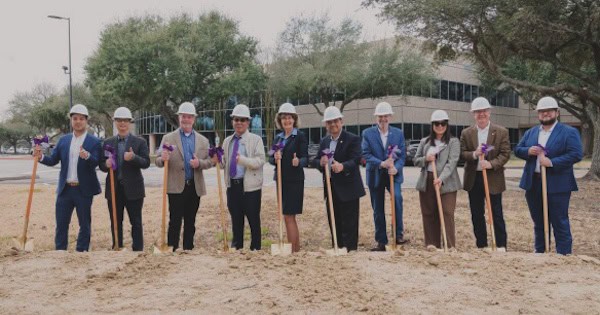 Applied Optoelecdtronics broke ground to expand in Sugar Land, Texas in April 2026. (Photo: Applied Optoelectronics)
In April, Applied Optoelectronics Inc. (AOI), received a TSIF grant for a major expansion in Sugar Land, part of the Houston metro. Gov. Abbott announced that AOI would receive approximately $20.9 million in TSIF support to expand semiconductor and optical networking manufacturing capacity. The project represents more than $279 million in capital investment and is expected to create approximately 500 jobs. AOI’s expansion includes a new 210,000-square-foot manufacturing facility adjacent to its headquarters, where the company plans to significantly increase production of AI-focused data center transceivers and optical networking technologies used in high-speed cloud and artificial intelligence infrastructure.
The state has also expanded semiconductor incentives tied to fabrication and materials manufacturing. Earlier this year, Coherent Corp. received a TSIF grant of approximately $14 million to accelerate semiconductor wafer production in Sherman, Texas, tied to a $154 million expansion project.
Houston: Energy Transition, Industrial Innovation
The Houston region continues evolving from a traditional energy capital into a broader hub for industrial innovation and energy technology.
One of the most closely watched developments this year has been the growing momentum behind geothermal startup Fervo Energy, whose planned IPO could value the company near $7 billion. Industry observers increasingly view Fervo as symbolic of Houston’s transition toward next-generation energy technologies built on the region’s engineering and drilling expertise.
The Houston market also continues attracting investments tied to carbon management, hydrogen, petrochemicals, and industrial decarbonization. The city’s long-established infrastructure and talent base remain major competitive advantages for companies operating in energy-intensive industries.
Dallas-Fort Worth: Headquarters Growth & Semiconductor Expansion
The Dallas-Fort Worth region remains one of the nation’s strongest corporate relocation and headquarters markets. Financial services, technology, logistics, and semiconductor manufacturing continue driving major investment activity throughout the Metroplex. Wells Fargo’s ongoing Las Colinas campus development, for example, represents a roughly $400 million office investment expected to support approximately 4,000 jobs. Incentives tied to the project include a $5 million Texas Enterprise Fund grant and approximately $31 million in local tax increment financing and related support from Irving.
Charles Schwab’s Westlake campus expansion also continues reshaping the region’s financial services footprint. The project includes approximately $100 million in investment and more than 1,200 jobs, supported by state and local incentives including a $6 million Texas Enterprise Fund grant and long-term property tax abatements.
The state’s trajectory in 2025 and into 2026 reflects an economic development strategy to compete in industries shaping the next generation of growth.
Meanwhile, semiconductor manufacturing is becoming an increasingly important growth driver for North Texas. Texas Instruments’ Sherman fabrication campus remains one of the largest semiconductor projects underway in the United States, representing approximately $30 billion in long-term investment and roughly 3,000 jobs. Local incentives include extensive property tax abatements and infrastructure support from city, county, and educational entities.
Austin: Balancing Growth With Active Recruitment
Austin’s economic development strategy is entering a new phase in 2026. After years of organic growth driven by technology migration and venture capital investment, city leaders are now moving toward a more proactive recruitment model amid slowing growth and increasing competition from other markets.
In May 2026, Austin officials advanced a new economic development framework aimed at actively recruiting large-scale projects and expanding the city’s global investment profile. Government officials described the strategy as necessary to compete more intentionally for investment opportunities. The city is also reconsidering how it deploys corporate incentives. Officials estimate Austin’s previous incentive agreements helped generate approximately $5.1 billion in capital investment and nearly 9,000 jobs.
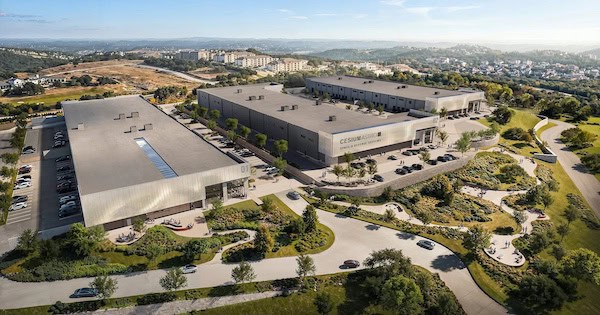 Aerospace and communications company CesiumAstro will relocate its headquarters in the Austin, Texas region, in the city of Bee Cave. (Photo: Cesiumastro)
One notable 2026 announcement involved aerospace and communications company CesiumAstro, which has confirmed plans to relocate its headquarters to Bee Cave near Austin. The project represents approximately $500 million in investment and is expected to create around 500 jobs. Regional leaders described the project as evidence of Austin’s continuing strength in aerospace, defense technology, and advanced engineering sectors.
The Austin Infrastructure Academy, a workforce development initiative to prepare residents for high-demand careers in construction, transportation, utilities, and skilled trades, will occupy a permanent space in a 560,000-square-foot facility purchased by Austin Community College District (ACCD). Created through a partnership among the City of Austin, Workforce Solutions Capital Area, and ACCD, the academy training programs focus on fields such as welding, HVAC, electrical work, heavy equipment operations, and construction management.
San Antonio: Cybersecurity, Defense, and Advanced Manufacturing
San Antonio continues emerging as one of Texas’ most strategically important metros for defense technology, cybersecurity, aerospace, and advanced manufacturing investment. Long anchored by military installations and federal operations, the region is increasingly leveraging that foundation to attract private-sector growth in industries tied to national security, cloud computing, and advanced industrial production.
Advanced manufacturing activity is also accelerating across the region. Toyota Motor Manufacturing Texas continues expanding production at its South Side truck assembly plant, which supports thousands of direct jobs and a large supplier network throughout South Texas.
Business-Friendly, Strategically Essential
The state’s economic trajectory increasingly reflects a deliberate strategy to compete in industries shaping the next generation of global growth. Semiconductor fabrication, AI infrastructure, aerospace systems, cybersecurity, advanced manufacturing, and energy transition technologies are no longer emerging opportunities in Texas—they are becoming foundational pillars of the state’s evolving economy. From Houston’s industrial innovation ecosystem to Dallas-Fort Worth’s headquarters and semiconductor momentum, from Austin’s talent-development initiatives to San Antonio’s defense and cybersecurity strengths, regional economies across Texas are contributing to a broader statewide transformation.