
By Michael Gryboski, Editor Thursday, June 18, 2026
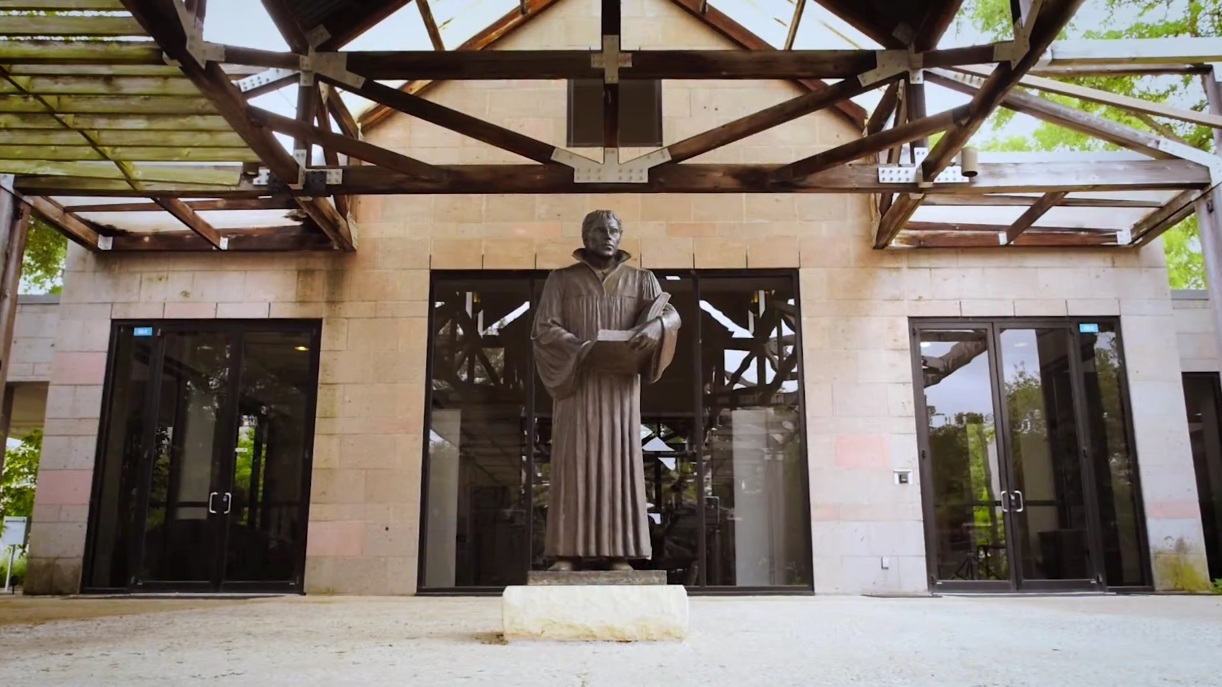
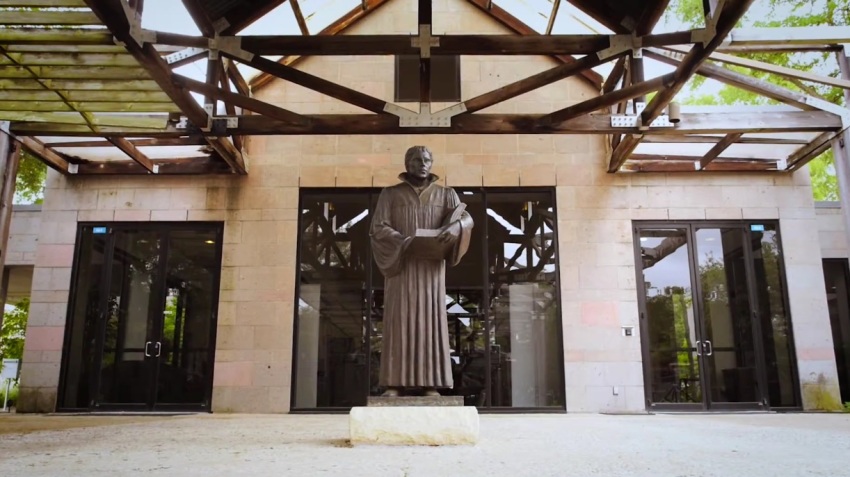 The campus of Concordia University Texas, an academic institution based in Austin, Texas, that is affiliated with The Lutheran Church—Missouri Synod. | YouTube/Media Masters
A federal appeals court has ruled that The Lutheran Church — Missouri Synod (LCMS) does not have to violate its own bylaws to sue a university that is seeking to end the denomination’s leadership influence over the school.
A three-judge panel of the 5th U.S. Circuit Court of Appeals issued a 2-1 decision earlier this month in the case of The Lutheran Church—Missouri Synod v. Concordia University Texas.
Circuit Judge Edith H. Jones, a Reagan appointee, authored the majority opinion, concluding that the lower court had “quintessentially violated the church autonomy doctrine” when ruling against LCMS.
“The church autonomy doctrine, a corollary of the First Amendment, protects religious institutions’ internal management decisions and doctrinal self-governance from judicial intrusion,” Jones ruled.
“[The district court’s] invasive inquiry replaced the Church’s description of its polity, rooted in doctrine, with the court’s secular reading of the Church’s constitution, bylaws, and policies. The district court engaged in precisely the type of review that the doctrine seeks to prevent.”
In November 2022, the Concordia Board of Regents voted to amend its governing documents to remove the requirement to adhere to LCMS bylaws following months of discernment. Concordia President Donald Christian stated in a memorandum at the time that the decision was not meant to fully sever ties, writing that “we are not leaving the LCMS.”
“This vote simply reframes the nature of that relationship so that governance will be directed solely by the Board of Regents rather than shared with Synod,” Christian wrote.
“[W]e will continue to live out the mission of the church by remaining faithful to Scripture and the confessions; engaging with the broader culture and being a light to the world; continuing to train workers for the church; sharing the gospel with students; and partnering with LCMS entities to help them live out their mission.”
In response, the LCMS Commission on Constitutional Matters ruled against Concordia leadership, saying it had to receive prior approval before adopting such amendments.
When Concordia refused to seat a new set of regents in 2023, LCMS filed a lawsuit against Christian, Board Chairman Christopher Bannwolf and the board of regents in general. The following year, Concordia countersued, and the cases were consolidated.
Concordia University Texas argued that LCMS was required to bring any legal action against the school, even though LCMS bylaws require the LCMS to handle only spiritual matters. A district court ordered the LCMS to bring the case against Concordia instead of the corporate LCMS entity, which denominational bylaws require to handle such matters.
Circuit Judge James E. Graves Jr., an Obama appointee, authored a dissenting opinion, claiming that “the Synod holds the substantive rights at issue, and is therefore an indispensable party.”
“The Synod adopted the Commission’s judgment against Concordia, and elected regents of Concordia’s board to replace the current board,” Graves wrote.
“Even these descriptions of the Synod-Concordia relationship could suffice for the court to determine, as the magistrate judge and the district court did, that the Synod holds the substantive rights at issue.”
Daniel Blomberg, vice president and senior counsel at Becket, which helped represent LCMS on the appeal, released a statement celebrating the decision.
“In America, churches — not courts — get the final say in how they are structured and governed,” Blomberg stated. “Uncle Sam can’t remake houses of worship into his own image. The Fifth Circuit reinforced that common-sense rule, which is a win for every faith community in the country.”