
If you were looking for something cute and wholesome, look no further than Dallas and Fort Worth zoos’ 2026 babies.

Dallas Zoo has welcomed over 100 birds, butterflies, mammals and everything in-between since January. Similarly, the Fort Worth Zoo has seen more than 75 births since the start of the year.
Here’s a look at some of the zoo residents born this year.
Reticulated giraffe (Fort Worth)
Fort Worth Zoo participates in a cooperative breeding program to maintain a healthy, genetically diverse population of giraffes.
Courtesy of the Fort Worth Zoo
A baby girl reticulated giraffe was born on May 31, standing 6 feet, 2 inches tall and weighing 152 pounds, according to a Fort Worth Zoo statement.
Article continues below this ad
She will remain unnamed until June 27, when the results of a TODAY Show poll will determine which of three names will be chosen. The names in the running are Kumi, Honey and Iris.
Reticulated giraffes, also known as Somali giraffes, are classified as an endangered species by the International Union for Conservation of Nature.
More here: Fort Worth Zoo’s new baby giraffe needs a name. Here’s how you can help choose it
Eastern bongo
The eastern bongo is type of antelope native to Africa with auburn or chestnut coats lined with 10 to 15 white stripes.
Courtesy of the Fort Worth Zoo
Fort Worth Zoo welcomed a baby eastern bongo, also known as a mountain bongo, on May 10.
Article continues below this ad
The eastern bongo is type of antelope native to Africa with auburn or chestnut coats lined with 10 to 15 white stripes, according to the African Wildlife Foundation.
Both males and females have large spiraled horns, which start to appear once they’re three to four months old.
North American porcupine: Lillia
Lillia was the first North American porcupine born in Dallas Zoo’s history.
Courtesy of the Dallas Zoo
Lillia was born on May 3 at the Dallas Zoo to first-time parents Sylvie and Lemon and is the first North American porcupine born at the facility.
Article continues below this ad
These porcupines are native to the coniferous and mixed-forest habitats of Canada, the northeastern and western regions of the United States and northern Mexico. By the time they’re adults, their coats consist of nearly 30,000 quills, according to the Smithsonian’s National Zoo & Conservation Biology Institute.
Contrary to popular belief, porcupines cannot throw or shoot their quills, rather the quills come off when they encounter a predator, according to the institute.
Bearded emperor tamarins
Bearded emperor tamarins are native to the southwest Amazon Basin, with a range that crosses Peru, Brazil and Bolivia, and can live up to 20 years in the wild.
Courtesy of the Dallas Zoo
First-time parents, Bella and Sandino, welcomed two baby bearded emperor tamarins to the Dallas Zoo on April 5.
Article continues below this ad
Bearded emperor tamarins are small monkeys with long, white whiskers around their muzzles that look like mustaches, according to the institute.
They’re native to the southwest Amazon Basin, with a range that crosses Peru, Brazil and Bolivia, and can live up to 20 years in the wild.
Asian elephant: Sam Houston
Sam Houston is the largest elephant calf born in the zoo’s history, zoo officials said.
Fort Worth Zoo
Sam Houston, a male Asian elephant calf, was born at the Fort Worth Zoo on April 1.
Article continues below this ad
He weighed 285 pounds at birth, stood 36 inches tall, and is the largest elephant calf born in the zoo’s history, zoo officials said.
More here: New baby Asian elephant Sam Houston makes public debut at Fort Worth Zoo
Prehensile-tailed porcupine: Persephone
At the Fort Worth Zoo, the prehensile-tailed porcupines are ambassador animals, meaning they aren’t in a publicly visible space.
Courtesy of the Fort Worth Zoo
A baby prehensile-tailed porcupine was born on March 27 to mom Piper and dad Quilliam at the Fort Worth Zoo.
Article continues below this ad
The prehensile-tailed porcupine is normally found in South American forests and uses its long tail to grasp things, according to the institute.
At the zoo, the porcupines are ambassador animals, meaning they aren’t in a publicly visible space. Visitors can see them by signing up for a zoo education program called Quills & Thrills behind-the-scenes experience, or by attending a Stage Show where they make appearances.
Reticulated giraffe: Opali (Dallas)
The calf was named Opali in May, inspired by the Swahili word for opal.
Courtesy of the Dallas Zoo
The Dallas Zoo welcomed a new reticulated giraffe calf on March 23 to mother Chrystal and father Tebogo. She weighed around 132 pounds and stood 5 feet, 9 inches at birth, zoo officials said.
She was named Opali in May, inspired by the Swahili word for opal.
Arapawa goat kids
Arapawas are a small breed of non-aggressive, critically endangered goats native to New Zealand.
Courtesy of the Dallas Zoo
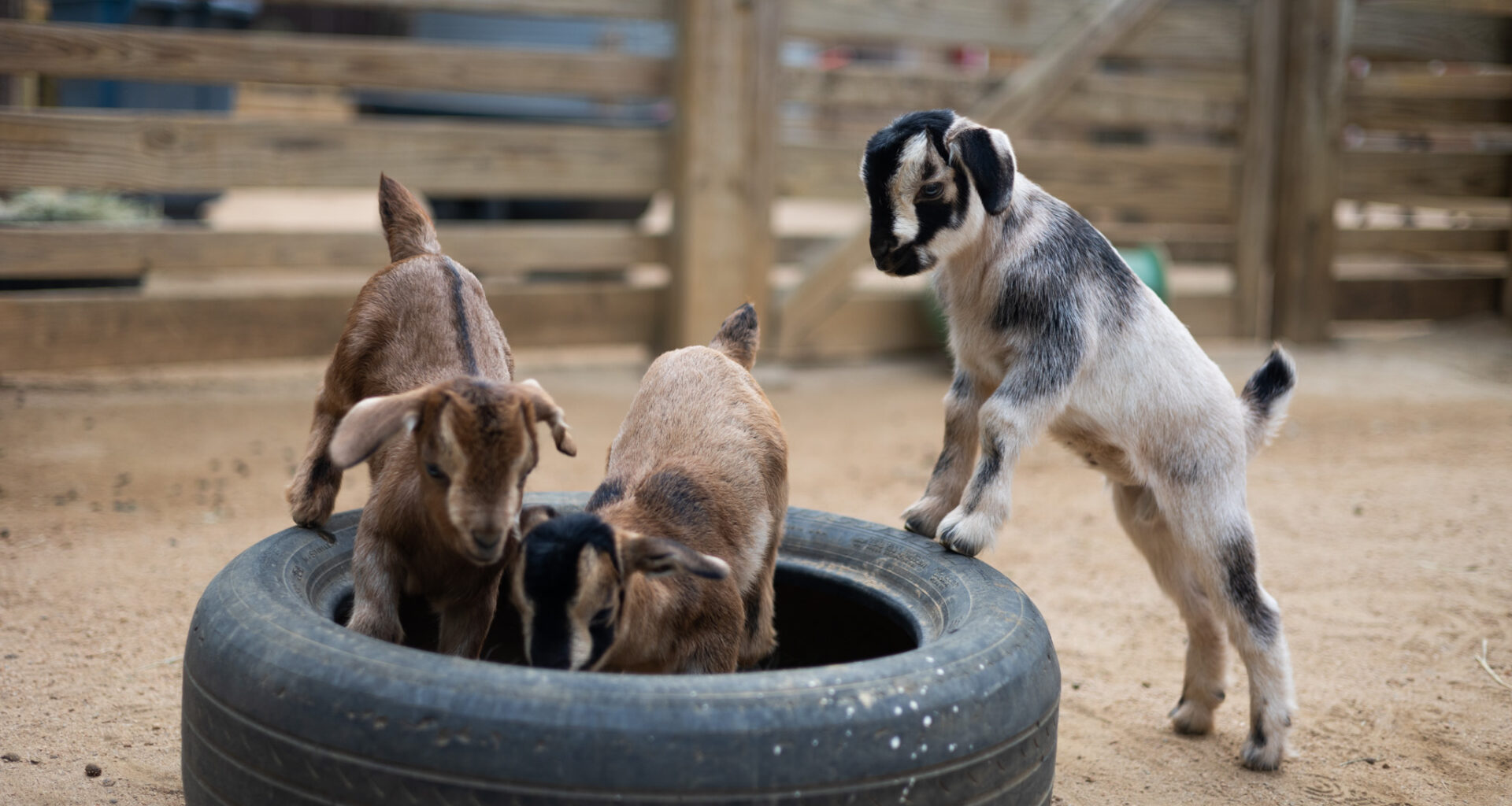
Dallas Zoo’s arapawa goats welcomed three girls and a boy between March 14 and 25.
Arapawas are a small breed of non-aggressive, critically endangered goats native to a New Zealand island.
The goats come in a variety of colors, with patterns of white, fawn, brown and black being the most common. Males have wide, sweeping horns, while females develop shorter, backward-pointing horns, according to the New Zealand Arapawa Goat Association.
Sumatran tigers: Rina and Serasi
Sumatran tigers are critically endangered, with fewer than 400 believed to remain in the wild, according to the International Fund of Animal Welfare.
Courtesy of the Dallas Zoo
Two baby Sumatran tigers — Rina, a girl, and Serasi, a boy — were born at the Dallas Zoo on February 22.
Rina’s name was selected after a public contest to raise awareness about wildlife conservation, and Serasi’s name was chosen by zoo staff to honor a ranger from the Sumatran Ranger Project who died.
Sumatran tigers are critically endangered, with less than 600 believed to remain in the wild, according to the International Fund for Animal Welfare.
More here: New Sumatran tiger cub at Dallas Zoo gets name from public contest
Lesser flamingo hatchlings
Lesser flamingos are listed as near threatened by the International Union for the Conservation of Nature.
Courtesy of the Fort Worth Zoo
The Fort Worth Zoo welcomed 18 lesser flamingo hatchlings from Feb. 6 to April 26.
Lesser flamingos typically breed in sub-Saharan Africa and India and are the smallest of the flamingos. They’re listed as near threatened by the International Union for Conservation of Nature.
African fish eaglet
The Fort Worth Zoo announced Thursday the first-ever hatching of an African fish eagle chick in the zoo’s 117-year history.
Fort Worth Zoo
The Fort Worth Zoo successfully hatched an African fish eagle on Jan. 31, making it one of only five institutions in North America to house the rare raptor.
Like the bald eagle, the African fish eagle has a dark body and a white head. However, its white feathers extend down its neck and breast, according to Britannica.
They usually live in pairs south of the Sahara Desert and are classified as sea eagles, meaning they reside near lakes, rivers and coastlines.
More here: Fort Worth Zoo welcomes first eagle chick in institution’s 117-year history
More birds, reptiles and amphibians
Both zoos have announced the arrival of various other birds, butterflies, amphibians and reptiles.
March through June: Five Houston toads
May 28: Aruba Island rattlesnake
May 8-24: Six Texas horned lizards
April 8-10: Four New Caledonia giant geckos
April 4-9: Four cockatiel chicks
April 5: Bruce’s green pigeon hatchling
March 14: Central Asian tortoise
The Fort Worth Zoo manages a conservation program for the endangered Houston toad – breeding them at the zoo and releasing toadlets and tadpoles back into the wild.
Courtesy of the Fort Worth Zoo
March through May: 124,541 Houston toad tadpoles
April 26: Kori bustard hatchling
April 20: Two Luzon bleeding-heart doves
March 23-4: Three masked lapwing hatchlings
Feb. 1: Mossy leaf-tailed gecko
Jan. 14-5: Two Henkel’s leaf-tailed geckos
Those interested in keeping track of some of the babies as they grow and develop can do so on the Fort Worth and Dallas zoo Facebook pages.
Related: More animal coverage