
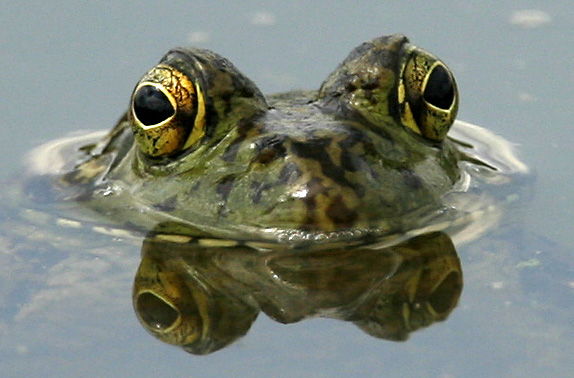
Ah, the sounds of a Texas summer: the high-pitched trills of crickets, the electric buzz of cicadas … and the amphibian equivalent of a late-night booty call.

After this week’s heavy downpours, Houston’s usual nighttime soundtrack has been overtaken by something louder, stranger and far more persistent. Across neighborhoods, residents are hearing deep bass booms, rhythmic mechanical drones, raspy trills, duck-like quacks and high-pitched bleats echoing through the darkness.
The culprits aren’t insects. They’re frogs and toads.
Article continues below this ad
What Houstonians are hearing are so-called frog choruses, noisy breeding events triggered by heavy rains when male frogs and toads begin calling for mates.
The frogs seem to have taken a page from old-school R&B singers: stand in the rain, sing your heart out and hope somebody notices.
“Male frogs call to attract females to mate,” Zach Truelock, a private lands biologist with the Amphibian and Reptile Conservancy, told Chron. “For many species, rain is a signal that breeding conditions are good because temporary pools and wetlands have filled up with water.”
Article continues below this ad
Male frogs and toads call to attract mates after heavy rains, producing the loud choruses that can sound like an outdoor orchestra.
Getty Images
Once that happens, a lot of frogs begin calling at the same time. The result can sound less like a pond and more like a bizarre outdoor orchestra, with dozens or even hundreds of amphibians competing to be heard over one another.
“That’s why it can sound like the whole neighborhood suddenly has a soundtrack,” Truelock said.
When the stage fills with water
During dry stretches, most frogs and toads retreat to cool, damp hiding spots beneath logs, debris and underground burrows. The explosion of croaks and trills can make it seem as though hundreds of frogs materialized overnight.
Article continues below this ad
“The funny thing is that they don’t really appear out of nowhere,” Truelock said. “They’ve been there all along. After a good rain, conditions are finally right for them to get out and move around.”
Because frogs have permeable skin, they are especially vulnerable to dehydration, making those damp hiding spots critical during dry periods.
The recent rains, combined with warm temperatures, have created ideal conditions for breeding activity across Southeast Texas, Truelock said. For frogs looking for love, it’s hard to ask for better weather. Some species, such as spadefoot toads, respond with what biologists call an “explosive breeding” event, calling intensely for only a day or two after a heavy rain.
“Many species of frogs in our area breed from April through June,” said Texas A&M herpetologist Lee Fitzgerald. “Our friends in Houston are likely hearing Gulf Coast toads, American Bullfrogs, a few other True Frog species, narrow-mouth toads and a couple of others.”
Article continues below this ad
Southern leopard frogs are among the species that may be contributing to the loud nighttime choruses now being heard across Southeast Texas following recent rains.
Jim McKinley/Getty Images
Truelock said green treefrogs, gray treefrogs, squirrel treefrogs, southern leopard frogs and Rio Grande chirping frogs are also likely adding to the chorus across Southeast Texas. Some are bass singers. Others are more tenors.
“The frog choruses will last for a few days and once breeding is finished for a particular species the adults will retreat back to their hangouts until next time,” Fitzgerald said. “What folks are hearing is the big event of frogs’ life cycle.”
Article continues below this ad
After breeding, eggs hatch into tadpoles that spend weeks or months growing in the water before transforming into tiny froglets. Those froglets may spend years maturing before they get the urge to start crooning in the rain.
“Watching videos of frogs calling and how their young develop gives a good understanding and builds appreciation for this wonderful wildlife that surrounds us largely unnoticed,” Fitzgerald said. “And yes, frogs and toads are harmless and they eat bugs and flies!”