
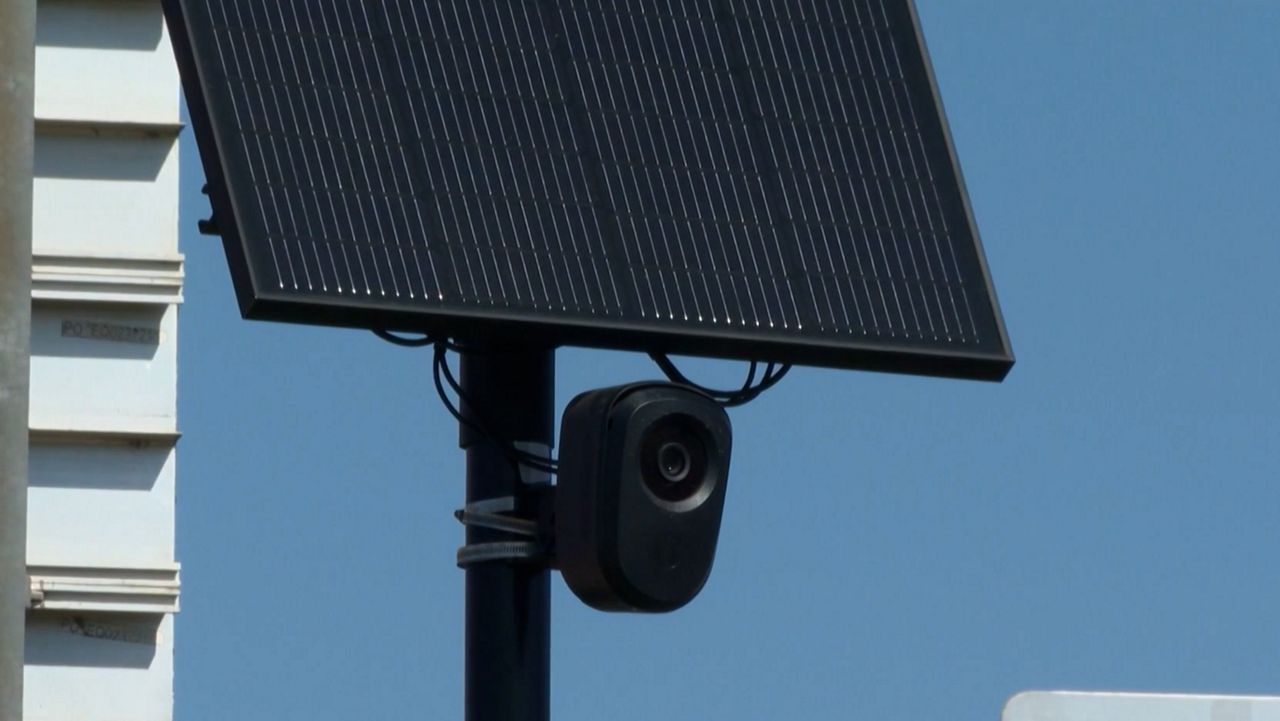
TEXAS — The automated license plate reader debate continues in the Lone Star State. The technology captures images of license plates and allows law enforcement agencies to identify and compare plates. However, the cameras are controversial. Some have said the cameras are an invasion of privacy, while others have said they aid police departments.
The latest conversation over the cameras is back in Austin once again.
“Well, I can tell you I think that conversation, you know, we have the TRUST Act, you know, setting guidelines on where we are with our technology. And I think that the conversation is ripe to have,” said Austin Police Chief Lisa Davis at a news conference in May.
Back in May, Austin saw a spree of a dozen shootings that left four people injured. At one point, the suspects were on the loose, prompting an emergency alert being sent out to residents in the Austin area. Since then, law enforcement has resurfaced the conversation of whether license plate readers should be brought back.
Last year, Austin City Council implemented the Transparent and Responsible Use of Surveillance Technology Act, or TRUST Act, to regulate surveillance technology after community concerns regarding automated license plate readers. The technology has since been discontinued by Austin City Council. The company Flock, that distributes these cameras, said it’s in line with the TRUST Act.
“Flock has doubled down on those transparency and accountability features. So when the time is right, we are absolutely ready to, to get into those conversations,” said Trevor Chandler, senior director of public affairs at Flock.
Kevin Welch, who leads the Electronic Frontier Foundation (EFF) of Austin, said the potential public safety gains far outweigh public privacy concerns.
“The dangers of people potentially being, tracked with this technology, of which the risks, especially for vulnerable populations,” said Welch.
We reached out to Austin City Council Member Mike Siegel about the controversy.
He said in a statement:
“From my understanding, ALPRs will not be on the Council agenda until late Fall at the earliest. Whenever they come back, our office is committed to preserving the constitutional right to privacy; protecting immigrants, people seeking reproductive and gender affirming care, and other vulnerable community members, and preventing private corporations from accessing and selling our personal information to the highest bidder.”
It’s important to note, the Texas Department of Public Safety (DPS) has installed automated license plate readers on several state-owned roadways in Austin despite city leaders choosing to end its own contract last year.