
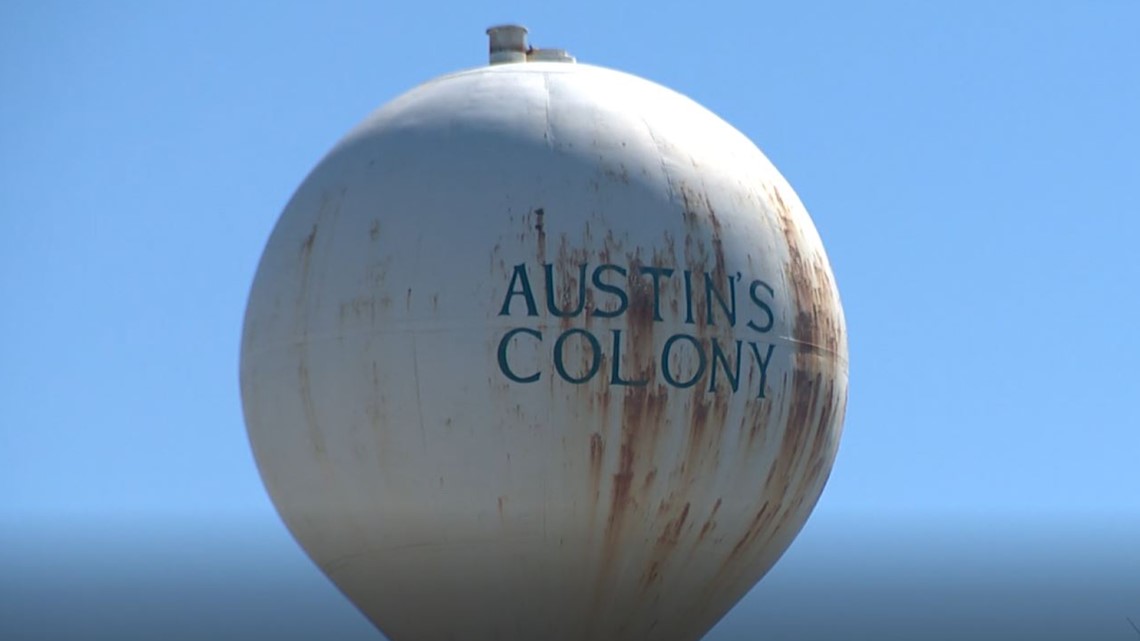
The study examined water quality concerns in Austin’s Colony, located northeast of Highway 130 and SH 71.
AUSTIN, Texas — A recent study led by researchers at University of Texas at Austin points to concerning levels of lead and arsenic in one Austin neighborhood’s water supply.
The study, published in May in the Public Library of Science journal PLOS Water, examined water quality concerns in Austin’s Colony, located northeast of Highway 130 and SH 71.
Residents have reported issues for years, including water discoloration, odor and mineral buildup that damages appliances, according to the study. Researchers collected water samples and detected arsenic, lead, copper and other metals. Some concentrations exceeded regulatory limits set by state and federal agencies, the study said.
The research team also surveyed 271 residents across 100 households. Census data estimates Austin’s Colony has a population of about 8,000.
The neighborhood’s water supply comes from the Colorado River Alluvial Aquifer and the Carrizo-Wilcox Aquifer, located about 50 miles away. Researchers said increasing reliance on the deeper Carrizo-Wilcox source could help reduce water hardness and discoloration.
The findings highlight the need for improved monitoring systems in fast-growing suburban areas that may face water quality and supply challenges, researchers said.
Advocates with PODER worked with researchers to survey residents and raise awareness about the water issues. Following the study’s release, PODER leaders told KVUE they are forming four groups to present recommendations to state and local officials.