
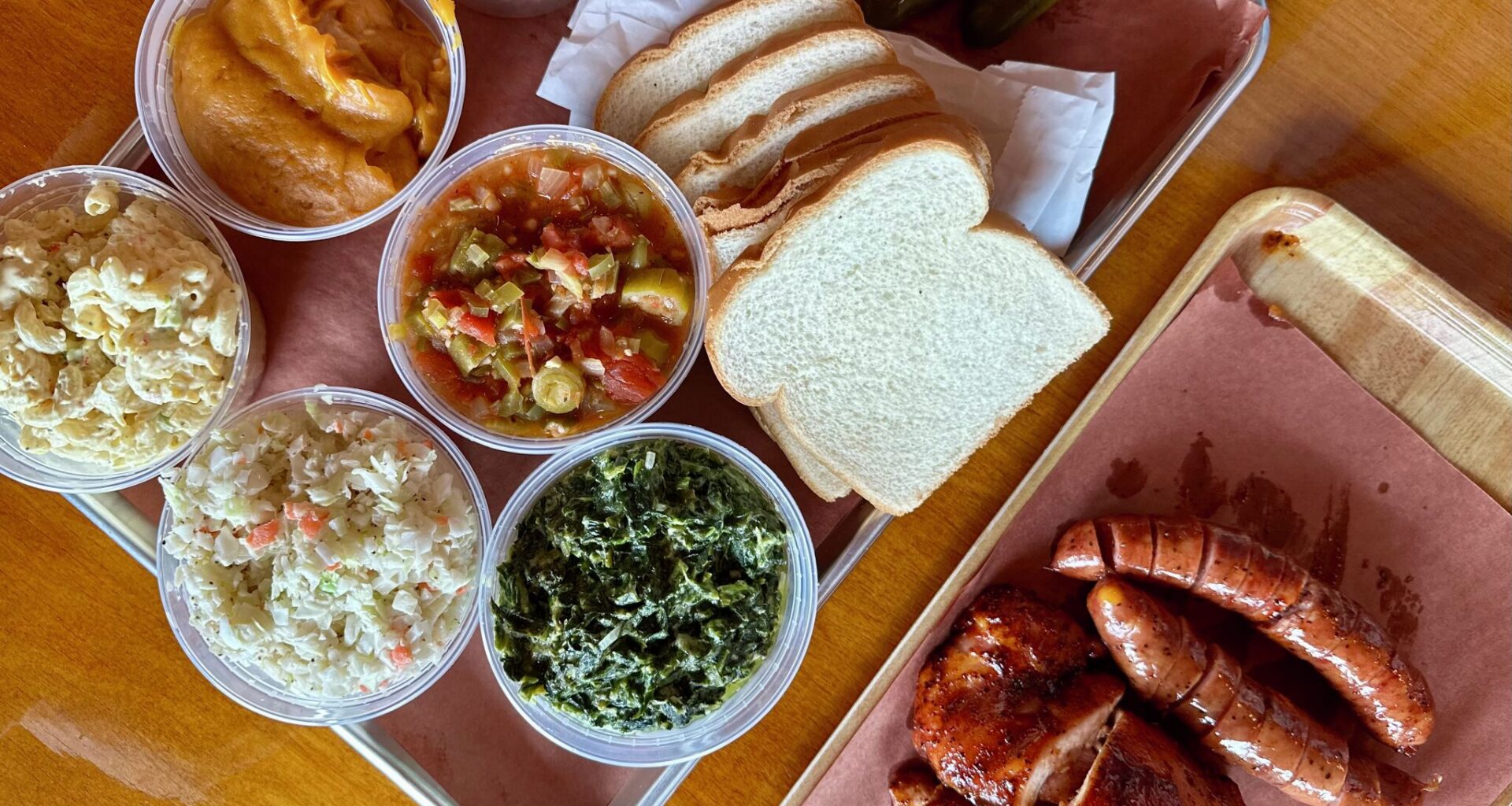
The line was out the door at Pinkerton’s Barbecue at 3801 Farnham St. When I saw the menu, the panic set in. It was my first time ordering barbecue since I moved to Houston. I was supposed to be ordering lunch. Instead, it turned into a math problem.
How much barbecue do I order? How much barbecue does one person actually need? It’s embarrassing to ask, but I’m new here. But after asking a few pitmasters around town, I feel vindicated. The answer to both of those burning questions? It depends on who you talk to.
One thing is immediately clear. When in doubt, start with the meat. The pitmasters I spoke to said most recommend somewhere between ⅓ and ⅔ pound per person, with about half a pound hitting the “sweet spot” for the average diner.
“Some people like to order and then they have a little bit extra to take home. But if it’s something where you want to eat barbecue but you don’t want to get stuck to the couch for the rest of the day, where you feel too heavy, usually about half a pound is good. That way you can also try two meats—you can do like a quarter pound and a quarter pound,” said Sam Saab, co-owner of Smokeroom BBQ in Northwest Houston.
While meat takes center stage on any barbecue tray, it’s the sides that do the heavy lifting. At Henderson & Kane in the Washington Corridor, standard meat plates come with a third pound of meat and two sides. Chef John Avila said about half a pint is a typical portion size for a single side on barbecue plates, while pints and quarts are standard if you’re ordering by weight.
Even then, appetite remains the biggest variable.
“When you see a big country boy coming in, you kind of feel like maybe his expectations are a little bit different than … a female who may be more petite,” Avila told Chron. “So we kind of gauge our portions based on what we think is kind of the middle road for that and then that lets the customer decide whether they want one meat plate, 2 meat plate, 3 meat plate or maybe they want ‘The Pitmaster.'”
Henderson & Kane’s Pitmaster platter comes loaded with brisket, pulled pork, pork ribs, smoked chicken, sausage or boudin, plus three sides. Avila said he’s seen three people share it. He’s also seen one guy down the whole thing.
The practice also has deep roots in the history of Texas barbecue culture. Avila believes the practice of selling barbecue by weight may have evolved from the industry’s close ties to butcher shops and meat markets. He pointed to Smitty’s Market in Lockhart as an example. The barbecue institution began as a German butcher shop with fresh meat during the week and smoked leftovers on the weekend, as Texas Monthly reported.
“When you go to a butcher shop, it’s all about weight. When you order steaks or cuts of meat, that goes on a scale. The barbecue world is not far from butchering,” Avila said.
While that tradition is over a century old, there still doesn’t exist a proper one-size-fits-all formula for ordering. But maybe that’s part of the charm.
“Barbecue should be fun. It’s a little nostalgic, it’s fun … it’s hip at this point,” Avila said. “I think it’s just a matter of what the customer enjoys and what they’re searching for in terms of satisfaction.”