
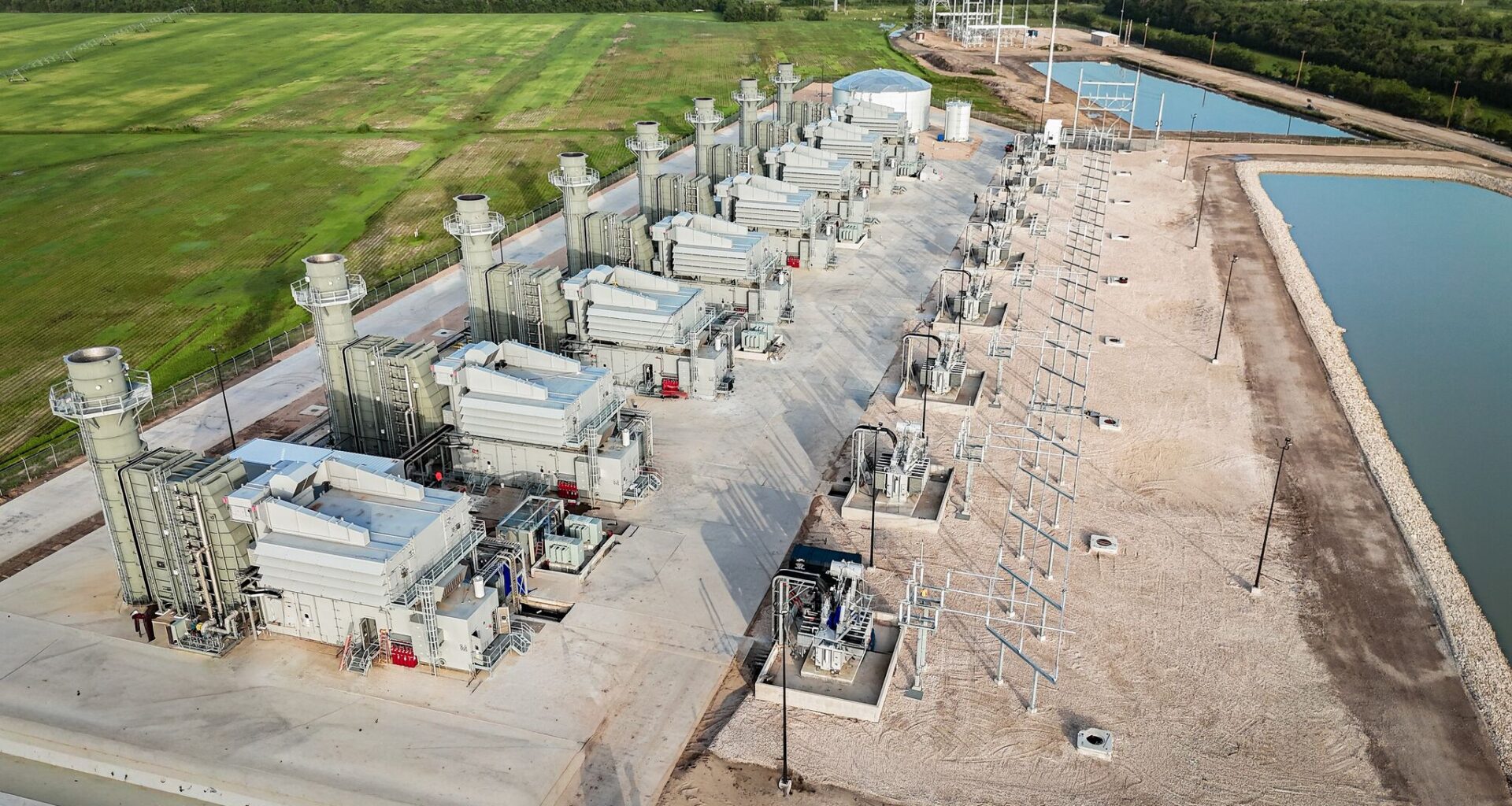
CPS Energy acquired this natural gas-fueled power plant and three others in September 2025. The San Antonio utility has revamped its energy generation plan to increase its reliance on natural gas.
CPS Energy
Jessica Solis and Isa Herrera with the Party for Socialism and Liberation in San Antonio expressed their concern about how CPS Energy’s updated generation plan would affect affordability and the environment during the public comment period of Monday’s CPS board meeting.
Kelsey Brown/San Antonio Express-News
During the CPS meeting Monday, members of the Party for Socialism and Liberation held up signs pressed against the glass that read: “No Rate Hike;” “Deny the rate hike increase;” “We need infrastructure upgrades. Make big consumers pay.”
Kelsey Brown/San Antonio Express-News
CPS Energy approved an updated generation plan that leans more into natural gas and self-sufficiency despite concerns about affordability and the environment.

The city-owned utility is amping up its reliance on natural gas to 35% of its total generation by 2040 — previously pegged at 26% — while also eliminating market purchases, which accounted for nearly 10% of its power under the earlier plan.
Article continues below this ad
The changes were spurred by new projections that by the start of the next decade, its current capacity would fail to meet the predicted surge of energy demand.
But several of those who spoke during the public comments portion of the CPS board meeting pointed out that residential growth was not the primary driver of the surging energy demand. CPS projects that demand from its residential sector will grow nearly 34% by 2040. However, commercial demand is expected to surge by more than 104% in that same time period. That increase is being fueled by the boom in data centers looking to move into San Antonio.
READ MORE: CPS Energy revamps power plan, shifts toward more natural gas as demand surges
San Antonio Express News Logo
Make us a Preferred Source on Google to see more of us when you search.
Add Preferred Source
“This plan is supposed to be for reliable and affordable energy,” said Jeremy Linville, 24, one of 19 people who signed up to speak Monday afternoon. “But the question is going to be for who?”
Article continues below this ad
While the presentation did not explicitly ask for a rate increase, Isa Herrera, an organizer for the Party for Socialism and Liberation, pointed out that the generation plan provided no protection for ratepayers from rising costs.
She also said it locked the utility into a path where it fails to meet the city’s climate emission goals by 2040.
Concerns about cutting back on climate emission goals have been raised since the utility’s $1.4 billion purchase of four natural gas plants in September. Although the utility touted the $2 to $4 customers would see on their monthly bills, environmental advocates and some members of CPS’ Community Input Committee saw it as going backward. DeeDee Belmares, a clean energy advocate with Public Citizen, called the savings “insignificant” and said the decision “locks us into that fossil fuel usage.”
In May, when the revamped plan was presented to the community advisory group, Dr. Adelita Cantu questioned the effect of allowing a higher level of emissions on public health. And some members expressed an interest in an alternative plan that kept the utility on track for meeting the targets in the city’s climate action plan by using a greater percentage of zero-emission power sources. But that proposal was rejected by the utility, which pointed out that it would cost more.
Article continues below this ad
And costs were a concern for many of those speaking out at Monday’s board hearing.
“We’re currently living through an affordability crisis,” said Jessica Solis, pointing out the higher costs of gas and groceries. In addition, the San Antonio Water System went to City Council this month to ask for a rate increase. “Our utilities and water are also going up. People are no longer able to afford to keep their lights on,” she said.
Residents already are seeing higher bills — up $11.99 on average — when compared with the year prior. The increase — from an average bill of $122.75 in April 2025 to $134.74 in April 2026 — was broken down by the utility: $4.12 for change in fuel, $1.70 for recovery from winter storm of 2021, $1.22 incremental regulatory and $4.95 for change in usage.
“That might not seem like a lot to this board, but for working families, that adds up,” Belmares said.
Article continues below this ad
RELATED: Inside San Antonio’s AI-driven data center boom and what it means for CPS Energy
During the nearly 50 minutes of public comment, Linville and other members of the Party for Socialism and Liberation held up signs pressed against the glass that read: “No Rate Hike,” “Deny the rate hike increase,” “We need infrastructure upgrades. Make big consumers pay.”
The board pushed back that the updated generation plan is necessary to ensure the reliability and affordability for its ratepayers.
“We are voting today on a strategy, on a pie chart,” board Chair Francine Romero said. “We are not voting on a rate increase.”
Article continues below this ad
David Kee, the utility’s director of energy market policy, said the changes were aimed at protecting ratepayers.
By cutting out reliance on market purchases of power and instead sourcing energy from primarily natural gas and solar, the utility would be insulating customers from the volatility of the energy market, Kee said.
“If we don’t have the ability to produce power, we’ll have to go to market,” Kee said. “There’s a risk that we’ll have some higher prices, which can result in bill shock.”
READ MORE: After debate, split City Council delays decision on SAWS rate hike
Article continues below this ad
He added that the previous plan’s nearly 10% reliance on market purchases was not intentional. It was a response to how quickly demand grew in just four years.
In recent years, CPS hasn’t needed to rely on the wholesale market for energy. In fact, it’s been a source of revenue as it sells its excess energy. Last year, CPS brought in more than $300 million in wholesale revenue.
Romero said the volatility that the utility is trying to avoid expands beyond just an intense winter storm or summer heat wave. Without building out the necessary generation, the utility would be affected more frequently by the spikes in the broader power market.
Mayor Gina Ortiz Jones, who is a member of the utility’s board, said the new plan offers a flexibility that the utility needs, pointing out the unknown effects of Gov. Greg Abbott’s recent letter to the Public Utility Commission and Electric Reliability Council of Texas, in which he called for various regulatory measures in response to the unprecedented amount of proposed data centers.
Article continues below this ad
RELATED: Greg Abbott tells PUC, ERCOT not to pass new data center costs to customers
While most of those who spoke during the public comment period raised concerns about affordability and the environment, Brett Finley, president and CEO of the Metro SA Chamber of Commerce, supported the revamped generation plan.
The lone vote against the refreshed generation plan came from board member Janie Gonzalez. While she said she understood the concerns of volatility, she questioned whether all the tools had been used to mitigate that risk without ratepayers having to pay for it.
Article continues below this ad
“We can say that it doesn’t lead to a rate increase, but there’s a cost in producing this,” Gonzalez said.