
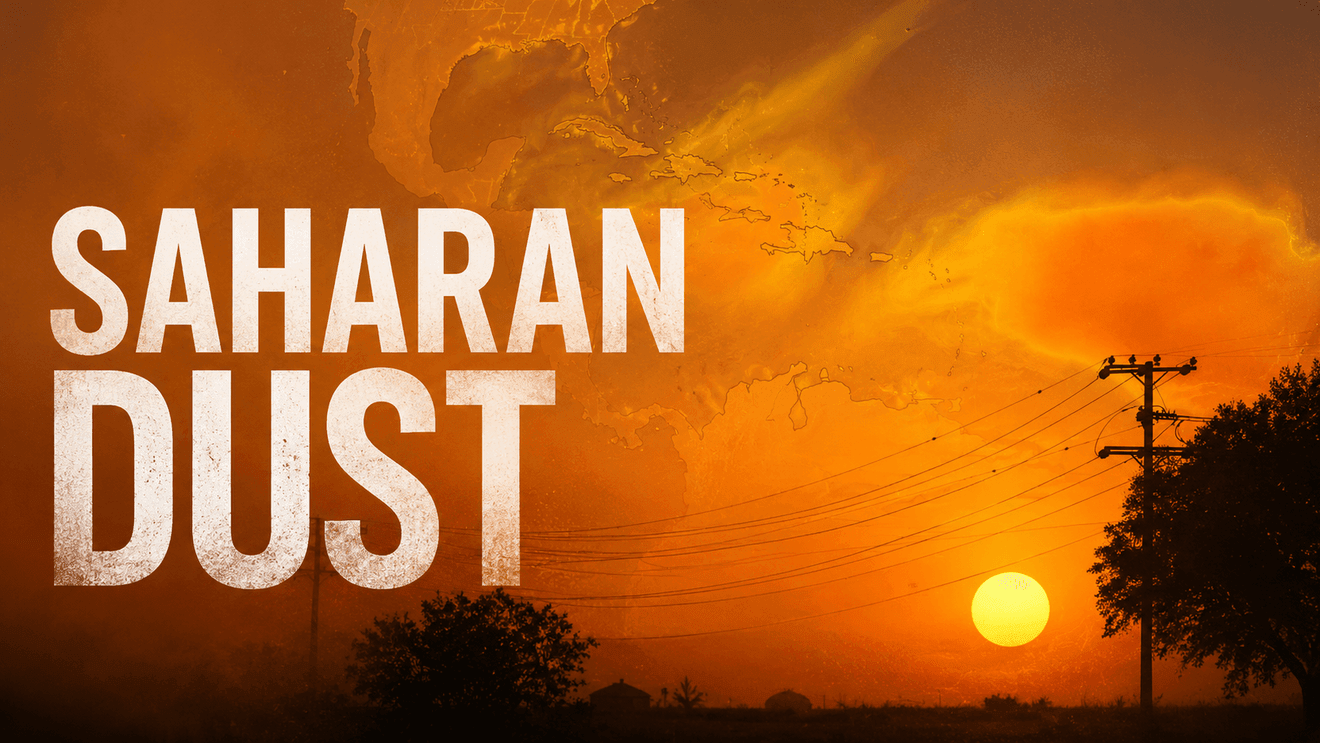
SAN ANTONIO – Summertime in Alamo City usually means three things: triple-digit heat, tubing the nearby rivers, and – somewhat surprisingly – milky, hazy skies caused by a desert located more than 5,000 miles away.
Every year, typically between late May and August, a massive meteorological phenomenon known as the Saharan Air Layer (SAL) sends plumes of fine mineral dust traveling across the Atlantic Ocean. When these plumes track into the Gulf of Mexico, San Antonians are treated to a unique mix of breathtaking sunsets and scratchy throats.
How Does Desert Sand Cross an Ocean?
It sounds like science fiction: sand kicked up in North Africa ending up on the windshields of cars parked outside the Pearl. However, the atmospheric engine behind it is highly consistent.
The process begins when intense summer storms and strong winds over the West African desert loft millions of tons of fine dust particles into the upper atmosphere. This dust gets trapped in the Saharan Air Layer—a super-dry, warm, and high-velocity wind layer that sits between 5,000 and 20,000 feet above sea level.
Driven by the easterly trade winds, this 2.5-mile-thick atmospheric conveyor belt carries the dust across the Atlantic Basin. The journey takes about a week to ten days before the plume descends into the Gulf Coast and spreads deep into the Lone Star State.
The Double-Edged Sword
When a Saharan dust plume settles over Bexar County, it brings a distinct set of pros and cons.
1. The Good: Technicolor Sunsets and Suppressed Storms
If you notice the midday sky looking a bit milky or bleached out, stick around for dusk. The fine dust particles act as a natural prism. As low-angle sunlight passes through the dust-laden atmosphere during sunrise and sunset, the particles scatter the blue wavelengths of light, leaving behind vibrant, deeply saturated shades of orange, pink, and neon red.
Additionally, the dry air and wind shear associated with the SAL act as a natural shield against severe weather. The layer effectively chokes out tropical development in the Atlantic Basin, keeping hurricane season quiet while it persists.
“It does contain a fraction of organic matter often embedded in the rock minerals which is fertilizer for places like the Amazon Rain Forest,” explained Meteorologist Chris Suchan.
2. The Bad: Stifling Heat
While the dust layer suppresses major tropical storms, it also squashes our local afternoon thunderstorms. Without those cooling summer downpours, the trapped heat can cause some of the hottest, most stagnant days of the summer in South Texas.
3. The Ugly: Air Quality and Health Risks
The most significant downside to the Saharan dust is its impact on respiratory health. The Texas Commission on Environmental Quality (TCEQ) monitors these events, which routinely bump San Antonio’s Air Quality Index (AQI) into the “Moderate” range due to elevated particulate matter.
If you’re healthy, a light-to-moderate plume might just cause mild allergy-like symptoms:
Sneezing and runny noseItchy, watery eyesA dry, scratchy throat
However, for sensitive groups – including the elderly, young children, and those with asthma, COPD, or chronic sinus issues – the dust can trigger severe respiratory inflammation and shortness of breath. Local health officials note that Saharan dust symptoms can closely mimic viral illnesses, though notably, a dust reaction will never cause a fever.
How to Prepare for the Dust
If a dense plume of Saharan dust is forecasted to roll into the San Antonio area, you don’t need to panic, but a few simple adjustments can keep you comfortable:
Check the AQI: Keep an eye on our weathercasts to monitor daily air quality levels.
Limit Outdoor Exertion: If you belong to a sensitive group or have asthma, move your morning jogs or heavy outdoor workouts indoors until the plume dissipates.
Seal Your Spaces: Keep your home and car windows rolled up. Ensure your HVAC system is equipped with a clean, high-quality air filter (such as a MERV 11 or higher) to trap fine outdoor particulates.
Hold Off on the Car Wash: If you see a light layer of tan grime on your vehicle, wait a few days to wash it. The dust typically moves through the region within a few days to a week.
Ultimately, the Saharan dust is a reminder of just how interconnected our global ecosystem is. Grab your camera for the spectacular evening views but keep your rescue inhaler or allergy meds close by if your lungs are sensitive to the desert air!