
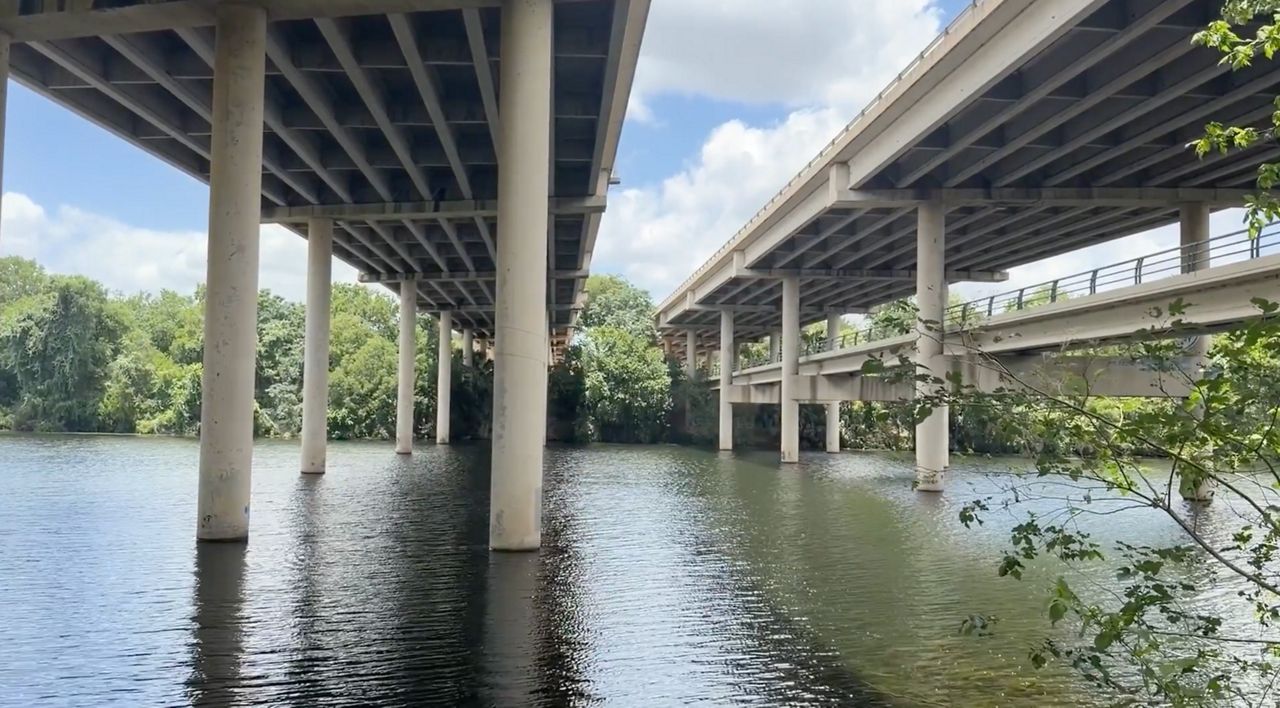
AUSTIN, Texas — A proposed construction project from the Central Texas Regional Mobility Authority to expand Austin’s MoPac highway is receiving some backlash due to concerns about potential impacts to the Edwards Aquifer and endangered species.
For more than 10 years, CTRMA has been developing an expansion project for MoPac that would stretch roughly nine miles from Cesar Chavez Street to Slaughter Lane. The current proposal would add up to two tolled express lanes in each direction to address congestion.
“We don’t expect people to be in the express lane each and every day, but there would be significant time savings because of that,” said James Bass, executive director of CTRMA.
Those who oppose the expansion say adding lanes won’t help with the traffic issues.
“More lanes means more cars,” said Kate Csillagi with the Save Our Springs Alliance (SOS).
Of the hundreds who are opposed to the potential project, many are concerned about further development over one of Austin’s most prime destinations, the Colorado River.
“Growth should never come at the cost of the reasons why people move to a place in the first place,” Csillagi said.
SOS, an environmental nonprofit, worries that the project threatens the Edwards Aquifer Recharge Zone and could impact endangered species like the Barton Springs and Austin blind salamanders.
“It’s going to impact water quality,” Csillagi said. “It’s going to impact air quality. There are endemic species that only live here.”
CTRMA completed an initial draft of their Environmental Assessment (EA), which concluded the project would not result in significant impacts to the surrounding environment.
“We’ve taken a very dedicated, some would say a long path to make sure that we’re studying all of the potential impacts and then also including mitigation factors into the project that would address a lot of those concerns,” Bass said.
As they respond to public comments, project developers will have to submit the final EA and wait on the Texas Department of Transportation’s decision in the fall.
“We will either go perform an Environmental Impact Statement, or if we received a finding of no significant impact, we would then go to our board to see if this is something they wanted us to pursue,” Bass said.
Still, those opposing the expansion are not convinced with the findings of the draft EA.
“People come here for Austin’s natural beauty, for the water, for the parks, for the trails, and this project threatens all of that,” Csillagi said.
There’s a long road ahead. If the project gets the green light, between designing and construction, it won’t be complete for about another 10 years.