
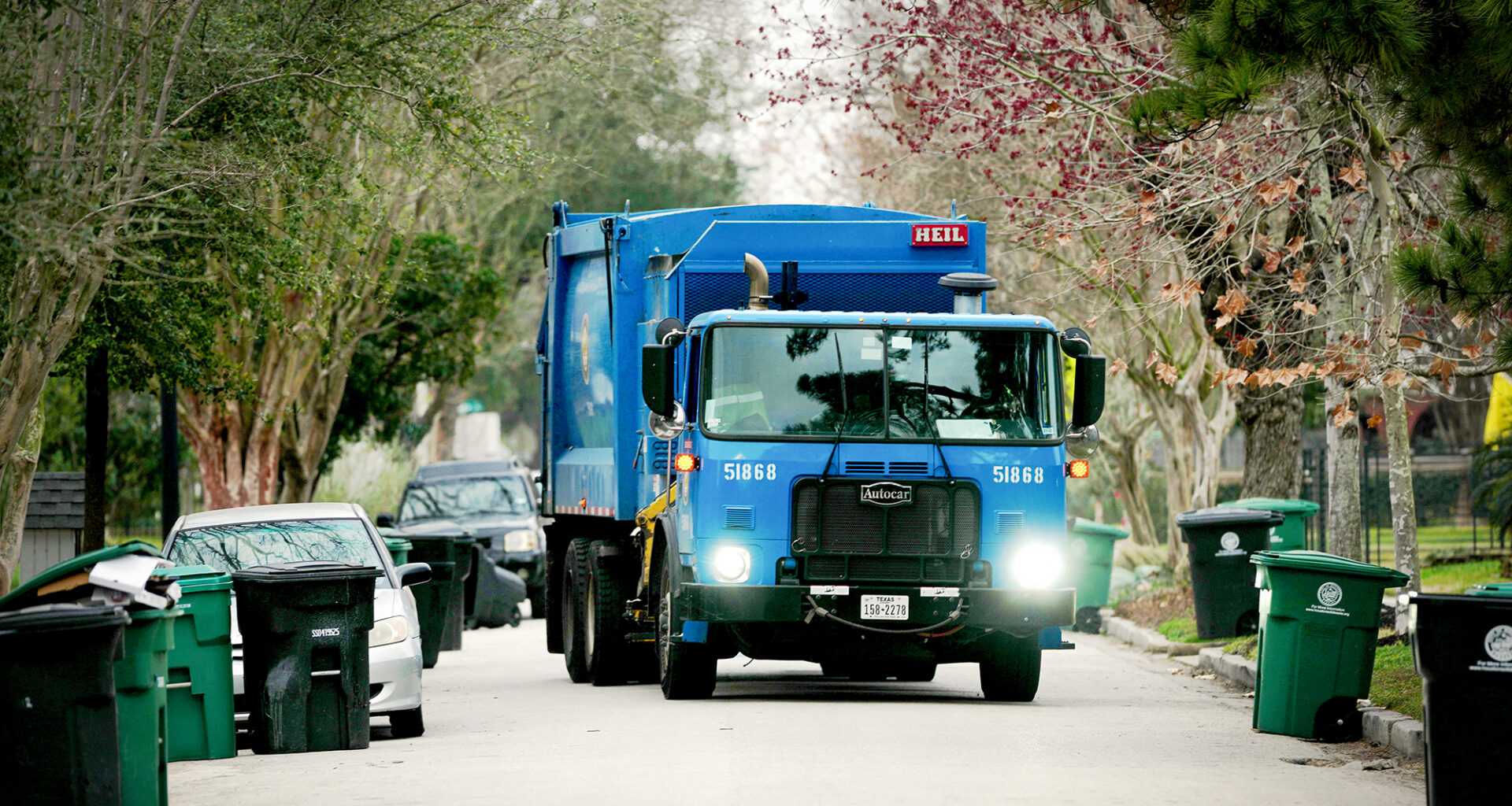
One of the city’s solid waste vehicles collects trash on Merrill St in the Heights on February 19, 2026.
Jill Karnicki/Staff photographer
Houston City Council approved an $18 billion capital projects plan Wednesday that only modestly increases spending on solid waste facilities and equipment, even as the city begins charging residents a new $5 monthly fee to support waste services.
Mayor John Whitmire and administration officials repeatedly have said the new fee and a plan to restructure how the long-struggling Solid Waste Management Department is funded will improve services, but they have offered few specifics and have not released the performance measures they will use to track improvements.
Houston’s Budget: Houston lags behind other major Texas cities in recycling. Will the new trash fee improve that?
Article continues below this ad
The Capital Improvement Plan passed Wednesday projects $92 million in solid waste spending over the next five fiscal years, including facility improvements, vehicles and equipment. That’s just $9 million more than was included in last year’s plan, before the city approved the fee and moved the department into the city utility system within Houston Public Works.
Much of the solid waste spending outlined in the infrastructure plan is directed toward replacing vehicles, repairing aging facilities and rebuilding the Northwest Transfer Station.
Solid waste investments account for a small share of the overall plan, which also includes funding for street, drainage and utility projects, library improvements, park projects, fire equipment and technology upgrades across city departments.
The largest project in the plan is the $252 million Surface Water Transmission Program, to expand the city’s drinking water network. Another $211 million is slated for sewer treatment plant improvements, with $147 million projected for fixes to sewer lift stations, which move waste toward treatment plants.
Article continues below this ad
More: Critics warn Mayor John Whitmire’s budget could strain Houston water-sewer system for years to come
The plan also includes $150 million for street and traffic projects, $78 million for regional stormwater detention projects and $48 million for the Storm Water Action Team, which handles local drainage concerns.
Voters will be asked to approve new bonds to fund the plan “within a year or so,” Finance Director Melissa Dubowski told the council’s budget committee on June 8.
The city typically holds a bond election every four to six years, she said; the last one was in 2022.
Solid Waste project spending
The plan identifies $92 million in planned solid waste spending over the next five years. Of that total, $29.8 million is dedicated to facilities, including a $17.7 million replacement of the Northwest Transfer Station, where city trucks drop waste for it to be trucked to the landfill.
Article continues below this ad
Another $62.1 million in solid waste-related spending appears elsewhere in the plan, primarily for new vehicles and equipment, including trash trucks, bulk-waste vehicles, tree-waste equipment and vehicle-tracking technology.
The council on Wednesday adopted an amendment from Council Member Alejandra Salinas to accelerate the purchase of trash trucks by moving $2.2 million from later years of the capital plan into the next fiscal year, which starts July 1.
More: Houstonians have given up on yard waste pick up, data shows. Will Mayor Whitmire’s budget fix it?
The investments come as Houston begins charging a $5 monthly trash fee that will generate $24 million in the new budget year to help support the solid waste department’s $134 million budget. The remainder of the department’s funding will come from the Combined Utility System, a move critics argue diverts money from water, sewer and drainage infrastructure.
Alice Liu, co-director of West Street Recovery, said the city’s capital investments should ultimately be judged by whether residents see better service.
Article continues below this ad
“The easiest way to determine whether or not it’s working is just by looking at the actual quality of services and infrastructure that’s being provided,” Liu said.
City officials have repeatedly argued that the new fee and budget restructuring will improve solid waste services, but they have offered few specifics about what will improve and how improvements will be measured.
Houston has struggled for years with missed trash and recycling pickups, delayed yard waste collection, illegal dumping and low recycling performance. Council members have questioned how the city plans to track progress after moving solid waste operations into the utility system.
Public Works Director Randy Macchi told council members before the budget vote that the department would return later this summer with a more refined set of performance measures. Those benchmarks have not yet been released.
Article continues below this ad