
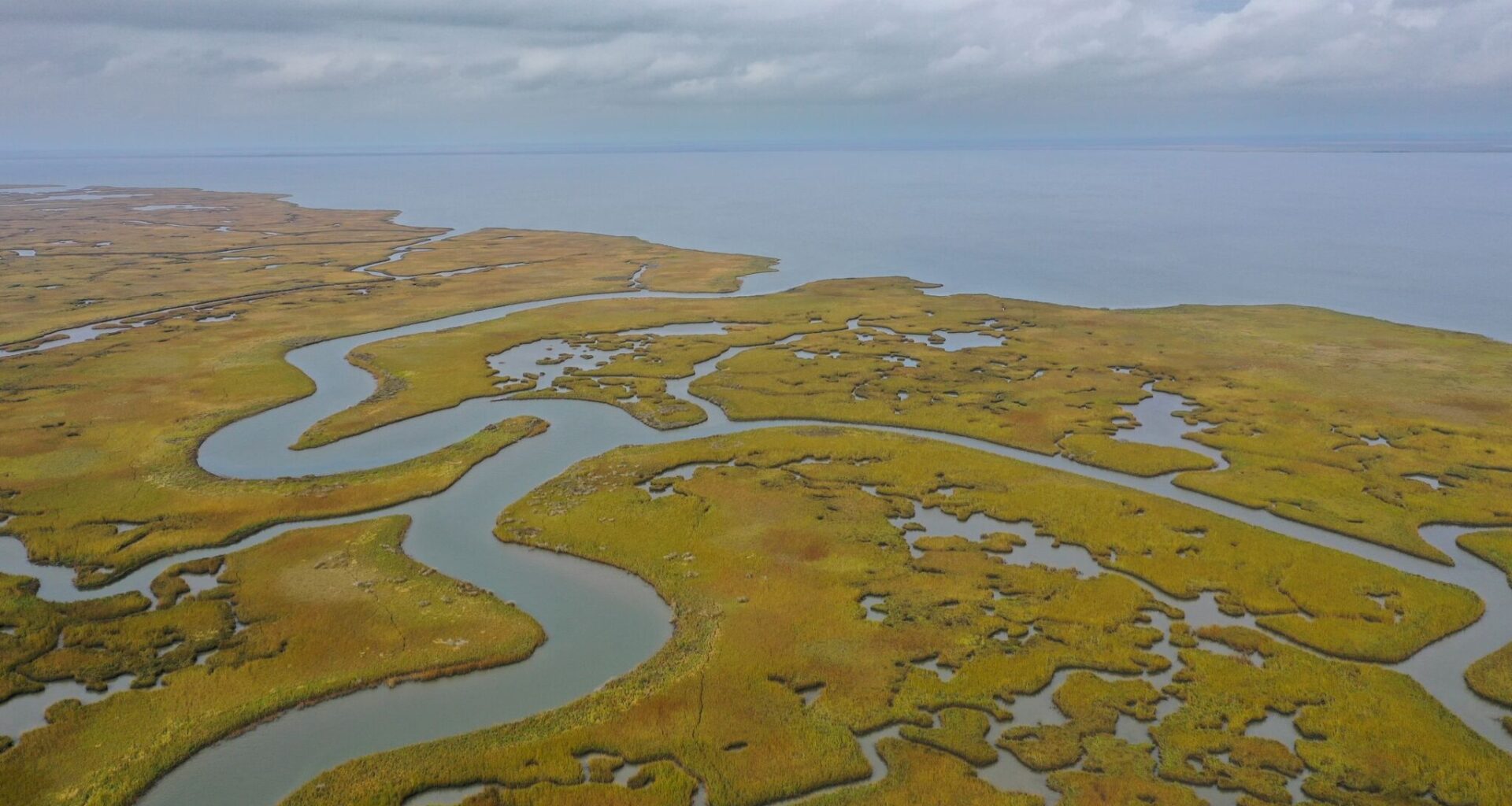
The Galveston Bay Foundation announced this week it has acquired Goat Island, nearly 1,500 acres of coastal marshland between Bolivar Peninsula and the Texas mainland. The acquisition adds to the more than 20,000 acres around the bay now under the foundation’s protection, Director of Conservation Matt Singer told Chron Thursday.
“One of our initiative areas is in the East Galveston Bay Watershed, and this Goat Island project, sits within the East Galveston Bay Watershed,” Singer said. “We’re excited more about restoration opportunities on this piece of property than what’s there right now.”
While Goat Island presently contains “lots of high-quality marsh,” Singer said, past aerial photography of the land shows a significant amount of erosion or subsidence (i.e. sinking) has taken place. The foundation hopes to offset this by using material dredged from the Intracoastal Waterway every few years to keep the shipping lanes open.
“We can take that material and engineer it and design restoration projects using that material so it’s not wasted,” Singer said. “It’s actually being used to build elevations back to that intertidal zone that’ll support plants and animals that were historically seen at these sites.”
For nearly 20 years, the foundation has been adding to the Pierce marsh near Hitchcock on the bay’s western side, in a similar manner, Singer said. He believes acquiring Goat Island will help ensure the trend continues in the right direction.
“We’re still losing acres of wetlands, but [the area] seems to be stabilized as a net,” Singer explained. “So we might lose some, but we might gain some somewhere else. What we’re trying to do is actually invest in these properties where we can actually reverse that trend and gain wetland acres.”
Adding wetlands around Goat Island also presents an opportunity to restore the area’s oyster reefs. Historically, eastern Galveston Bay has been home to many of the area’s harvestable reefs, Singer said, but they still haven’t quite recovered from the devastation of Hurricane Ike in 2008.
“Oyster reef creation is very expensive,” he said. “They need substrate, and getting substrate out into the water is very challenging, especially in shallow water environments. But I think it’s fair to say that we would have some form of oyster reef component to our long-term restoration at this property.”
Besides helping improve water quality, Galveston Bay’s wetlands provide habitat for hundreds of species, including fish, crabs, and birds ranging from raptors to waterfowl. Recreationally, Singer said the foundation welcomes anglers and birding enthusiasts who can navigate the island’s waterways responsibly. The hunting situation is more complicated, but also something of a moot point: its marshy terrain is “good for birds, not good for hooved mammals,” Singer said.
The foundation acquired the land as part of an agreement with nationwide wetlands-preservation nonprofit Ducks Unlimited, which received it in a donation in 2022. Goat Island now belongs to what the foundation calls a “network of protected conservation lands” that also includes a pair of sanctuaries owned by the Houston Audubon Society and the U.S. Fish and Wildlife Service’s nearby Jocelyn Nungaray and McFaddin National Wildlife Refuges.
“More and more, I’m seeing a hugely collaborative nature between conservation organizations in the Houston/Galveston region,” Singer said. “We all understand the mission to protect our natural resources is critical, and we work together very well to help promote each other’s projects.
“There’s probably half a dozen or so active land conservation organizations that are working within the same geographical range here,” he added, “and we all work very collaboratively.”