
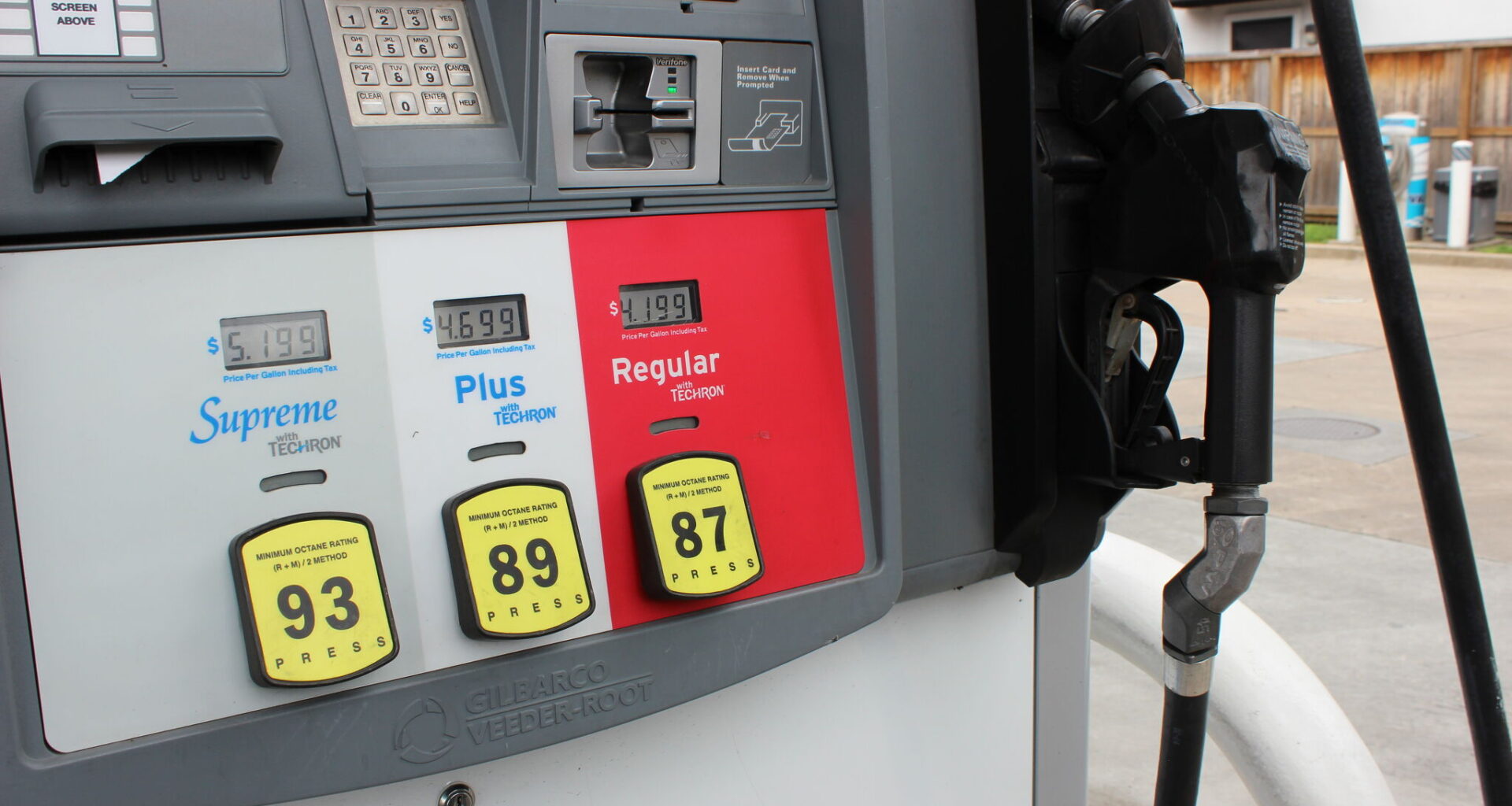
The Chevron gas pumps on 4002 Southwest Freeway shows $4.19 per gallon as of Thursday, May 7, 2026. Gas prices increased during the U.S.-Iran conflict.
Octavia Johnson/Houston Chronicle
President Donald Trump accused Houston’s oil and gas industry of price “gouging” at the pump on Wednesday, calling for an official Justice Department investigation as peak summer travel is expected to kick off next week.
“The big Oil Companies are not dropping their price at the pump commensurate with the sharply lower prices they are paying for Oil,” Trump wrote in a post on Truth Social. “Those prices are dropping like a rock! In other words, customers are being ‘gouged.’”
Oil and fuel prices have fallen in recent weeks after the U.S. and Iran signed a temporary peace agreement, opening the Strait of Hormuz under a ceasefire while officials from both countries and neighboring allies continue to meet in Switzerland to hash out a permanent deal.
Article continues below this ad
But it will take time for these actions to affect the price consumers pay at the pump, experts say.
“The gasoline prices at the pump today are because of the price of crude oil last month,” said Ed Hirs, an economist at the University of Houston.
What was the average price at the pump before the war and what is it now?
Fuel prices surged as the Iran war strained the world’s oil supplies, driving Texas oil prices to an eye-popping $113 in April. As a result, prices at the pump will approach record highs next week for the July 4 holiday, second only to 2022, according to the fuel-price tracking service GasBuddy.
Article continues below this ad
Pump prices have been falling as oil prices settle in response to peace talks. In Houston, average fuel prices are roughly $3.43 per gallon, down from $4 in May.
OFFSHORE BOOM: Why Houston’s biggest oil companies are betting billions on the Gulf of Mexico again
The national average currently sits at $3.92, with Texas’ average hovering around $3.46, according to the American Automobile Association, better known as AAA.
In February, the national average was just below $3, AAA said. In Texas, prices were around $2.60.
Why do prices seem to jump so quickly but take longer to go back down?
When there is a spike in the price of oil, gas retailers try to stay ahead of it by increasing their prices at the pumps. They know they will soon pay more to buy gasoline and diesel, and they increase prices so they don’t lose money, said Debnil Chowdhury, head of refining for S&P Global Energy.
Article continues below this ad
That’s because contracts for oil inventories are signed based on crude prices and inventory outlooks and it can take awhile for them to go back down. As oil refining costs increase with the price of oil, refiners pass those costs to retailers.
OILFIELD ALLEGATIONS: Who is Josh Cohen? What to know about the recently arrested oil executive.
Most gas retailers “actually lose quite a bit of money,” Chowdhury said.
Retailers’ desire to break even or recoup early losses is what keeps prices at the pump from falling, and rising, on the same daily basis that per-barrel prices do in the oil market.
When might fuel prices return to their pre-war levels?
It’s hard to say for sure, said Chowdhury, but historically: about three to four weeks after the price of oil drops.
Article continues below this ad
Global crude oil inventories are depleted and the demand for oil may be higher while countries seek to refill their stock. The ceasefire must also hold and damage to overseas refining and production facilities needs to be repaired, so fuel prices might remain elevated until demand subsides, Chowdhury said.
How are gas prices determined?
Around half of the price at the pump is determined by the price of oil, according to the Energy Information Administration.
Other factors impacting prices are marketing costs, state and federal taxes, and pipeline and refining costs.
Article continues below this ad