
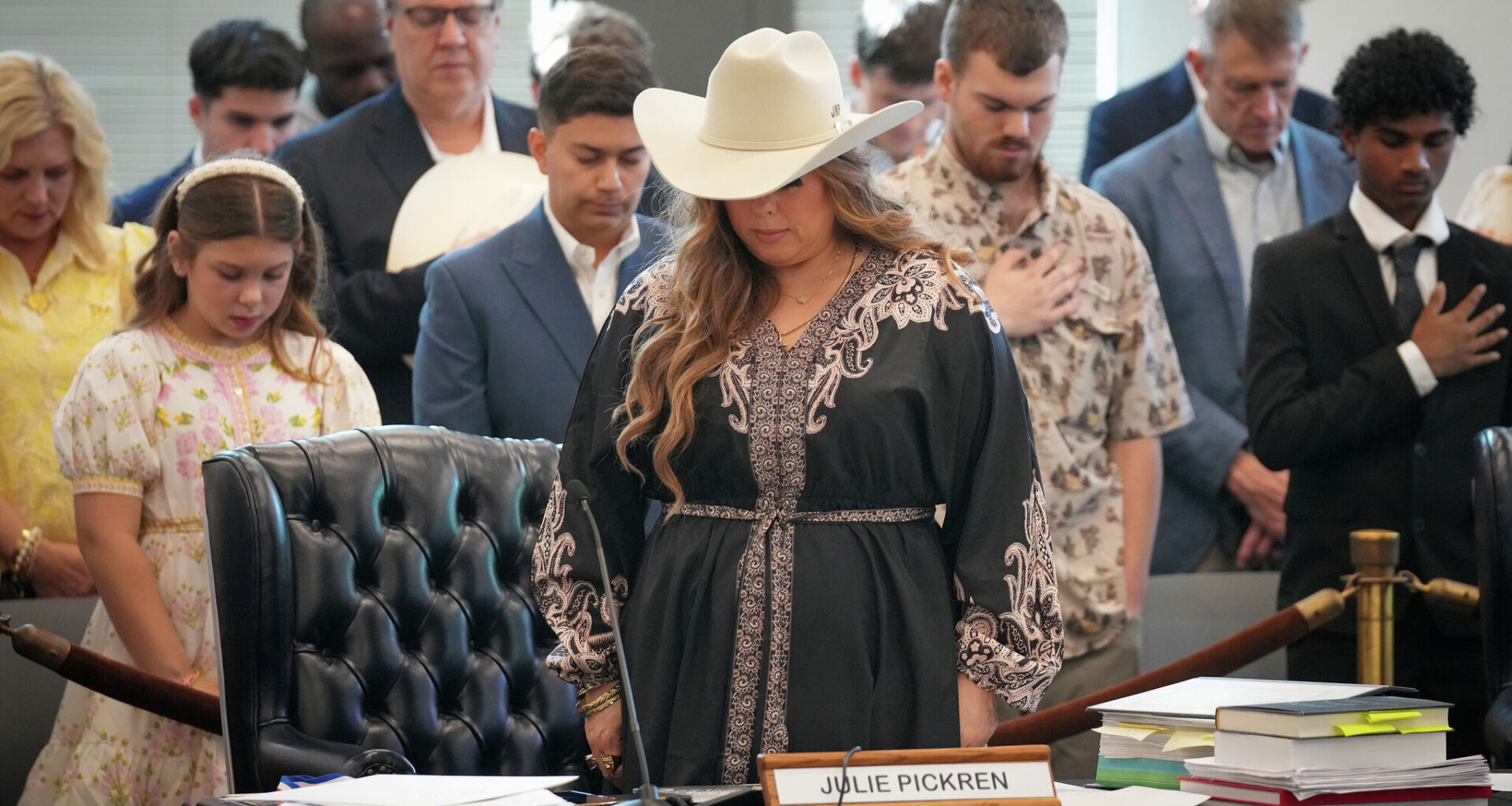
The Republican-led board passed the reading list in a 9-5 vote. One Republican, Evelyn Brooks of Frisco, voted against the list, saying it would remove autonomy from teachers.
The reading list will be worked into annual standardized exams, and will be rolled out into classrooms in phases beginning with elementary school in the 2030-2031 school year.
Republicans trumpeted the list as a victory for Judeo-Christian values and classical ideals. Proponents say that biblical passages are designed not to evangelize but help children an understanding of the country’s foundations.
“We are bringing the Bible back into schools this week for the first time in 60 years,” said SBOE member Brandon Hall, R-Aledo, during a prayer session outside the hearing this week.
The book list makes Texas the only state in the country to issue its own literature requirements, rather than leaving the choices up to teachers or districts. It is being issued to comply with a 2023 state law calling for “at least one” book per grade level, though the proposal passed Friday was far more expansive, requiring as many as 25 texts in some grades.
Texas is also so far the only state to mandate the reading of direct religious texts. Students will analyze around a dozen Bible passages and stories, from David and Goliath in second grade to the Book of Job in tenth grade.
Though teachers may still select other books to supplement the list, many testified prior to the vote that the required list was already too long to be taught within a single school year.
“The lists will eat up weeks of valuable instructional time,” said Diane Miller of the Texas Council of Teachers of English Language Arts. “It’s a bridge too far to cross.”
This is a developing story and will be updated.