
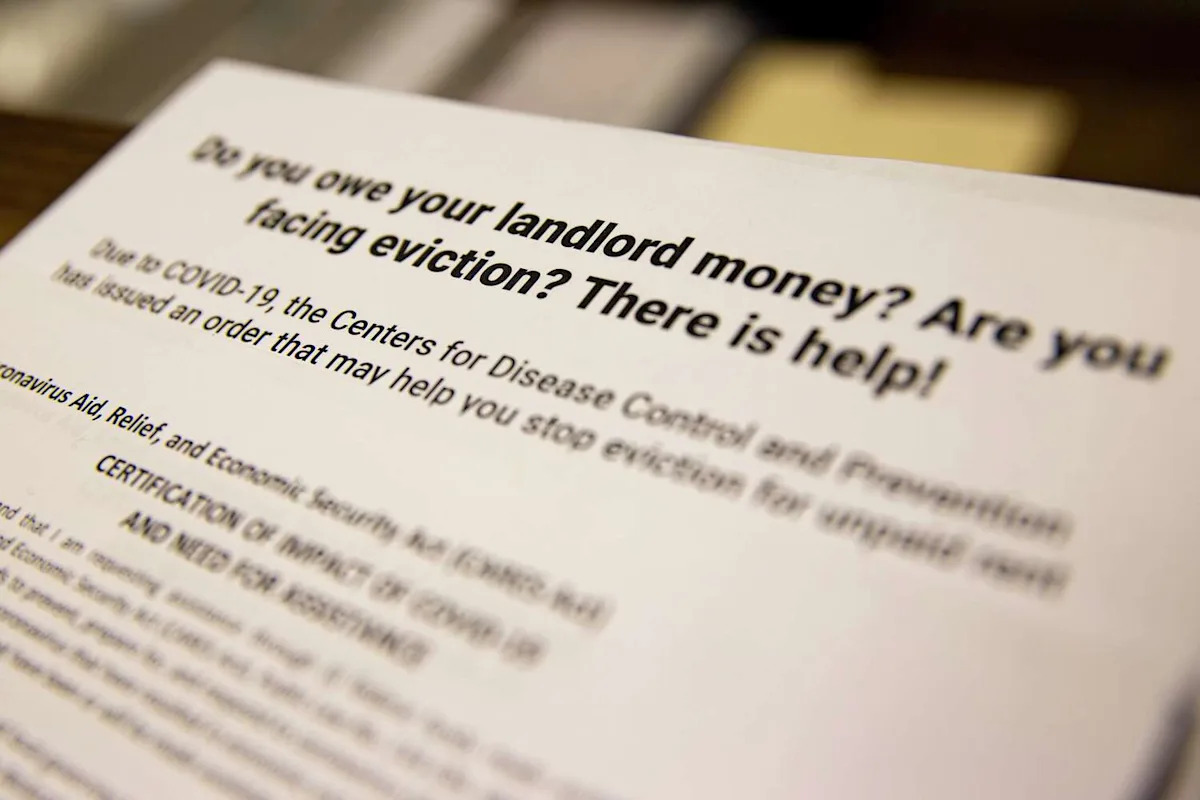
Eviction filings in Dallas County rose to their highest level in 2024, according to a report released Thursday.
The Child Poverty Action Lab tracked eviction filings and their outcomes in a new report. Eviction filings are the first step towards understanding the big picture of who is at risk of losing their home, said Ashley Flores, senior director of the Child Poverty Action Lab.
“We wanted to know more about what I call the life cycle of the eviction process,” Flores said. “From filing, to how the tenant is notified, to what happens at the hearing, to whether or not there’s an appeal, and then ultimately whether or not there’s a writ of possession executed by the constable.”
Eviction filings are the first data point in the cycle, Flores said. In 2024, Dallas County landlords filed 50,117 evictions, the highest level in 25 years of available data, according to the report.
There are an estimated 478,162 renters in Dallas County. In 2024, 10.5% of the renter population had an eviction filed against them, according to the report.
Annual eviction filings plummeted in 2020 and 2021 due to federal rent relief and renter protections as part of a response to the coronavirus pandemic. However, after that period, filing patterns returned and then exceeded pre-pandemic patterns.
Flores said that there was an expectation that eviction filings would creep back up after the moratorium was lifted. However, she said she was surprised that the filings not only crept back up, but exceeded pre-pandemic levels.
Although there isn’t a certain answer to why evictions rose, Flores said that around the same time, the cost to rent rose in a way that didn’t keep pace with wage growth. She said that trend has moderated, but that difference could be a reason why people could be vulnerable to eviction.
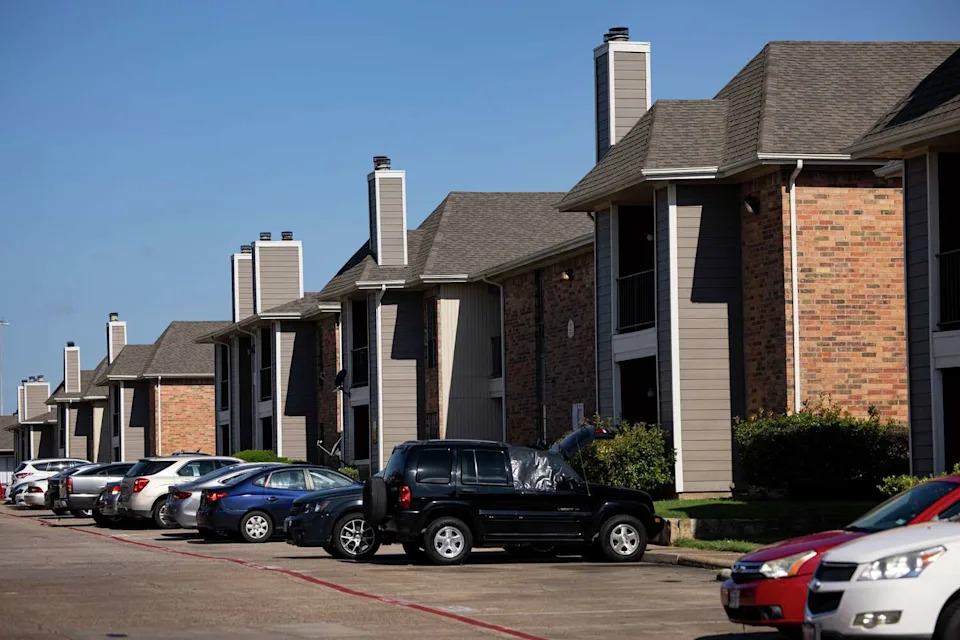
Regal Crossing apartments photographed on Thursday, June 24, 2021, in Dallas. (Juan Figueroa/The Dallas Morning News) (Juan Figueroa/Staff Photographer)
Not all eviction filings result in evictions. CPAL has measured eviction filings previously as part of the North Texas Eviction Project, but in this report also measured the potential outcomes after an eviction case was filed.
About 52.2% of cases resulted in a favorable outcome for landlords, meaning that the case was decided by default or in favor of the landlord, according to the report. About 47.6% of cases resulted in a favorable outcome for the tenant, meaning that the case was dismissed for any reason.
CPAL analyzed court records, but that data doesn’t show if a tenant actually moved or how an eviction filing was resolved after a case. However, records do show if a landlord takes action once a judge rules in favor of the landlord and a tenant doesn’t appeal or vacate the home.
A landlord may request a writ of possession where a constable removes the tenant from the home. In 2024, 10,906 writs of possession were issued in Dallas County, or 24% of cases with an outcome, according to the report.
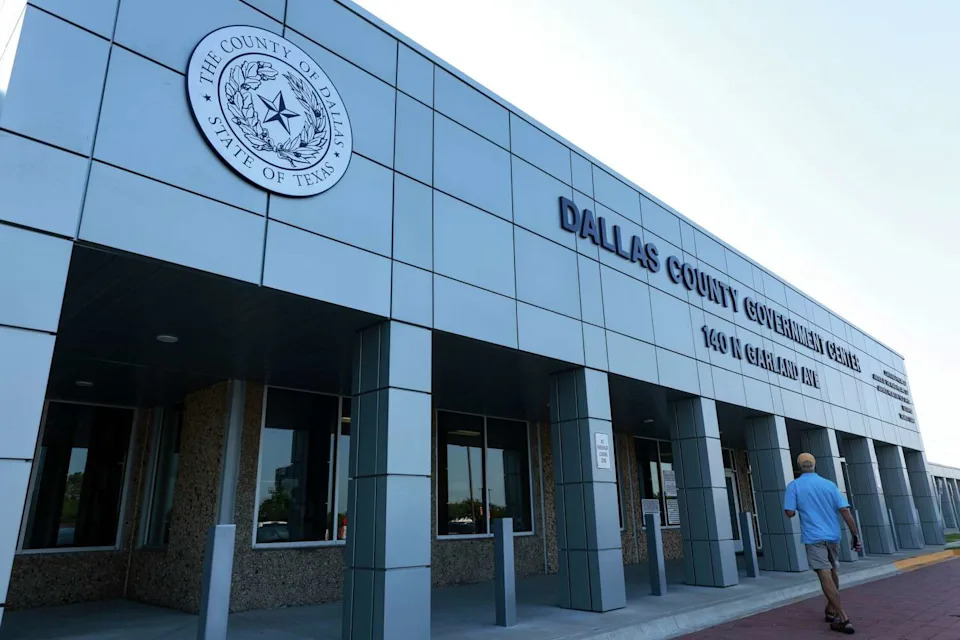
Dallas County Government Center where Justice of the Peace, Precinct 2-1 are, Wednesday, September 7, 2022 in Garland, Texas. (Rebecca Slezak/Staff Photographer)
The report also showed that there were big differences in how often courts ruled in favor of tenants when both the landlord and tenant presented their version of events during a hearing.
Dallas County has ten Justice of the Peace courts split among five districts. Several courts only ruled in favor of tenants less than 30% of the time. Meanwhile, another court ruled in favor of tenants about 70% of the time.
The report also found that some census tracts had higher levels of eviction filing activity. The neighborhoods with the largest number of filings were the area near the intersection of Rosehill Road and Bobtown Road, the Cedars and the intersection of Forest Lane and Audelia Road.
Most eviction filings also include an amount of money that the landlord claims is owed by the tenant. The median amount allegedly owed by tenants was $2,070, according to CPAL. Finally, the average length of time from eviction filing date to judgement date was 21.2 days.
In this report, CPAL was seeking to go beyond eviction filings and understand the outcome of the eviction cases.
“Our big picture motivation is to better understand the life cycle of eviction cases, so that we can find ways to better support tenants so that they can remain housed,” Flores said.
Subscribe