
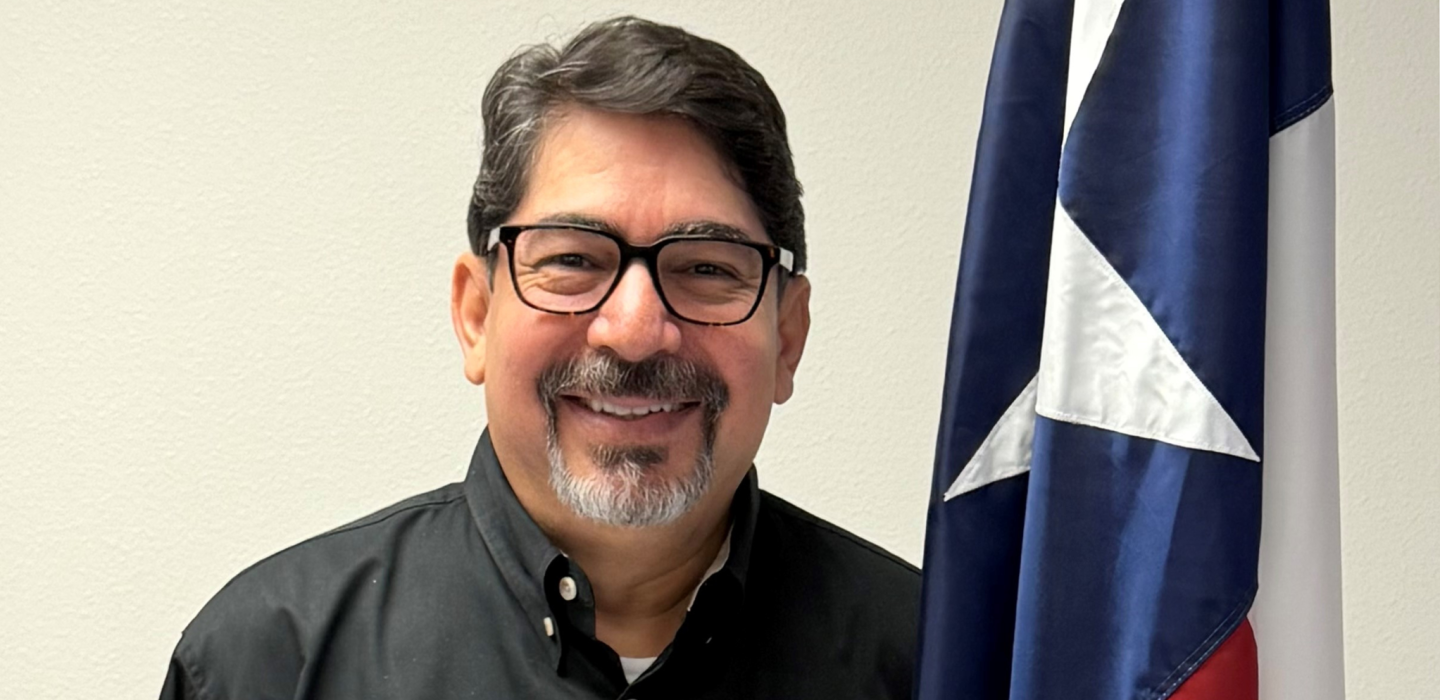
Voters in Cameron County, Texas, have historically preferred Democratic candidates. Its population is 90 percent Hispanic.
A blue island in a red state, it has not experienced distrust of its election outcomes from inside or outside the county.
Remi Garza, county elections administrator, attributes this to community values and ongoing efforts to ensure voters understand the local voting process.
Cameron County sits at the southernmost tip of Texas. Remi Garza, the county’s election administrator, has offices in Brownsville, the county seat. He’s two miles from the Mexican border, but far from the charged political atmosphere in other parts of Texas.
The county population is 90 percent Hispanic. Donald Trump won over its voters in 2024, but it’s a consistently blue island in the country’s biggest red state.
Despite this, Garza’s office hasn’t been under siege in recent years like other election offices across the country, where some public officials have received threats and been accused of manipulating outcomes. (Investigations have not turned up any evidence of widespread voter fraud anywhere in the country.)
“We’ve been very fortunate,” Garza says. “We have good support, good communication with community leaders and the general public. That isn’t true for others in the state of Texas.”
Garza’s first government job was in the county judge’s office, where he worked for 12 years. He came to it through involvement with a community organization helping local longshoremen. (Brownsville is a port town, the only deepwater port on the U.S.-Mexico border.)
At the time, the county was growing, becoming less rural and more urban. The judge’s office was dealing with the construction of a new international bridge, a new jail facility and the renovation of a historic courthouse. The latter, an imposing three-story building with an octagonal rotunda and an art-glass dome, sits catty-corner from Garza’s present workplace.
Garza liked the feeling of being involved in work that was having a positive impact, developing projects and seeing them move forward to completion. His parents had a history of community involvement; his father, a doctor, had been an elected member of the school board.
He next served as assistant county administrator, then left government for a time to consult on community development projects. He worked as a municipal judge for two small communities and was contracted to help with election recounts.
In 2015, the county’s election administrator left for a job in another county, and Garza was named interim administrator.
He hasn’t left elections since.
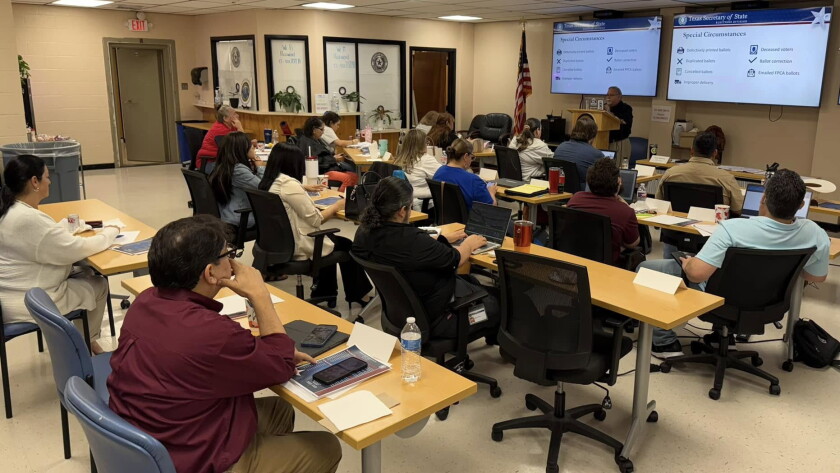
Regional training at the Cameron County elections office. Election Administrators and staff from Hidalgo, Jim Hogg, Jim Wells, Kennedy, Kleberg, Zapata, and Willacy counties attended an event held in partnership with the Texas Secretary of State.
(Cameron County Department of Elections)
Making Results the Story
While in the judge’s office, Garza helped troubleshoot elections. He worked as elections clerk.
“I always say the universe has a sense of humor,” Garza says of his career path. “For many years working in the county judge’s office, it was like, ‘If I had a chance, I would do this or I would do that,’ and then the universe decided to give me the chance to do it.”
Garza’s first priorities when the universe gave him the election administrator job were to streamline procedures and ensure voters got accurate information about results in a timely manner.
The county had dealt with concerns about voter fraud in the past. One resident pleaded guilty to voting more than once in 2012.
A Brownsville resident was among 15 “politiqueras” — campaigners hired by locals to help in Latino communities — charged with assisting legitimate voters in casting mail ballots, a violation of Texas law. A 2012 justice of the peace candidate claimed he had lost because of illegal mail-in votes, but the case was thrown out by a judge.
Even with these controversies, the election office itself remained behind the scenes. Voter focus was on candidates and results.
“When I started, one of my driving philosophies was that the office was not going to be the story the day after the election,” Garza says. “We’ve been successful with that goal.”
Cameron County is one of the largest in the state, with more than 200,000 registered voters. “We do everything we can to make sure the election experience is consistent from election to election,” Garza says. “We’ve been fortunate that there have not been any circumstances that bring the results into serious question.”
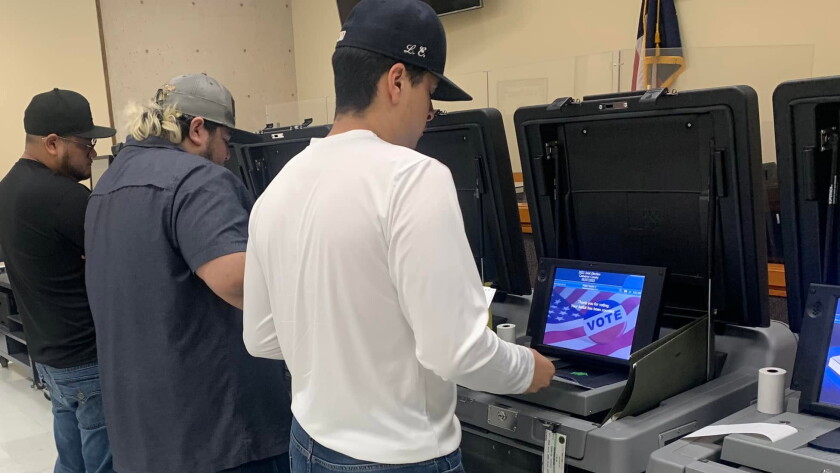
Residents participate in pre-election logic and accuracy testing to verify that election equipment will accurately mark and count votes.
(Cameron County Office of Elections)
‘Stop the Steal’ and Pez Dispensers
Unlike their counterparts in some other jurisdictions, Garza and his staff have not received threats. “I’ve received some suspicious packages that have been dealt with without consequence or concern,” he says. “It was not disruptive to the process.”
In the end, no package contained anything menacing. They tended to be “weird objects” such as action figures or Pez dispensers, Garza says. The closest anything came to being alarming was when a beeper was accidentally included in a box of materials his office was expecting.
Election denial has been in the air in Texas, even if Garza’s office hasn’t felt the worst of it. State Attorney General Ken Paxton was a vocal member of the “Stop the Steal” movement that sprung up after Donald Trump falsely claimed the 2020 presidential election had been stolen from him.
Garza did see a sharp increase in document requests, a national trend adding to election office workload. (One Colorado clerk compared it to a “denial-of-service attack on local government.”) They often asked for things that did not apply to the Texas election system or equipment used in the state.
“We brought in temporary help to compile all documents and make the necessary copies and redactions,” Garza says. “On the positive side, the requested information was very similar from requester to requester; once we had the data, we were just sending it out after the first round.”
The volume of such requests has tapered off in recent years. There’s an open door policy at the election office, including for demonstrations of voting processes, Garza says. Presentations at local events and meetings help Garza and his staff stay ahead of emerging questions or concerns.
Consistency and Trust
Cameron isn’t the biggest county in Texas, but it stands out in other ways.
Its first inhabitants arrived 10,000 years ago; it has been a crossroads for trade and commerce with Mexico for centuries. The county officially became part of the United States in 1848 through the treaty that ended the Mexican-American War — a war that started in the county when U.S. troops were ambushed by Mexican cavalry.
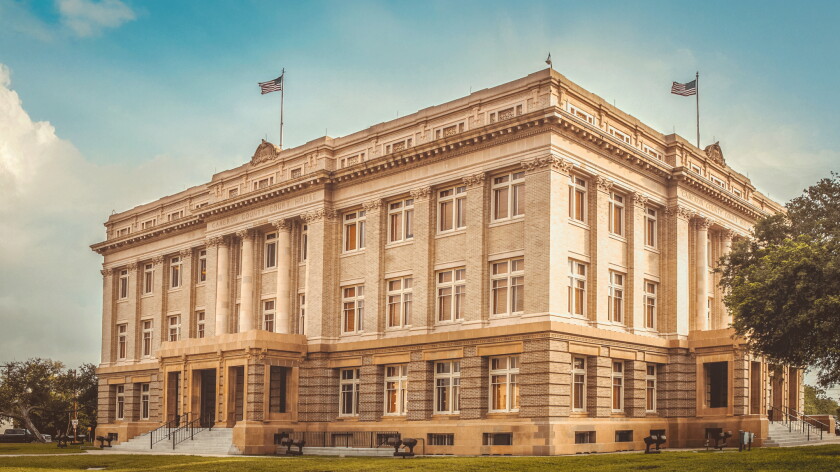
Cameron County courthouse. Garza worked for the judge early in his career, and helped with renovation of the historic building.
(Cameron County)
Garza, a past president of the Texas Association of Election Officials (and a current vice president), is well aware that the relative calm around elections in his county is not the norm everywhere in his state. “People seem to understand what we’re doing in the office and why we’re doing it,” he says.
He speaks about elections regularly at public events and opens his office for public testing of election machines and demonstrations of election processes. He employs an outreach coordinator that works with community groups and county political parties. His office is active on Facebook, keeping residents updated on election dates and polling sites.
In December 2025, the Texas Secretary of State claimed that nearly 3,000 noncitizens in the state had been registered to vote. (Similar concerns had been raised in 2019.)
The state flagged 68 potential noncitizen registrants in Cameron County, a scant 0.03 percent of all registered voters. In a conversation with a local news outlet, Garza outlined the verification process that takes place every month in his office. Most often, it turns out that a clerical error is to blame, he said.
The state required Garza to send a notice to every name on his list, giving them 30 days to provide proof of citizenship to the county or lose the right to vote. He told the Texas Tribune he’d talked to someone whose family member was in fact a citizen and had the requested documents but didn’t want to enter a county building.
“They were afraid that there were going to be federal officers that would approach them while they were trying to resolve this,” he told the outlet.
Elections Are Local
It’s important for voters to understand that elections are local, Garza says. Information about elections that’s coming from the outside doesn’t necessarily transfer, even from county to county.
“I received a phone call from an individual who was concerned that the screens were changing the parties or candidate selections in Cameron County,” Garza says. “I had to remind them that we don’t use touch screens — we use paper ballots, so it is not possible for my machines be miscalibrated.”
Local processes may vary, but not the commitment of local officials. “Our profession has a lot of dedicated individuals whose only mission is to make sure things are done correctly,” Garza says.
“If elections are in danger at any point, it’s always from an outside source,” Garza says. “I don’t think that the strains the process is feeling right now are to the point of danger.”