
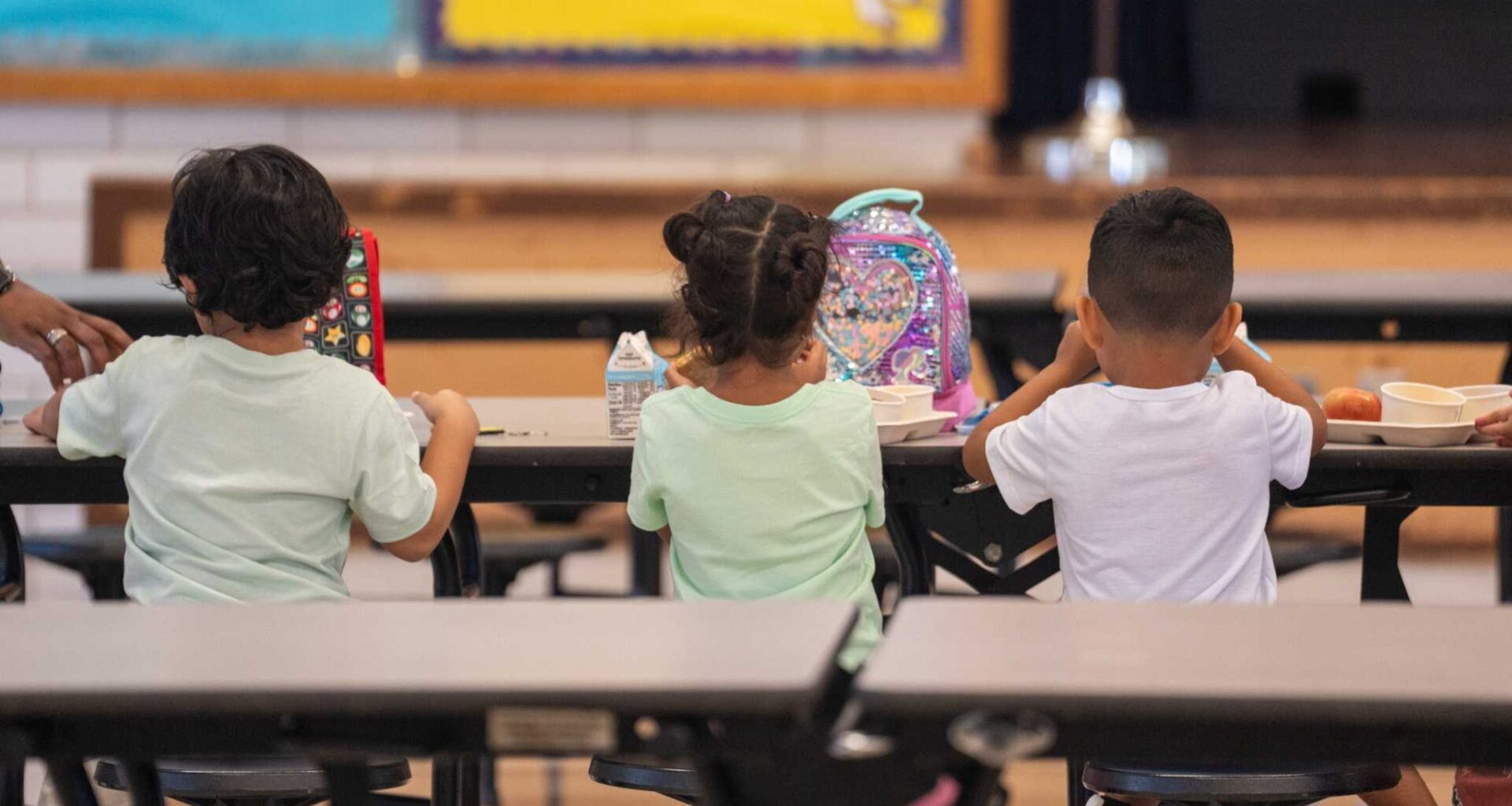
Children eat lunch in the cafeteria at Andrews Elementary School Tuesday, Aug. 20, 2024.
Mikala Compton/American-Statesman
Every year, thousands of Texas children are fed in local public schools.

Research shows that students need healthy, nutritious meals to stay focused and perform their best at school.
Article continues below this ad
For many low-income students, school remains a reliable way to get those important meals. However, during the summer, schools and other community sites provide meals to children who need nutritional support.
Why provide meals to students during the summer?
More than a fifth of Texas children under 18 live in households considered food insecure, which means they cannot access enough food because of financial or other resource constraints, according to Feeding America, a nationwide network of food banks.
About 16.4% of Travis County children are considered food insecure.
Article continues below this ad
For many families, schools provide access to breakfast, lunch and sometimes healthy snacks during the school year.
How big is the need?
In the 2025-26 school year, 2.4 million — or 44% — of Texas’ 5.5 million students qualified for free lunch.
Article continues below this ad
Public schools served 822 million meals and snacks for free that year.
Children qualify for free and reduced-priced lunches if their family’s income is between 130% and 185% of the federal poverty line. A family of four would need to make less than $42,900 to qualify for free lunches and $61,050 or less to qualify for reduced-price lunches.
What are lawmakers doing?
In 2023, Texas lawmakers directed $6.6 million to cover costs so students eligible for reduced-price breakfast could eat for free. Another law in 2025 directed $19.8 million to cover the cost of reduced-price lunches for children.
Article continues below this ad
This means all children who qualify for free or reduced-price meals can eat at no charge.
Where does the rest of the money come from?
While Texas lawmakers agreed to fund some costs to feed low-income children, the vast majority of the funding comes from the federal government under the National School Lunch Program. This program also funds meals over the summer for students.
The federal government pays a maximum of $4.77 per free lunch and $4.37 per reduced-price lunch. States receive about half those amounts for breakfast.
Article continues below this ad
Where can children get free meals over the summer?
Schools are among a handful of sites, like community centers and libraries, that serve free meals to qualifying children.
Several Austin ISD schools serve as sites for children to access free meals between specified times, and families can find other locations through the Texas Department of Agriculture website.
While some sites require children to eat on-site, others allow families to take meals to go.
Article continues below this ad
The Central Texas Food Bank also has locations throughout Central Texas where children can eat or pick up meals during the summer.
Have a question about schools? Submit it below, and one of our education reporters will get back to you with answers.