
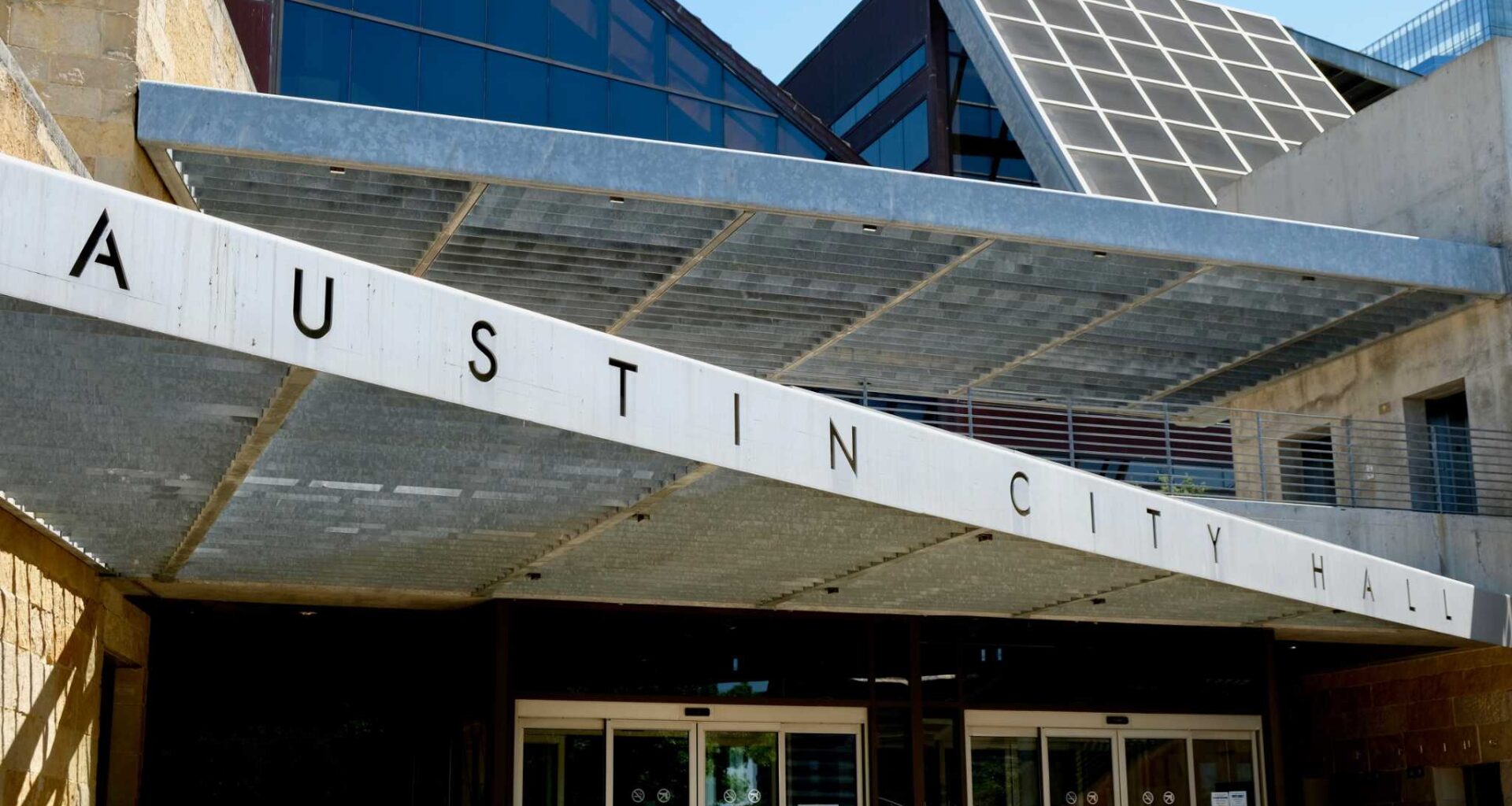
Austin City Hall. File photo/American-Statesman
File photo/American-Statesman
Roughly 170 property owners near Bee Caves Armory say Austin wrongly pulled their land back under the city’s extraterritorial jurisdiction after previously confirming it had been released.

Now they’re asking a federal judge to stop the city from enforcing that decision.
Article continues below this ad
A lawsuit filed June 5 by Property Owners Withstanding ETJ Retractions and the Schoenstatt Movement of Austin challenges Austin’s March decision to void previously approved releases from the city’s extraterritorial jurisdiction, or ETJ — the unincorporated area outside city limits where Austin can still regulate some development and land use.
The plaintiffs argue the city had no legal authority to reverse releases it had already approved, in some cases months or years earlier, and did so without notice, a hearing or an opportunity to appeal.
“We relied on the city’s word that we were out of its jurisdiction,” said Marcela Pinto, president of Schoenstatt’s board. “A letter sent years later calling that release ‘void’ threatens everything we’ve been building toward.”
The city confirmed to the American-Statesman that it sent about 170 letters telling owners their land was “not eligible for release.” Jenny LaCoste-Caputo, Austin’s deputy chief communications director, said the city filed its court response June 24.
Article continues below this ad
Why are the ETJ releases being challenged?
The dispute centers on Senate Bill 2038, a 2023 state law that allows qualifying property owners to leave a city’s ETJ.
The law excludes certain properties located within five miles of a military base. Austin contends Bee Caves Armory — located in far western Travis County — qualifies for that exemption “because it is owned by the federal government and is the site of an active training program,” LaCoste-Caputo said.
Article continues below this ad
Their lawsuit argues Bee Caves Armory is operated by the Texas Army National Guard on federally owned land leased to the state and does not meet the Legislature’s definition of a military base under the law because the U.S. Department of Defense cannot independently close or realign it.
The lawsuit names the city of Austin, City Manager T.C. Broadnax and Development Services Director Keith Mars as defendants.
Why did Austin reverse course?
According to the lawsuit, Austin reviewed property owners’ petitions in late 2023 and 2024 and issued written confirmations that their properties qualified for release from the ETJ.
Article continues below this ad
On March 13, however, the city sent letters stating those approvals “were issued in error and are void and of no force or effect” because the properties are within five miles of Bee Caves Armory, according to the complaint.
LaCoste-Caputo said the issue surfaced after area residents raised safety concerns about a billboard under construction on property that had been released from the ETJ.
While those complaints were pending, residents argued the nearby armory meant the property should never have qualified for release. The city investigated and concluded the complaints were valid.
“The City investigated these complaints and determined the complaints were valid as the Bee Caves Armory qualified as a military base under SB 2038,” LaCoste-Caputo said.
Article continues below this ad
Property owners say projects have stalled
The plaintiffs say Austin’s reversal has disrupted development plans, delayed property sales and reduced land values.
The lawsuit highlights the Schoenstatt Movement of Austin, a Catholic nonprofit that says it obtained ETJ release approval in August 2024 after petitioning the city the previous month. The organization says it then invested in design work and fundraising to expand facilities for Mass, retreats and religious gatherings before receiving the March letter reversing the decision.
The complaint also says projects involving St. Michael’s Catholic Preparatory School and other nearby property owners have been affected.
Article continues below this ad
Austin declined to address those specific claims, saying its court filing outlines the city’s position.
What happens now
LaCoste-Caputo said Austin has issued one notice of violation since sending the March letters but has taken no additional enforcement action.
The city also said it will honor development work already underway through Travis County before March 16. Property owners with projects that had already begun have been asked to submit documentation for review, while any new development after March 16 must go through the city’s approval process.
Article continues below this ad
Austin acknowledged there is no administrative appeal process for affected property owners.
LaCoste-Caputo said owners with questions were directed to contact the city by email but added that “under SB 2038, there is no available appeal process for this decision.”
The lawsuit asks the court to declare the original ETJ releases valid, rule that Austin’s reversal has no legal effect and prohibit the city from enforcing ETJ regulations against the affected properties. It also seeks attorney fees and $1 in nominal damages for Schoenstatt.
Article continues below this ad
“Once state law releases a property from the ETJ, the city has no authority to regulate it — and none to take it back,” said plaintiffs’ attorney Bill Cobb. “Austin granted itself a power the Legislature withheld.”
LaCoste-Caputo said City Council has been briefed on the litigation. She added the city is willing to participate in alternative dispute resolution but maintains “the properties in question are ineligible for release under the governing law.”