
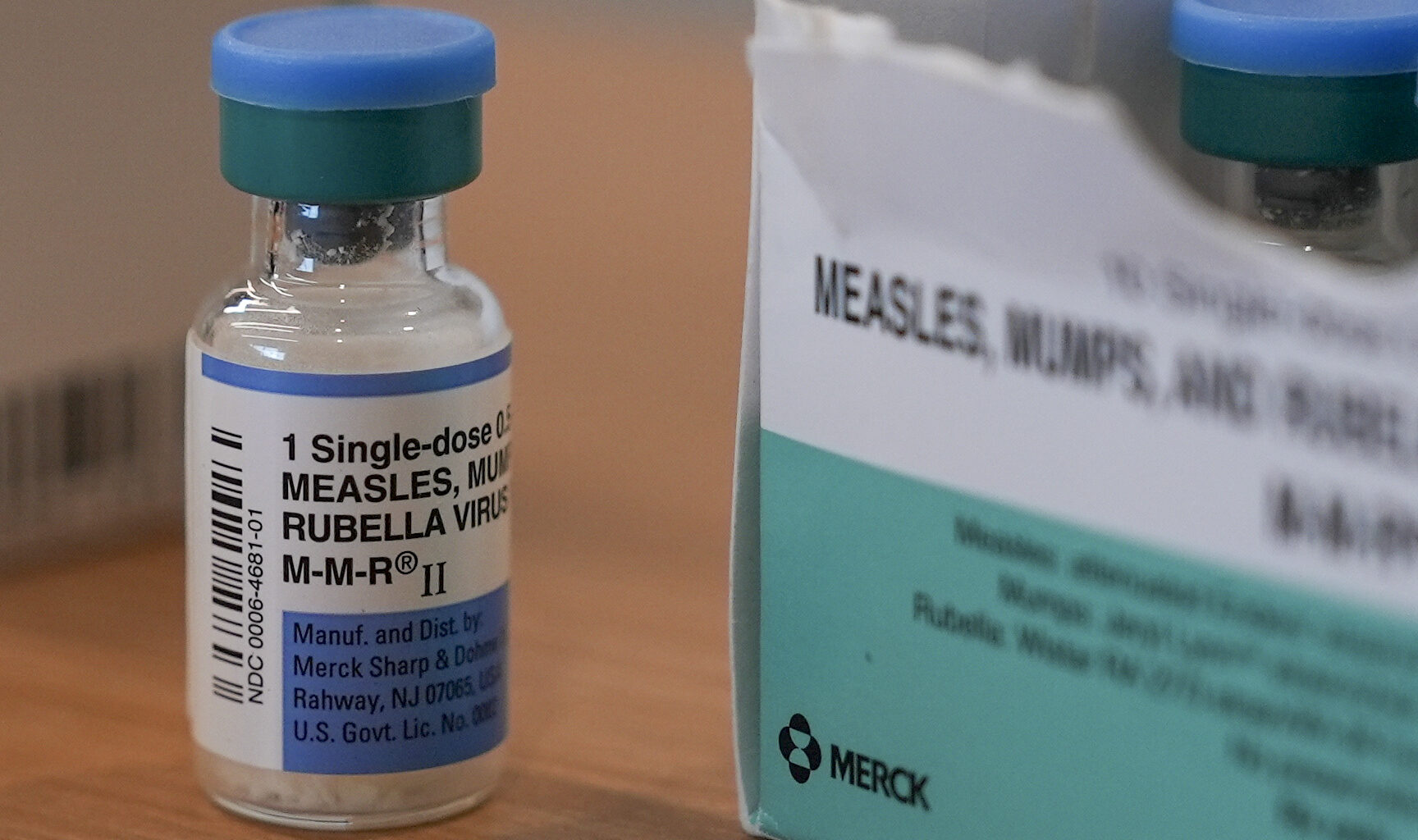
Connecticut health officials reported the state’s second case of measles this year.
The state Department of Public Health said the second case was in a vaccinated adult from Hartford County. Health officials conducted testing over the weekend and noted the “test yielded a weak positive result.”
DPH said the second Connecticut resident to have a confirmed case had been exposed to the other adult with measles about two weeks ago and had been monitoring themselves for symptoms. Their symptoms included fever, cough and a rash.
“While the MMR vaccine is highly effective and is the best way to protect yourself, your family, and your community, infections can still occur, especially following prolonged exposure,” DPH said.
Health Commissioner Manisha Juthani said that since this individual was vaccinated, “their symptoms are milder and their test result is a low-level positive meaning that they are shedding a small amount of virus.”
“Two doses of the MMR vaccine are about 97 percent effective at preventing illness, but if you have been in close contact with someone with measles, you could increase your chance of becoming infected,” Juthani continued. “That is why vaccination is still our best protection tool, both for the person exposed and to reduce the chance of spreading infection to anyone else.”
Measles is a highly contagious disease that can spread quickly through the air when an infected person coughs or sneezes, according to DPH. The disease can be dangerous, especially for children under the age of 5.
Unvaccinated individuals have a high chance of contracting the virus if they are exposed — some nine out of 10 unvaccinated individuals who encounter an infected person will become infected, according to the U.S. Centers for Disease Control and Prevention. About one in five unvaccinated people in the United States who get measles end up being hospitalized, the DPH said.
The CDC’s website states that measles was declared eliminated in the United States in 2000, meaning the disease hadn’t continuously spread for more than 12 months.
And when a community’s vaccine coverage exceeds 95%, it creates an indirect barrier that prevents highly infectious diseases, like measles, from spreading, known as “herd immunity,” and helps shield people who can’t be vaccinated or immunization status is unknown. Yet vaccination rates for all diseases, including measles, have declined over the years nationwide, creating holes in herd immunity and raising concerns, said Dr. Scott Roberts, an infectious disease specialist at Yale New Haven Health and Yale New Haven Hospital, earlier this year.
So far this year, there have been 2,134 cases of measles reported nationwide — just 150 fewer cases than all of those reported in 2025.