

TRAVIS COUNTY, Texas — A proposed entertainment, hotel and residential resort along a stretch of Highway 71 could bring a major new development to the area, but local officials and environmental advocates say they are still looking for answers about its long-term impact.
Plans for the first-of-its-kind project call for a hotel, private residences, an amphitheater, recording studios and other entertainment amenities across 71 acres.
As the project moves through the approval process, Travis County Commissioner Ann Howard of Precinct 3 said officials want to ensure development is done responsibly.
“We need to be smart about what we’re building, where we’re building it, how we’re building it,” Howard said.
Howard said she respects property rights but believes it is part of her role to scrutinize what is proposed. “I respect people’s property rights. But I think it’s my job to sort of question, you know, do we need that?” she said.
A review of publicly available records found no estimated public costs, tax incentive agreements or tax break requests have been filed for the project so far. A spokesperson for White Rocks Residences says the measured impact on the community is that “By preserving 70% of our site as open space and integrating a $10-per-ticket philanthropic fund, we can ensure that our growth directly fuels the region’s environmental preservation and creative culture.”
Local officials said they will be watching closely as the development moves through the approval process.
In a statement, White Rocks Residences said it chose the area because “it’s the unique intersection of the ‘Live Music Capital of the World’ and the expansive beauty of the Hill Country.”

Plans for the first-of-its-kind project call for a hotel, private residences, an amphitheater, recording studios and other entertainment amenities across 71 acres. (Photo: White Rocks)
Opponents said their biggest concern is the project’s environmental impact, including wastewater and stormwater.
“We’re just really concerned about impacts from wastewater, stormwater, water demand, noise pollution, air pollution,” said Victoria Rose, a staff attorney for the Save Our Springs Alliance.
Save Our Springs pointed to a wastewater permit first filed in 2024. The application proposes disposing of up to 120,000 gallons of treated wastewater per day.
Rose said the concern is how wastewater would be handled on the site. “So the concern there is that the wastewater will be irrigated on these disposal fields and then make its way down the steep slopes and through the thin soils into the creeks,” she said.
Rose added that the damage that the wastewater could do to the surrounding Barton Creek and preserve is that it could “spur algae growth once they get into the creek.”
White Rocks responded that the project is designed to achieve 100 percent water reuse through a closed-loop system that it says results in zero discharge.
“Sustainability was our starting point. White Rocks is the only large-scale project in the region achieving 100% water reuse. Our closed-loop system ensures zero discharge into municipal systems, and by strictly limiting our building footprint and keeping vehicular access away from protected natural areas, we’ve prioritized the health of the Preserve above all else.”
Bee Cave Mayor Kara King said the city takes its location along Barton Creek seriously. King also raised concerns about whether existing infrastructure can support a development of this size, particularly traffic. “We cannot hold that number of cars and that number of traffic on Highway 71 and in our roads,” she said.
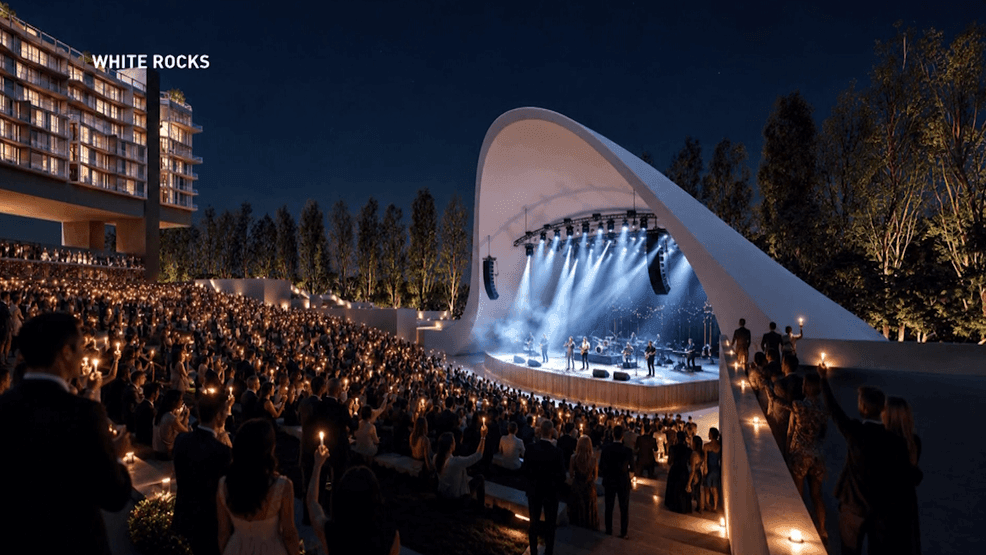
Plans for the first-of-its-kind project call for a hotel, private residences, an amphitheater, recording studios and other entertainment amenities across 71 acres. (Photo: White Rocks)
King says the city council passed a resolution over this issue last year, “and we thought it was done. The project had been denied. We thought it was going to go away.”
In part of his statement, U-Music President of Hospitality and Lifestyle Jordi Solé said the project is designed to give back to the city that inspired it. “Beyond delivering an exceptional experience for residents and guests, it will create new opportunities for artists, support Austin’s vibrant music community, and foster cultural connections with a lasting impact,” he said.”
Right now, Howard says a developer has not applied for any development permits, but that when it’s all said and done, “whatever gets developed, if anything, is the right thing,” she said.
The updated wastewater plan is expected to go before the Texas Commission on Environmental Quality in mid-July. Developers hope to break ground next year, while questions about the project’s environmental impacts and any future public infrastructure costs remain under review.