
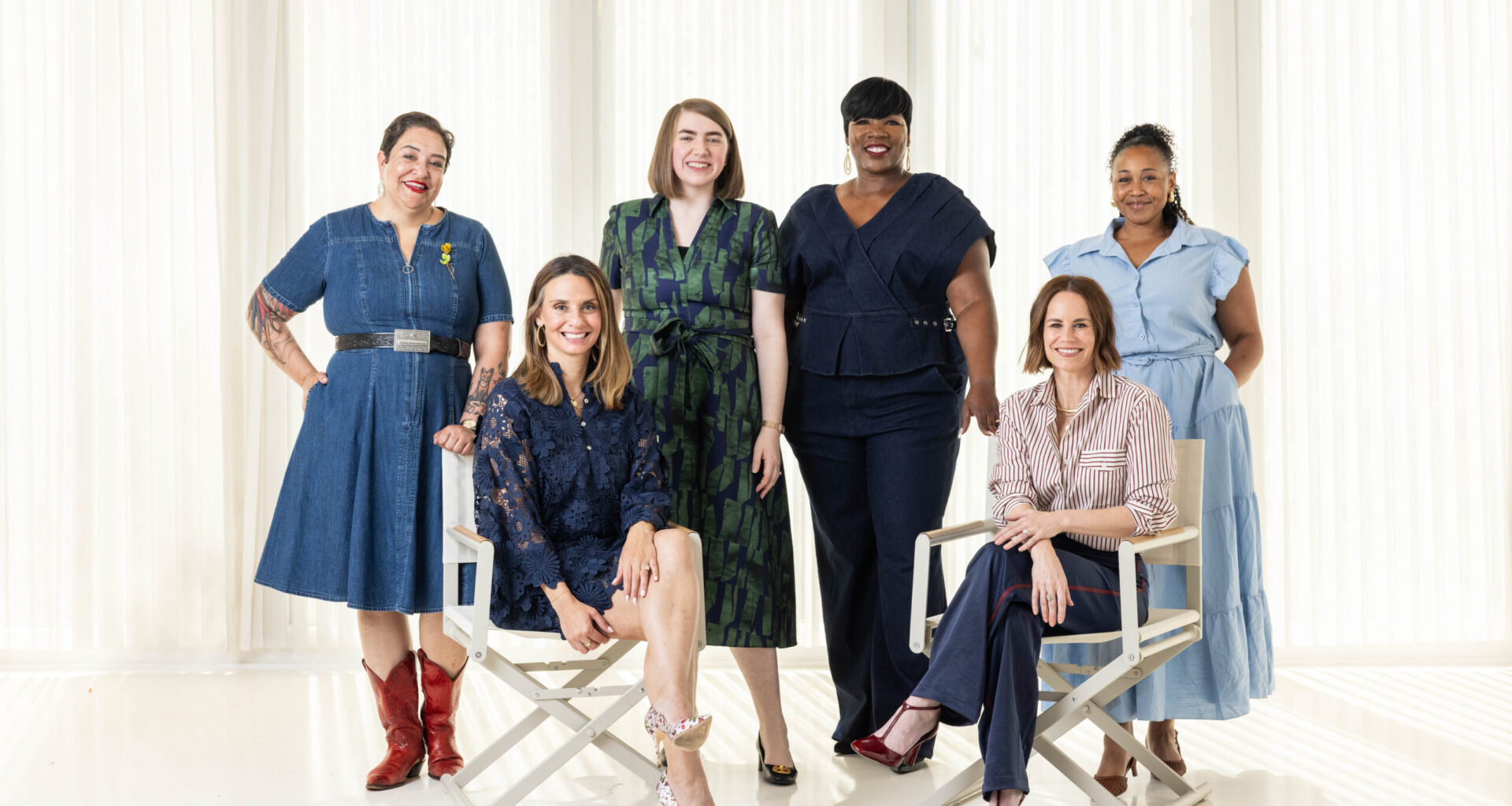
There are over a million public charities in the U.S. (more than half of which are run by women) and about 147,546 in Texas, according to the data website Candid. The need for services is increasing, per The Center for Effective Philanthropy’s State of Nonprofits 2026 report, while funding is uncertain, and burnout among nonprofit CEOs is on the rise.
So why keep working in the nonprofit sector? Because these leaders are passionate about the work they do. Look no further than East Dallas to find women who know the challenges and are moving forward anyways. And if you find a nonprofit that speaks to you, donating money or volunteering can help that organization continue to achieve its mission.
Modeling sobriety
Everything changed when Heather Emmanuel Ormand gave up alcohol in 2011.
On the outside, she was fine. The Arkansas native graduated from the University of Richmond, had her job in accounting and lived in New York for the first part of her career. She eventually moved to Dallas in 2009 to be closer to family.
But on the inside, Ormand was miserable and suicidal. Her drinking habits compounded her previously diagnosed depression and anxiety. She called herself “undateable” at the time and says she sabotaged her personal relationships. Her therapist’s suggestion and her desire to have children someday motivated her to stop drinking.
Now, she’s able to raise her children in a sober household with her husband and help women also find recovery as the CEO of the nonprofit Nexus Family Recovery Center in Far East Dallas.
Giving up alcohol prompted a career change.
“(I) really wanted to do something more mission focused, honestly, and just felt like I’d been given a second chance and really wanted to give back in a meaningful way,” she says. “I was never passionate about accounting.”
Having previously joined the leadership team at the Dallas Children’s Advocacy Center, Ormand took the chance to work at Nexus in 2020 — despite COVID-19 pandemic madness at the time and having two young children at home.
“My husband was extremely supportive,” she says. “He was going to have to figure out the heavy lifting with childcare. I’ll never forget; he just said, ‘There’s never going to be an ideal time, and this is what you worked for, and this is happening now, but we’ll figure it out as a family,’ and that’s what we did.”
During the pandemic, it was important to keep Nexus open and be ready to help women who were ready to accept it. Nexus Family Recovery Center provides specialized substance use disorder treatment, as well as therapy services to women, including those who are pregnant or have children, who can accompany them into the treatment center and also receive care.
Unlike the resources Ormand had when seeking recovery, 30% of women who turn to Nexus for treatment are unhoused, and 90% make less than $25,000 a year. And yet, Ormand is amazed at how they still put in the work for a better life.
“I get to lead an organization helping other women, and that means the world to me,” Ormand says. “It’s literally my dream job. I get to look them in the eye and say, ‘You can do this,’ and I’ve learned so much more just about resilience and hope and the tremendous effort that these moms put in every single day to help their kids, and it’s a miracle. In a time when there’s not a lot of hope in other areas of the world, I get to see people change every day.”
Surviving adversity
“Expect to fight. Expect to win.”
This phrase is printed on a throw pillow in Interfaith Family Services CEO Kimberly Williams’ office. And she knows what it’s like to fight and win.
“After about year two or three at Interfaith, I was starting to get a little exhausted of all the resistance that I was encountering,” the Skyline High School and University of North Texas alumna says. “One day during my devotion, it just became really clear that I’m a change agent, so resistance is a natural component of my life and existence, and so instead of becoming like bitter or upset about the resistance that comes, expect it, but don’t just expect it, expect to win at the end because every change or transition that I’ve taken organizations through, it turns out well.”
Interfaith Family Services, based near Lowest Greenville, helps families in poverty with housing, rent and utilities, job training and placement, and childcare. But 15 years ago when Williams stepped into her role, the organization was facing financial challenges and only had a 40% success rate. Williams says she focused on changing the service model from reactionary help in the short-term to a hand up for long-term stability.
“We went from kind of an intervention of like, ‘You’re homeless; let’s get you housing and get you into, what we primarily did then was transition into Section 8 or public housing,’ to change the model to, ‘You’re homeless; let’s see if we can provide training, financial coaching and educational support that will enable you to be not only stable but independent and transition into private housing,’” Williams says.
This is because public housing puts limits on the amount of assets that a person can have, which Williams remembers from her early career work. She says this can demotivate people from trying to save money and accepting promotions and pay raises to work themselves out of poverty.
Despite her reasoning, not everyone saw her vision.
“A lot of people just didn’t think it was possible,” she says. “They’d never done it, never seen it, and so people were telling me that I was running the organization like a corporation and not a nonprofit, that we were losing the ministry edge. I’m a preacher’s kid, a licensed minister myself, but none of that mattered because I was focusing on outcomes and data and metrics.”
Within her first three years, about a third of Interfaith’s staff tried to get Williams fired for her approach, but the board of directors sided with her. Since then, Interfaith’s success rate doubled to 80%. Moreover, the rate for self-sufficiency after one year is 91%, and more than 80% of children within the nonprofit’s care “advance at least one level in reading and math every year,” Williams says. Seeing families achieve what they thought was impossible is her favorite part of her job.
Williams’ upbringing in the church (New Greater Memorial Family Church, currently in DeSoto) is what shaped her mindset. She quoted James 2:26 — “Faith without works is dead” — while recalling her distaste for those who would talk the talk but not walk the walk in their Christianity.
“It’s not enough just to talk about helping people and tell good stories and get emotional,” she says. “I just saw too much pain in the world and having that same formula of, ‘Let’s get emotional, let’s pat ourselves on the back, let’s feel like we did something,’ I was like, ‘Nothing is ever going to get done like this.’ Seeing that as a kid really motivated me to do work that matters and work you can measure.”
Working together
The people Old East Dallas neighbor Januari Fox works with at Prism Health North Texas give her hope that everything is going to be OK.
Prism started out as an HIV prevention and treatment clinic in 1986 but now offers primary care, pediatrics and women’s health services. The nonprofit focuses on building and promoting equitable care. Fox is the policy, advocacy and community engagement director at Prism.
“The best part of my job is the people that I get to work with across the board, whether that’s here at Prism; our staff is amazing, and it takes all of us to get things done,” the Garland native says. “Our patients are incredibly resilient and active and engaged in their healthcare and in their communities, and I just am passionate about the work that I’m doing in general, and I do feel like it’s making a difference.”
Fox has always been social justice-motivated, particularly for racial justice when she was young. So in college, she pursued her undergraduate degree in political science and social sciences from the University of Houston-Downtown. After spending six years as a stay-at-home mother, she studied political social work (i.e. – “policy, advocacy, community organizing and administrative practice”) in graduate school.
Then, Fox worked in government relations for Legacy Community Health, a federally-qualified health care center in Houston, for six and a half years. After that, she was a fundraiser at her alma mater, the University of Houston Graduate College of Social Work, but she lost her job amid the COVID-19 pandemic. When she posted about needing a new one on Facebook, she received a response within a day from Prism’s Chief Administration Officer Karin Petties, who she had worked with before.
And the opportunity being offered seemed unreal to Fox — creating Prism’s government relations department. Within a month, she started her new role.
“That was almost six years ago now, and I’m really proud of the work that we have done collectively because it has been a huge team effort,” Fox says.
Engaging voters, putting out a state legislative agenda every other year, and talking with lawmakers in Austin (including about adding HIV testing to standard sexually transmitted infections panels) and Washington D.C. are all part of Fox’s department. But lately, she’s been getting involved on the city level as well, particularly regarding keeping libraries open because they offer free resources and are voting centers.
“The Oak Lawn library is close to two of our busiest clinics, and the Oak Lawn library is also, I think, the second largest early voting center in Dallas,” Fox says. “So to close that down, that becomes a voter rights issue, and that becomes a lack of access issue, and we firmly believe that all elections matter and that everybody has the right to vote, and closing that down would cause a lot of issues for a lot of people in that area.”
Among her favorite people is her boss Petties — a mentor who has helped Fox grow and can give and receive honest feedback without getting offended.
“This is why I think it’s important to have women in leadership because I think that women do see things in different ways than men, and having a woman as a mentor and a guide has been helpful to me,” Fox says.