
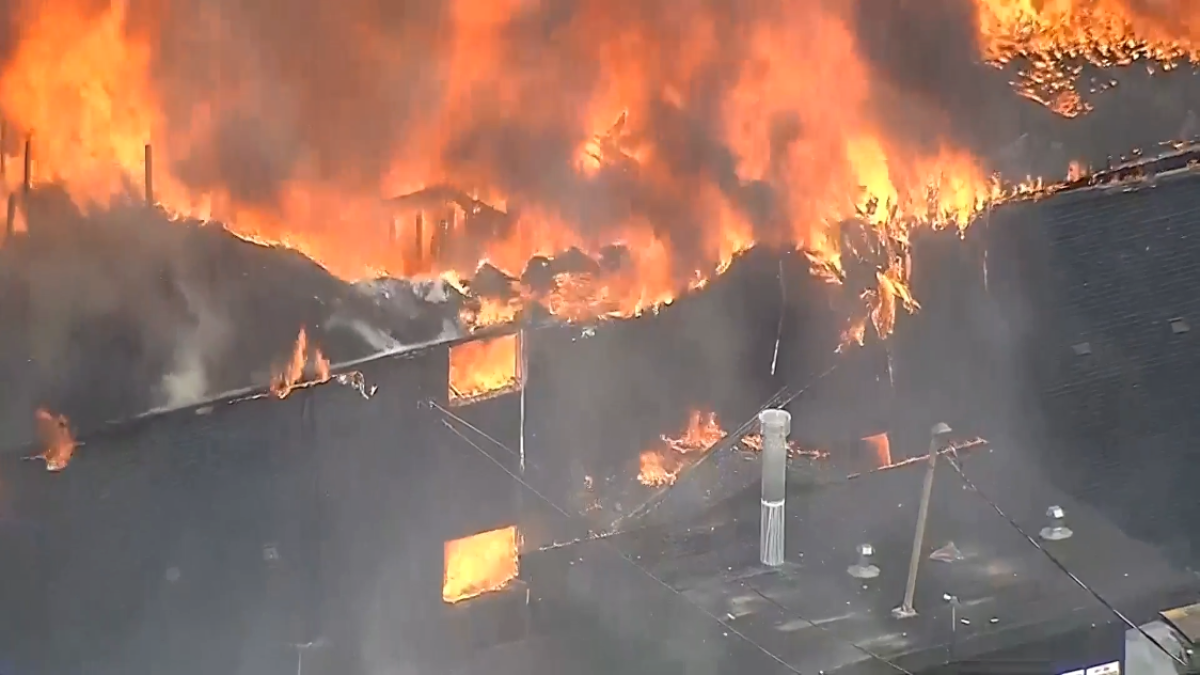
The first federal report on a punctured natural gas line that exploded and destroyed a Dallas apartment building says the gas line had not been identified and marked before the May 28 blast.
Three people were killed and five others were injured in the Oak Cliff explosion. The National Transportation Safety Board released its preliminary report Wednesday afternoon, stressing that the report is only an initial review and that the accident remains under investigation to determine the probable cause.
The evidence of the explosion’s aftermath can still be seen in Oak Cliff, where neighbor Jorge Moreno said the memories remain vivid.
“Everything was so fast. Less than five minutes, everything was already on fire. Big fire,” Moreno said.
Moreno said he still has not been able to move back into his house.
“Hopefully, we’ll come back pretty soon,” Moreno said.
According to the NTSB report, a drill rig used for soil sampling was operating near the apartment building before the explosion. The report also provided a timeline of the response.
“At 12:49 p.m., Dallas Fire-Rescue responded to a reported natural gas leak. At 12:51 p.m., Dallas Fire-Rescue notified the natural gas provider, Atmos Energy Corporation, of a cut line; Atmos arrived about 1:20 p.m., shortly after the explosion.”
The report also said the engineering company called 811 to have lines marked, which excavators are legally required to do before digging. However, the NTSB noted the gas line had not been marked.
“Although the locations of some of the assets had been marked by painting and flagging, the location of this gas line had not been identified and marked.”
Brigham McCown, a pipeline expert who is not involved in the investigation, said the preliminary report is only an early step.
“Think of a preliminary report as an initial, quick look of obvious factors,” McCown said.
McCown was running the federal agency that rolled out the 811 system in the early 2000s. He is also a former acting administrator of the Federal Pipeline and Hazardous Materials Safety Administration. McCown said investigators will still need to answer more questions.
“The question emerges, should they have been using hand tools in this area? Were they within what’s called the exclusion zone? That’s roughly a foot and a half of either side of where the line was marked,” McCown said.
Atmos said it is actively supporting the NTSB and all parties involved in their investigations as they work to determine the cause of the incident.
This story was originally reported for broadcast by NBC DFW. AI tools helped convert the story into a digital article, and an NBC DFW journalist edited it again before publication.