
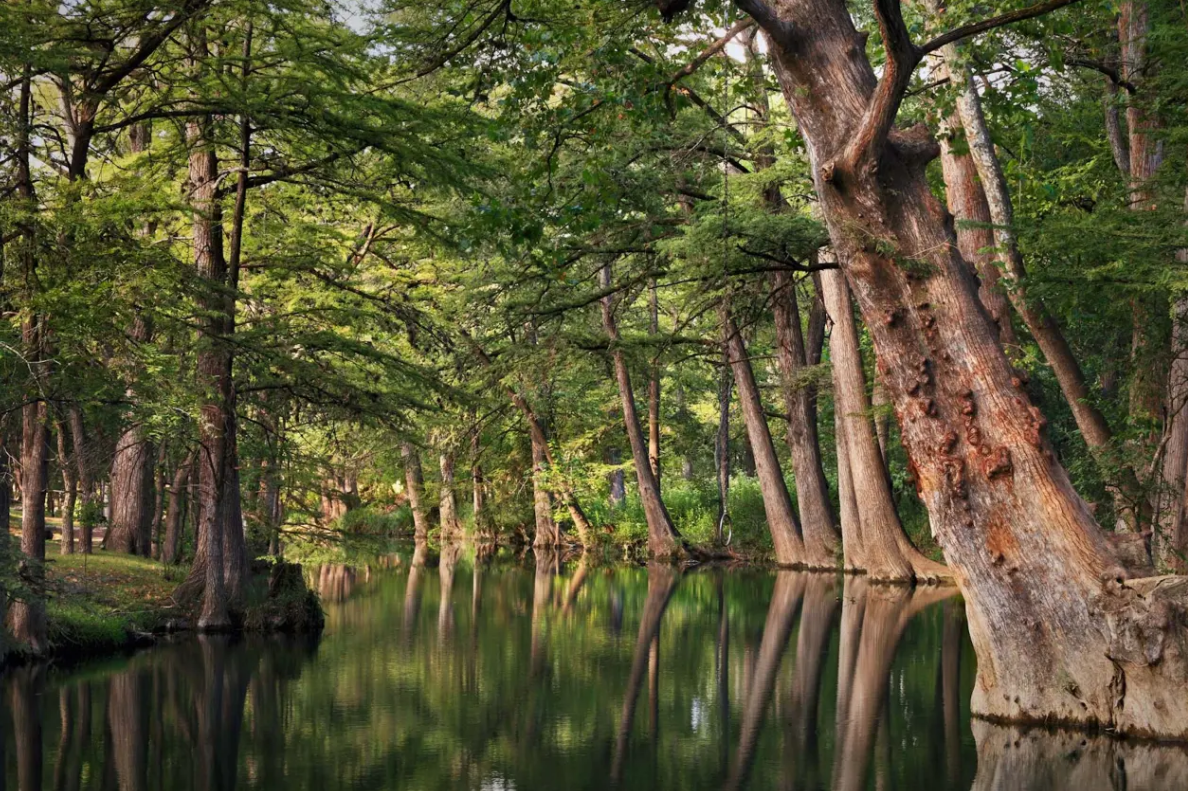
Blue Hole Regional Park, located in Hays County about 45 minutes south of Austin, has plans to kick off construction on the Blue Hole Nature Center—a $4 million endeavor, according to a recent filing with the Texas Department of Licensing and Regulation. The center is planned for 333 Blue Hole Ln. in Wimberley.
The development could bring another educational venue to the 126-acre site, known for its natural, spring-fed swimming hole. Wimberley Parks and Recreation did not respond to Chron’s request for comment by the time of publication.
While details submitted to the TDLR are subject to change, construction could start next July and last through mid-August 2028.
Project plans feature a 2,375-square-foot nature center, with two nature learning spaces, adjacent restrooms and northern and southern covered porches. A large educational courtyard is also proposed to the north of the center.
“The Center will feature interactive classrooms, nature-based exhibits, and restored prairie and wetland ecosystems,” according to the Wimberly Parks and Recreation project website.
Of the $4 million estimated price tag, $3 million in funding has been secured through Hays County’s Parks and Open Space Bond.
“It will serve as an expansion of Wimberley’s award-winning Nature Camp, reaching hundreds of local youth annually while offering year-round programs for families, schools, and organizations,” the website reads.
Wimberley’s Nature Camp is a weekly day camp with 10 available weeks, offering programming between 8:30 a.m. and 3:30 p.m. for children between ages 6 and 12, with additional counsel-in-training programs for children ages 13 to 15.
The City of Wimberley opened Blue Hole Regional Park in June 2011, but the property has more than a 100-year history as a public swimming hole for the community, according to Wimberley Parks and Recreation.
The land dates back to John R. Dobie in 1987, whose family lived and farmed the 500-acre property for more than 70 years. In the early 1920s, the family charged a fee for swimming at the Blue Hole.
In the mid 70s, private developers created the Blue Hole Recreation Club for swimming and camping. In 2001, an Austin developer proposed a 350-home residential development at the site and local leaders and community members rallied to protect the landmark.
After years of fundraising, the city purchased the land for the park in 2005 and officially opened the swimming hole to the public six years later. Today, Blue Hole Regional Park welcomes more than 60,000 visitors annually, with the busy season in September.