
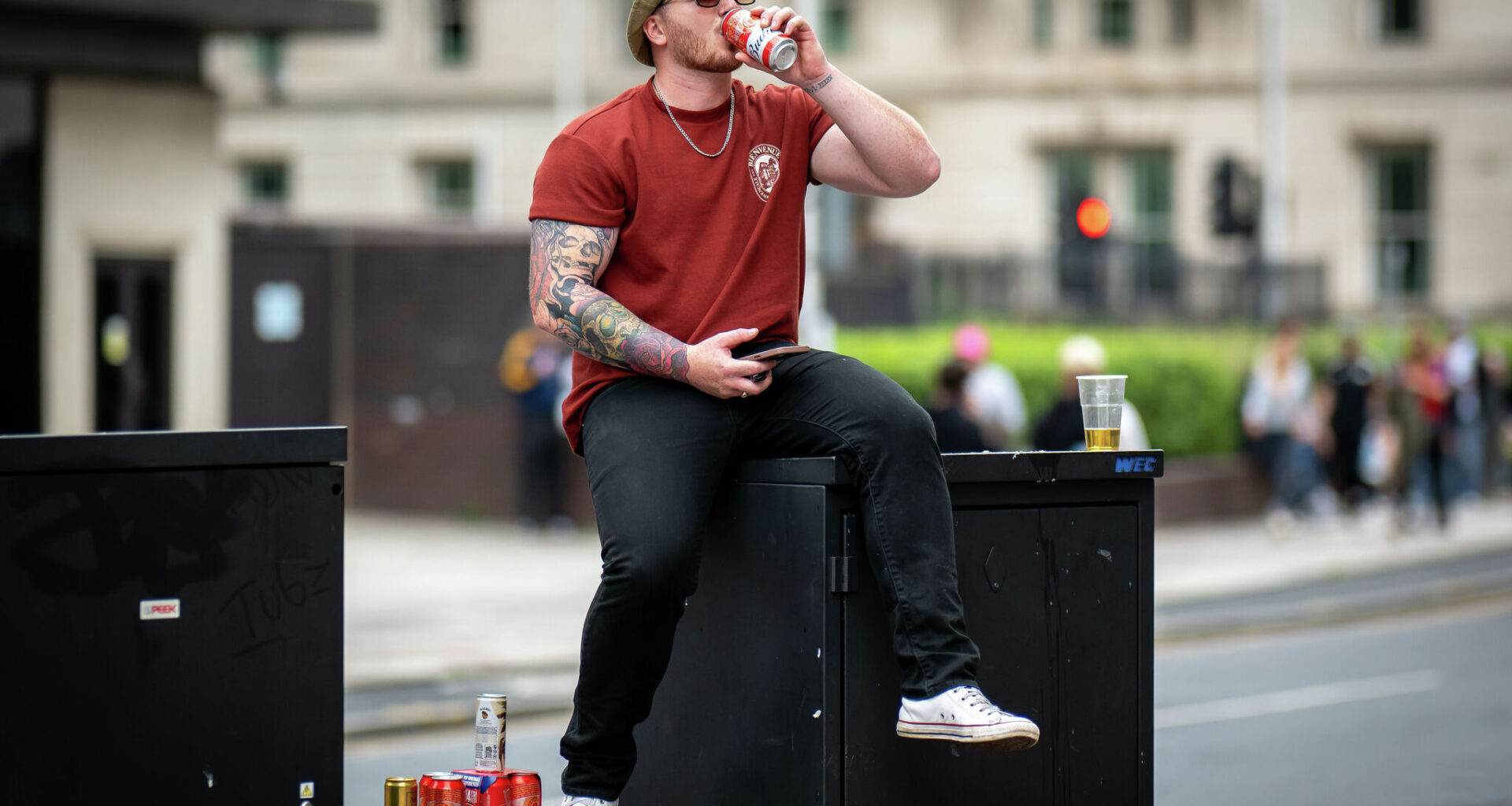
In 2020, the Austin City Council approved an ordinance that removes unequal restrictions on public alcohol consumption in historically minority neighborhoods. (Photo by Matthew Horwood/Getty Images)
Matthew Horwood/Getty Images
Can you crack open a cold beer in public in Austin? The answer depends on where you are.

Austin does not ban public drinking citywide, but the city prohibits consuming alcohol on streets, sidewalks and other public spaces in several designated areas. Texas law also prohibits possessing an open container of alcohol inside a motor vehicle on a public roadway.
Article continues below this ad
Here’s what to know about where public drinking is — and isn’t — allowed in Austin.
Can you drink beer in public in Austin?
Yes, in many parts of the city.
Austin does not prohibit public alcohol consumption citywide. However, the city bans drinking alcohol on streets, sidewalks and other public spaces within designated no-public-consumption zones.
Article continues below this ad
The Austin City Council changed the ordinance on Oct. 1, 2020, voting to remove the public drinking ban from designated areas of East Austin. The move reversed restrictions that had been in place for nearly 30 years.
Can you drink on Sixth Street in Austin?
Article continues below this ad
Sixth Street falls within one of Austin’s designated no-public-consumption areas, making it illegal to drink alcohol on public streets and sidewalks there.
Public intoxication is a separate offense.
Under Texas Penal Code § 49.02, a person commits public intoxication if they appear in a public place while intoxicated to the extent they may endanger themselves or others. Simply drinking alcohol in public is not a crime where public consumption is allowed.
People may legally consume alcohol at permitted outdoor events, festivals and in areas where public drinking is permitted.
Article continues below this ad
If you buy a drink from a Sixth Street bar, you should finish it inside the establishment or on its licensed patio before stepping onto a public sidewalk or street.
Where can you drink in public in Austin?
According to a 2020 city memorandum, Austin has six designated areas where drinking alcohol on public streets, roadways and sidewalks is prohibited.
Those zones include downtown, an area east of Interstate 35, the Drag along Guadalupe Street near the University of Texas, a corridor extending south from Lady Bird Lake toward Bouldin Creek, an area around East Riverside Drive and a neighborhood near Montopolis.
Article continues below this ad
The downtown zone encompasses much of the city’s entertainment district, including Sixth Street, making it generally illegal to consume alcohol on its public sidewalks during a typical night out.
The memorandum says residents in downtown, South Congress and the UT area supported restricting public alcohol consumption because of concerns about alcohol-related crime and violence.
When similar restrictions were enacted in a historically Black and Hispanic East Austin neighborhood, however, they prompted concerns from residents.
According to KUT, Council Member Natasha Harper-Madison, who represents much of East Austin, called the policies discriminatory.
Article continues below this ad
“This is another example of how some of these inequities can be hidden in policies and practices that most of us don’t even know exist,” she said.
Public drinking citations in Austin
Police data show the ordinance has been enforced far less frequently in recent years.
Austin police issued 571 citations for public alcohol consumption in designated no-consumption zones in 2015. By 2019, that number had fallen to six citations.
Article continues below this ad
Below is a map of citations in Austin for public alcohol consumption prior to the city changing the ordinance.
How much is the fine for public intoxication in Texas?
Public intoxication is a Class C misdemeanor under Texas law and carries a maximum fine of $500. The offense does not include mandatory jail time.
Article continues below this ad
A conviction becomes part of a person’s criminal record and may affect future employment, housing opportunities and professional licensing.