
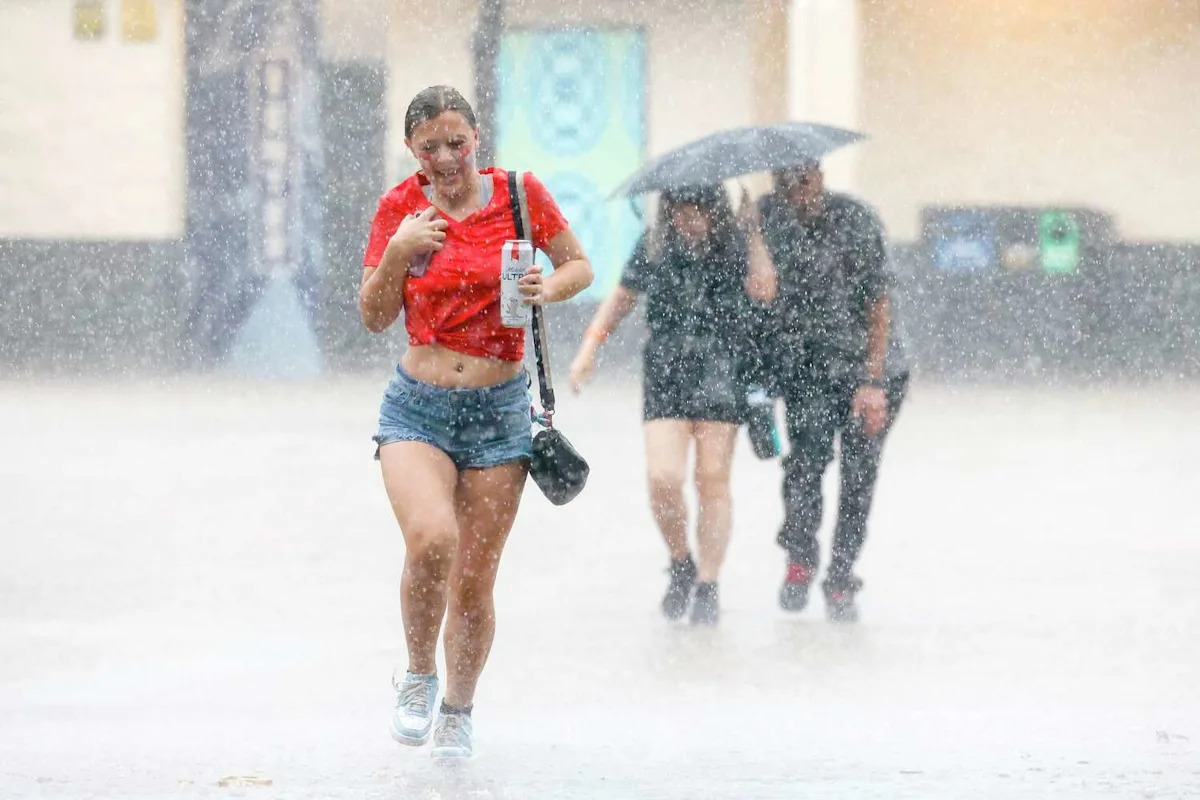
This June was an actual embodiment of the old phrase, “When it rains, it pours.”
Only eight days last month had measurable rainfall, according to the National Weather Service’s Fort Worth office. But despite that, this June was the sixth wettest since record keeping began for Dallas-Fort Worth in 1899.
After a drier start to the year, the region was trending behind on total annual rainfall, but June has shifted that pattern. Total rainfall for 2026 is at 21.25 inches, about an inch ahead of the historical average for the year’s halfway point.
These rains have continued to help alleviate drought in Texas. Nearly 90% of the state’s land was experiencing at least some level of drought in March, according to the U.S. Drought Monitor. That figure has fallen substantially with late spring and early summer rains.
As of June 23, only 36% of the state was in drought. Most of the Panhandle is still in drought, as well as some of northeast and south-central Texas.
In terms of temperature, North Texas continues to be quite average, after an abnormally warm period in February and March.
Temperatures in June continued to climb to toasty summer heights, with an average high of 92.6 degrees, according to the weather service. That monthly average was only about one degree above historic normals, a similar-sized gap to what the region experienced in May.
The Dallas-Fort Worth region has not yet hit 100 degrees, and it isn’t currently in the forecast for the first week of July. As of the start of the month, the hottest temperature observed so far this year was 98 degrees on June 29.
While the arrival of triple-digits varies from year to year, the weather service said the historical average is July 1. Last year, the first 100-degree day was noticeably behind schedule, not arriving until July 29.
Subscribe