
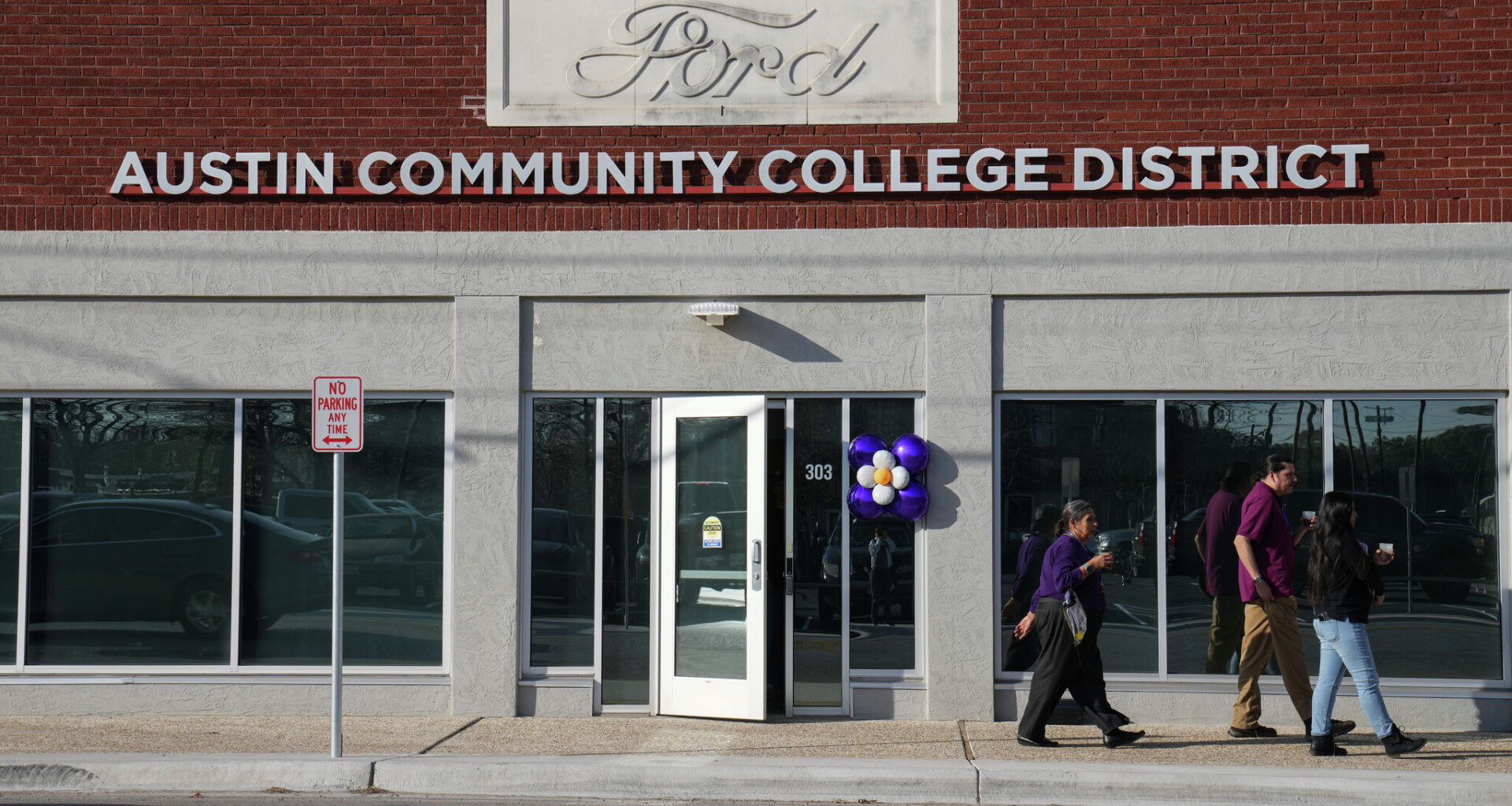
Officials with the Austin Community College District are warning students that they could lose federal aid if they unexpectedly drop classes.
Mikala Compton/Austin American-Statesman
Full-time enrollment is the quickest and most likely way for a college student to get a degree, studies show, and short-term workforce programs can help adult learners earn a better wage fast, both the Austin Community College and the Trump administration have said.

But because of changes approved in Trump’s One Big Beautiful Bill that went into effect July 1, more than 5,000 low-income ACC students with student loans could lose part of their funding if they drop classes during a semester. The change marks a major threat to these students’ economic livelihood, said Karen Serna, ACC’s director of student financial wellness and financial aid outreach.
Article continues below this ad
“The piece that we’re paying most attention to is your loan limit that will and can be adjusted based on how many credits you complete,” Serna said. “If you get a student loan for the fall semester, and then you end up dropping classes, that’s going to impact the loan amount you receive in the spring.”
For example, if a student commits to 12 credit hours but has to drop two classes — even if they take 12 credits later on — the next semester, they will only be awarded for the six credits they did complete, she said.
Serna said students, who borrow money based on how many classes they take, must be aware that their ability to complete those classes is tied to their ability to get future funds.
“We want our students to understand that before they drop a class this fall, they need to talk to us,” Serna said. “If you’re counting on that money to pay your rent or pay your car, you can get pretty quickly into a financial crisis if all of a sudden that the money that you were expecting to be there is no longer there.”
Article continues below this ad
Federal aid changes affect borrowing
The Trump administration said its new rules will add more accountability to student borrowing and boost the students’ return on their investment by incentivizing enrollment in high-demand fields. The federal government has also expanded Pell grants and federal aid for the most financially in-need students enrolled in short-term workforce programs, while setting caps on graduate student borrowing.
Serna said 5,313 students in Fall 2025 received subsidized student loans because of their low-income status. Many students use the aid to pay for non-education life expenses such as rent, car payments and childcare. ACC tuition has stayed flat for 13 years and is free for more than 10,000 students through ACC’s free tuition pilot program, Serna said.
The majority of ACC students seeking a credential — about 72% — attend class part-time because of competing work and childcare demands.
Article continues below this ad
ACC urges students to seek help before dropping classes
ACC set an ambitious goal to ensure 70% of students by 2030 successfully achieve a degree or transfer. Last year, ACC’s completion rate was 46%. As part of its plan, ACC has expanded the ways it supports students in meeting their basic needs, thereby allowing them to stay in college.
This is a time, Serna said, for the college to communicate available resources to keep students enrolled. The college offers free tutoring for students, job connections, scholarships and emergency aid.
“Everybody’s getting behind communicating to our students all the resources we have to help them stay enrolled during the semester,” Serna said.
Article continues below this ad
About 18,000 ACC students use federal financial aid. Now, every student who submits a financial aid application gets an email explaining the financial aid change, and ACC requires them to meet with an adviser to discuss the updates.
“I’m feeling confident,” Serna said. “I think this is a learning process for everyone, like for my team and my role, we are spending the majority of our day talking and communicating with students.”