
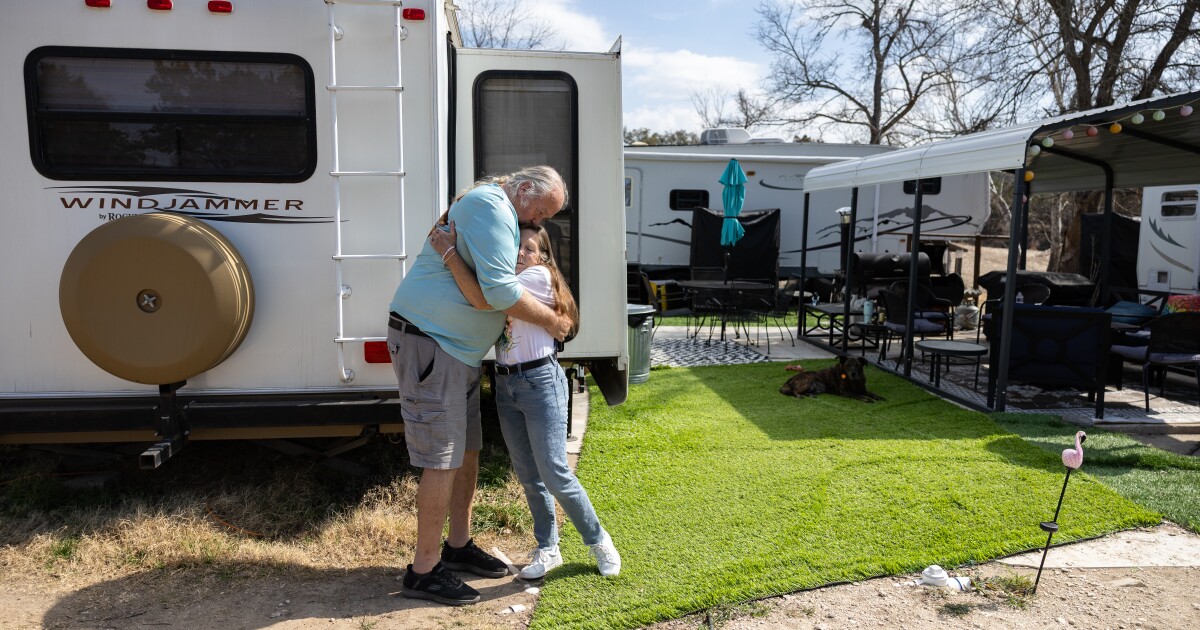
Brandy Gerstner knew her home near Big Sandy Creek in northwest Travis County needed work when she moved in 36 years ago. The double-wide trailer was infested with rattlesnakes, scorpions and tarantulas, and the grass on the half-acre property had grown taller than she was.
But Gerstner saw potential.
“The creek was beautiful, the trees were fantastic and I could see that with some TLC it could be absolutely beautiful,” she said.
Gerstner planted orchards and herb gardens and started raising livestock with a vision to eventually host farmers markets on her property. But last year, her decades of work were swept away in one night as floodwaters ravaged the neighborhood.
One year later, Gerstner is still deep in recovery mode. Despite being among the roughly 4% of homeowners in the area with flood insurance, Gerstner has struggled to secure enough funding to fully rebuild her home and farm.
“You’ve lost everything, and all these entities are wanting proof of your address, proof of what you pay for your bills, bank numbers, they want so much information,” she said. “They’re requiring a lot of paperwork that people just don’t have.”
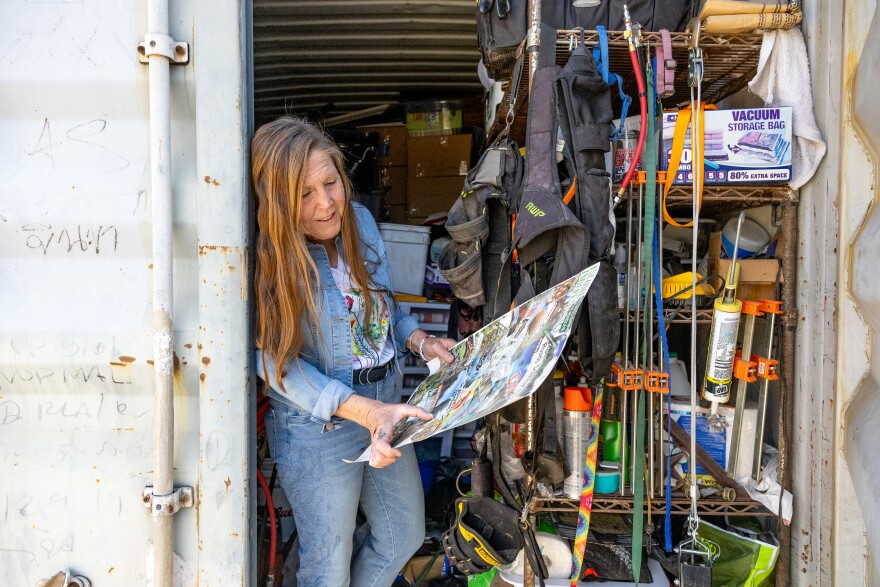
Brandy Gerstner looks at the vision board she had made before the deadly flooding happened in Sandy Creek. The storage unit has everything her family could save after their farm, Asher Acre, was completely destroyed by floodwaters.
Gerstner noticed dozens of her neighbors enduring the same struggle as insurance companies and governmental organizations respond at the pace of “bureaucracy” instead of “the pace of emergency.”
She hopes the Travis County Recovery Alliance, a new program she co-founded with her daughter, will help people return to normalcy faster.
The TCRA will connect people affected by disasters with long-term aid, like housing and financial assistance, through nonprofits or charity groups when insurance companies and governmental organizations fall short. The group is partnered with 17 organizations, including Austin Habitat for Humanity, the Central Texas Food Bank and the American Red Cross.
“The reality is that long-term recovery can take five to 10 years or longer,” said Janis Bookout, TCRA’s executive director. “It’s a really painful truth, and a lot of that has to do with all of the eligibility requirements that need to be met.”
Bookout said recovery for many families in Sandy Creek has been delayed because people lost important paperwork, don’t have flood insurance or need a new permit to rebuild their homes.
“There’s a lot of folks that need an RV replacement so they can go back to living where they were, but sometimes those are borrowed or inherited, or the title never changed over,” Bookout said.
Many families, including the Gerstners, have received some money through the Federal Emergency Management Agency and through a local fund called Travis County CARES, but it has not been enough to fully recover from the flood.
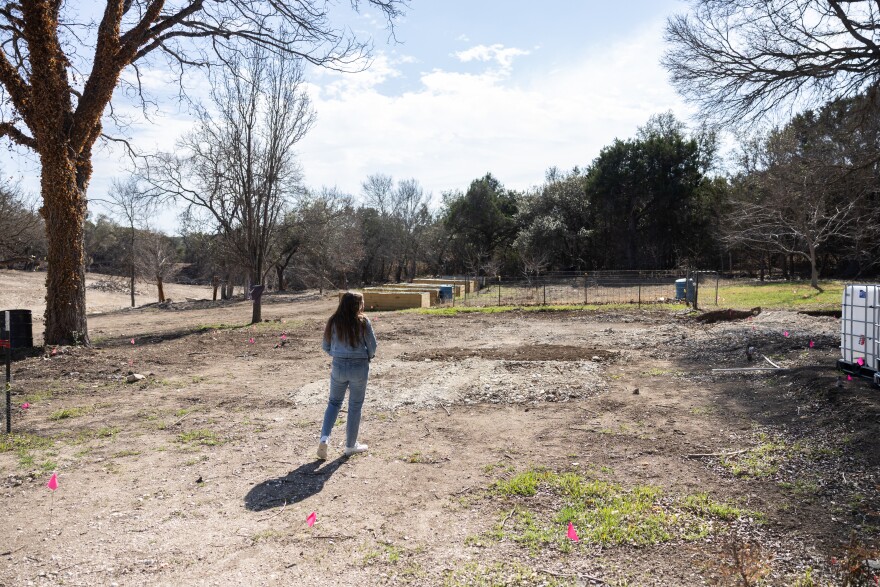
Brandy Gerstner stands on land where her family home was located in Sandy Creek before the flooding last year.
“FEMA only provides a percentage, that’s just the way FEMA works,” Bookout said. “It’s not designed … to make people whole, to make households whole, and there’s a lot of people that get left out on the basis of eligibility.”
Bookout said her current priority is helping families in Sandy Creek fully recover, but if another disaster strikes, she said TCRA will be ready to respond “from day one.”
Bookout said that means designating a central location for people to meet, coordinating volunteer services and connecting residents with long-term recovery resources the day an emergency happens. The TCRA will be available to respond to natural disasters, like floods and wildfires, but it could also help folks during less visible emergencies. Bookout said a group like this could have been helpful in 2022, as residents grappled with a nationwide baby formula shortage.
Her vision is sharply different from the way recovery operations looked last year in Sandy Creek. Immediately after the flood, Gerstner said it was just “neighbors helping neighbors.”
“There was no county, state, federal, anybody out here in the beginning,” she said.
Many volunteer organizations eventually deployed to the area, but Gerstner said it wasn’t until she and her family made their voices loud that they received assistance. She hopes by creating the Travis County Recovery Alliance, she’ll protect residents from having to navigate future disasters by themselves.
“They will never have to wrestle through mass quantities of paperwork at that time,” Gerstner said. “We will have these entities available the next day or that day of the emergency so that they’ll have all their immediate needs met so that no one else will have to go through what we did.”