
More than 1,000 animals representing over 200 species inhabit the El Paso Zoo & Botanical Gardens.
Keeping them healthy, maintaining the zoo’s 35-acre campus, welcoming between 340,000 and 378,000 visitors each year and restoring the institution’s national standing now falls to Gary Lunsford.
Lunsford, 52, was named the zoo’s permanent director last month after serving as assistant director and, since 2025, interim director.
On a warm Monday morning, while touring the zoo with El Paso Inc., Lunsford outlined his priorities: rebuilding the leadership team, regaining accreditation from the Association of Zoos & Aquariums, expanding conservation programs and continuing improvements for both the animals and visitors.
“I’m looking forward to being here to see the growth and development,” he said outside the rhinoceros habitat as Taj, the zoo’s 9-year-old male rhino, ate his morning meal of grass. “It’s about seeing things turn around and rebound from the loss of accreditation and some of the challenges associated with the transition from our previous society relationship. It’s about being a part of the zoo becoming a facility that the city of El Paso and the community can be truly proud of.”
Lunsford brings three decades of zoo experience to El Paso. He began his career in 1995 as an animal technician at the Oklahoma City Zoo before working at Assiniboine Park Zoo in Winnipeg, Manitoba; the Milwaukee County Zoo; and Buttonwood Park Zoo in Massachusetts.
He holds a bachelor’s degree in business administration from the University of Phoenix.
Today, he oversees a zoo with an annual operating budget of about $17 million and nearly 150 employees, including about 60 members of the animal care staff. The zoo serves as both a family attraction and a conservation resource for the Borderland.
Lunsford succeeds former Zoo Director Joe Montisano, who was placed on administrative leave in 2025 after the zoo lost its accreditation from the Association of Zoos & Aquariums. This was also amid a lawsuit filed by a former employee alleging wrongful termination and sexual harassment against the city, Montisano and other zoo employees.
In this conversation with El Paso Inc., Lunsford discusses what it will take for the zoo to regain accreditation, what visitors can expect in the future, and how they’re basically a dating service for animals.

Gary Lunsford with Taj, the 9-year-old male rhinoceros, eating grass in the background.
Photo by Herman Delgado
Q: Where do you think zoos fit in communities like El Paso?
Interesting you asked that, because we had to answer that question going through the program-based budgeting process here at the city of El Paso.
One of the main things that we identified as a service we provide to the community is conservation education.
Our social license for having animals in professional care is so that people can have that connection with the animals.
Our mission is about celebrating the value of animals and natural resources, and creating opportunities for people to rediscover their connection to nature.
The zoo is another major service we provide as a safe place to bring your family or to spend time with friends in an environment that’s both educational and recreational.
Q: How does your new role differ from your previous interim position?
The role itself is not significantly different. I would say the difference is the finality of it.
We’re committed, we’re moving forward and we’ll all be working together to identify what that future is going to look like with a little more certainty.
Q: What is your plan for the zoo at this very moment?
The biggest focus is regaining our accreditation with the Association of Zoos & Aquariums.
It’s going to take a little time, because we have so many projects in the works right now with some of them directly related to that accreditation.
Some of the criticism we received when we lost accreditation was in reference to some deferred maintenance. Once we get a little further with that, we’ll reapply for our accreditation.
Q: How can the zoo get its accreditation back from the Association of Zoos & Aquariums?
They review all aspects of disease operations, our conservation and education programs, our facilities, our events. Just the overall design, the welfare of the animals, our veterinary care. They look at everything.
When I say accreditation, it’s more than just cleaning things up for an inspection, it’s a review of every aspect of the zoo’s operation.
Again, some of the other projects are tied to that, particularly some of the capital projects. For example, renovations to the atrium roof and the South American Pavilion facilities.
They’re all tied back to needing accreditation. It signifies we’re on the right track and we’re one of the top zoos in the nation.
Q: What other benefits come with accreditation?
One of the major benefits for the zoo as a whole is being part of the larger accredited community. It’s easier to work with the animal breeding programs in collaboration with other facilities.
Some of the benefits to our accreditation is it’s a lot more convenient and less paperwork.
It’s also a certification from the association that we’re one of the best out there. The accredited community makes up about less than 10% of zoos in the United States.
Q: What lessons can be learned from losing accreditation?
Again, one of the main factors that cost our accreditation was more maintenance than it was operational. Our care for the animals’ well-being is amazing here. Our veterinary team is also incredible.
It was a matter of some deferred maintenance. The way accreditation works is certain maintenance needs to be fixed within a year.
Some of the obstacles that we were facing at the time couldn’t be remedied within a year. That’s why we lost accreditation.
Making sure that we’re ahead on deferred maintenance and facility development is number one.
Otherwise, it’s just maintaining a culture of continuous improvement so that we’re advancing and not just keeping up.
Q: What other challenges or issues do you have to address as director?
I would say the biggest challenge at the moment is stabilization, reforming a new leadership team and stabilizing our leadership paradigm. There has been a lot of change over the last couple of years.
We have our director, which I’m honored and glad to be. That still means we need to replace my previous position as assistant director before we can really make some progress.
We have brought in a consultant to help to bridge that gap with our zoo culture and an absence of a full leadership team.
I feel like we’ve made some really great strides, but until we get that final position in place, that remains a big challenge.
Q: How long do you think it will take to find a new assistant director?
The position was posted about a month ago, so soon we’ll be able to start looking at candidates.
It usually takes three or four months from the time we first advertise it for the soonest possible hiring.
Q: How does the zoo get its animals?
That’s where being a part of the bigger zoo community is essential, because we all work together. The association coordinates a lot of the breeding programs, they refer to them as species survival plan programs.
They’re basically a managed population of animals. They actually call it a stud book, much like if you were breeding horses.
They have a stud book for, say, giraffes. They will help to identify what mate within the zoo populations would be the best match for an animal like Gigi, our female giraffe.
They’ll help us identify a good genetic match and then we transfer them from the other facility.
It’s all zoos working together, both nationally and internationally, to maintain genetic diversity within the animal populations in professional care.
We basically work with other zoos to do a dating service for animal populations.
Q: What animals do you want to see at the zoo that are not here?
I’ve done a lot of work with bears. I would love to see a bear species back at the zoo.
I know we’ve had them in the past. Bears are on my mind.
Not saying we’ll definitely go that direction, but I would love to see an Andean bear.
Q: What animals are new to the zoo?
The Komodo dragon is a new habitat that will be opening soon. We’re very excited about that.
The Komodo dragons have been here for a while, but this is going to be a very exceptional new habitat for them, we’re very excited to see that in development.
Q: Was working full-time in a zoo your first experience in having a job involving animals?
My first job was actually at a pet shop at a retail place in Oklahoma, which doesn’t exist anymore.
That was where I met the team from the Aquarium Department at the Oklahoma City Zoo.
They had an opening, so I got my foot in the door there. That’s what I’ve done ever since.
I was always kind of an animal super freak and had an obsession with turtles as a child. I can’t really explain it, but I find turtles just absolutely fascinating.
Q: How does the El Paso Zoo compare to the other zoos you have worked in?
It’s a really exceptional place. It’s going to sound a little bit ironic, but to me I’d say it compares most closely to the zoo in Winnipeg, but mainly because El Paso Zoo and the Assiniboine Park Zoo both capitalized on the local climate.
They were focused on animals that would thrive in that climate and region, and we’ve kind of done the same thing here, with so much of the El Paso Zoo being focused on desert and warm weather animals that can be outdoors year round.
In Winnipeg, it was animals that could stay out in the negative 40 degree temperatures the whole year.
We have our older buildings, sure, but what El Paso Zoo and city of El Paso has done with the facilities over the years, is truly exceptional.
Q: So having these desert animals makes sure they are not impacted by El Paso’s 100-degree heat?
Well, that is one aspect.
One of the advantages to our model here is that most of our animals are desert animals, so the local climate has less of an impact.
That doesn’t mean we don’t do anything for them. When it gets particularly warm, for the animals — and this is something important for the community to understand — we give them a choice of whether they want to go outside or stay indoors.
If you see them outside, it’s because they have chosen to be in the heat. Now we also provide water sprinklers for them to cool down.
Q: What have been your favorite animal exhibits so far?
Depends on how you want to look at an exhibit. The Chihuahuan Desert facility here is a multi-species exhibit, it’s pretty phenomenal.
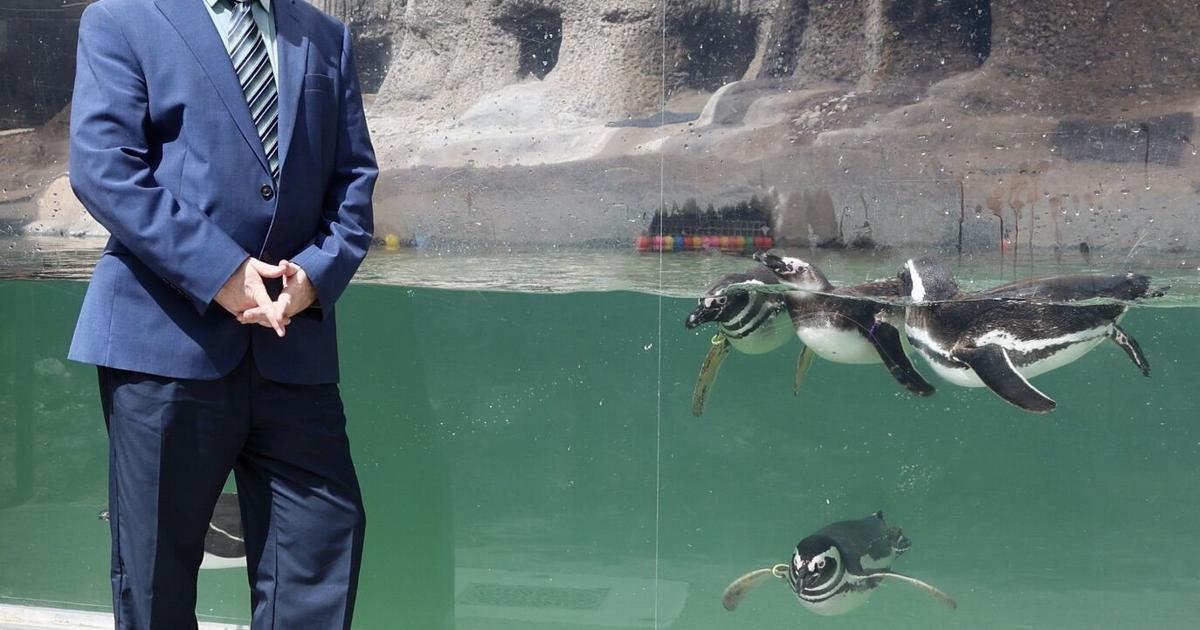
The penguin habitat is pretty exceptional as well. It’s one of the nicest penguin species habitats that I’ve seen.
Our newer stuff is really great. I have to admit, this is the first place that I’ve worked at that had coatimundis (a mammal in the raccoon family) and they’re pretty awesome.
Q: The zoo has more than 1,000 animals and 200 species of animals. Who is the largest animal group?
We have a pretty good size bird population, but that’s usually pretty typical because they’re a little bit smaller and fit into more spaces.
We have one of the largest populations of Peninsular pronghorn in Texas. They’re an endangered species similar to antelope.
Q: When is the best time to visit the zoo?
I recommend mornings before it gets too warm.
Animals often get fed early, so they tend to be a little bit more mobile before the heat later in the day.
It’s just a cooler experience overall before the poor things get heated up.
Q: What’s your opinion of those who are against having these animals here, away from their natural habitat?
That topic certainly comes up. I don’t get it directly. You mostly see a lot of that online in opinions being shared.
But again, a part of our service to the community and mission for the zoo is focused on conservation, educating the public and connecting people to take action to support the conservation of animals and natural resources.
So that can be argued, certainly, but that’s why we do what we do, and that’s how we justify having animals in professional care. That opportunity to provide a connection.
When I was a child, to experience animals and wildlife first hand, to be inspired to cultivate that passion for something like a turtle that might not stand out to everybody.
But to have that experience and connection to want to commit your life and time to protecting those species is truly special.