
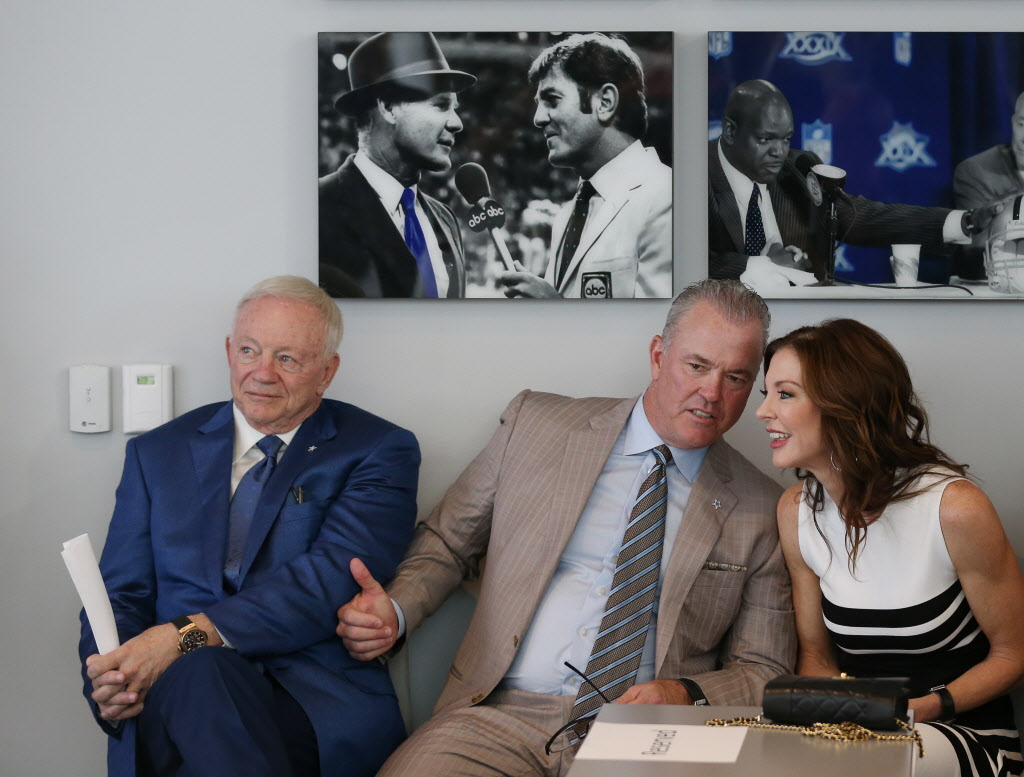
Long before Jerry Jones rewrote the economics of the game, general manager Tex Schramm was reshaping the fan experience.
Behind the 1970s dynasty of coach Tom Landry and quarterback Roger Staubach, Schramm championed innovations that made football as entertaining off the field as it was on it.
He enlisted Dee Brock, an educator and the team’s first cheerleader director, to build what became the high-caliber Dallas Cowboys Cheerleaders.
The squad became a national phenomenon, turning a sideline novelty into professional entertainment copied across the NFL.
Schramm saw football as both sport and show, a way to market it beyond traditional fans, said Charlotte Jones, the Cowboys’ chief brand officer and co-owner.
As Schramm put it, “We need more glamour,” she said.
Much of professional sports has followed the Cowboys’ lead, even if few have matched it.
When Arkansas entrepreneur Jerry Jones bought the Cowboys in 1989 for $140 million, the franchise was losing $25,000 a day. But he turned it into the world’s most valuable sports franchise, largely by inventing ways to monetize its unparalleled interest.
He secured the right to pursue lucrative local sponsorships once controlled by the NFL, and that later became a major source of income for clubs.
Jones expanded into brand licensing, real estate and the concessionaire Legends, and he built a showpiece stadium that redefined what a sports venue could be, a year-round economic engine.
Winning mattered, too. Three more Super Bowls in the 1990s expanded the Cowboys’ national following as the team grew into a commercial powerhouse.
The old ways were meant to be challenged, Charlotte Jones said, and before long, much of professional sports was doing the same.
“People don’t like to change, and somebody has to be the disruptor,” she said.