
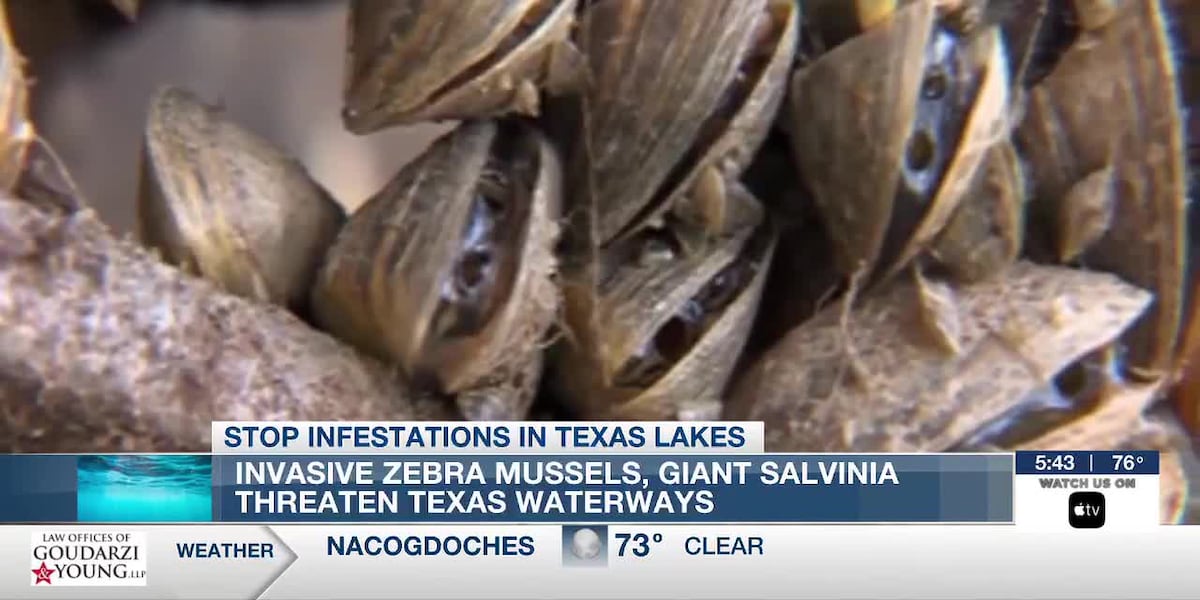
TYLER, Texas (KLTV) – As Texans head to lakes across the state for the holiday weekend, Texas Parks and Wildlife is warning boaters, paddlers and anglers about two invasive species threatening the state’s waterways: zebra mussels and giant salvinia.
Zebra mussels currently infest 40 Texas lakes, with 35 of those officially classified as “fully infested” — including Lake Livingston in Deep East Texas. Adult mussels spread primarily by attaching themselves to boats, which can cause damage to watercraft and water infrastructure. They also compete with native mussels for resources, altering the food chain. Microscopic larvae can also be transported in residual water left in a boat or carried to other lakes through natural waterways such as the Trinity River.
There are things Texans can do to help stop the spread. “Make sure that all the water is drained from the boats and all compartments — raise and lower the motor to drain out that water. Clean off any plants or any mud debris and then let the boat completely dry before you take it to another water body,” said Monica McGarrity, senior scientist for aquatic invasive species with the Texas Parks and Wildlife Department.
The other invasive species threatening Texas lakes is giant salvinia, an aquatic fern considered one of the worst aquatic weeds in the state. It can double its coverage area in just one week, growing in thick, dense mats that block sunlight and deplete oxygen levels — conditions that can destroy native aquatic ecosystems.
Giant salvinia is currently present in 29 East Texas lakes, as well as several rivers and creeks. Like zebra mussels, it can hitch a ride on a boat or trailer.
Texas Parks and Wildlife is urging all water users to follow three steps to prevent the spread of both species: clean, drain and dry.
Copyright 2026 KLTV. All rights reserved.