
TEXAS HILL COUNTRY—Three years ago, Jen Bachman noticed a woman who had started coming in twice a day to the cafe she owns with her husband in Wimberley, Texas, a small town about 45 miles southwest of Austin. The woman, Linda Nelson, said she’d made all her husband’s meals for over 40 years, and now that he’d died, she never wanted to cook again. Bachman made a coffee mug emblazoned with “Linda” for her to use, and hung it on the wall between Linda’s meals.
She started doing the same for other regular customers, and now there are around 1,500 personalized mugs at Wimberley Café. Demand for the mugs got so strong that Bachman limited hanging them on the walls to customers who ate there at least five times a week. She’s up to making around 25 new mugs a month, and is running out of wall space. “There are so many people here now, I can barely keep up,” she said.
Wimberley is one of several small towns ringing Austin to the west that have exploded with growth over the past six years. The surge started as a reaction to Austin’s pandemic housing boom, when waves of remote workers and big-tech companies like Tesla and Oracle moved there. There were 729 Austin homes sold for over $1 million between January and April of this year, compared with 262 for that same period in 2019, according to Unlock MLS.
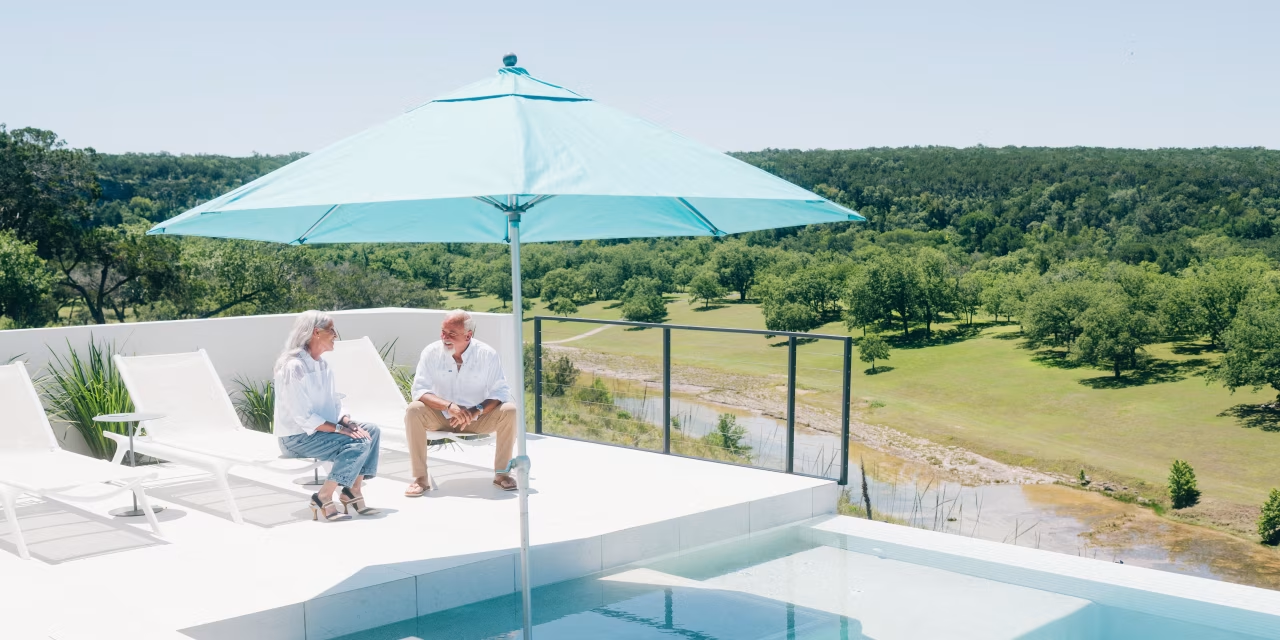
People looking for less-expensive homes and more space moved out to nearby towns like Wimberley, Dripping Springs and Spicewood. These areas are part of Texas Hill Country, a region of farm and ranch towns that have long attracted city dwellers looking for a rural getaway. An hour’s drive or less to Austin, these towns are now seen as good spots for weekend homes and, in some cases, for commuting.
Copyright ©2026 Dow Jones & Company, Inc. All Rights Reserved. 87990cbe856818d5eddac44c7b1cdeb8