
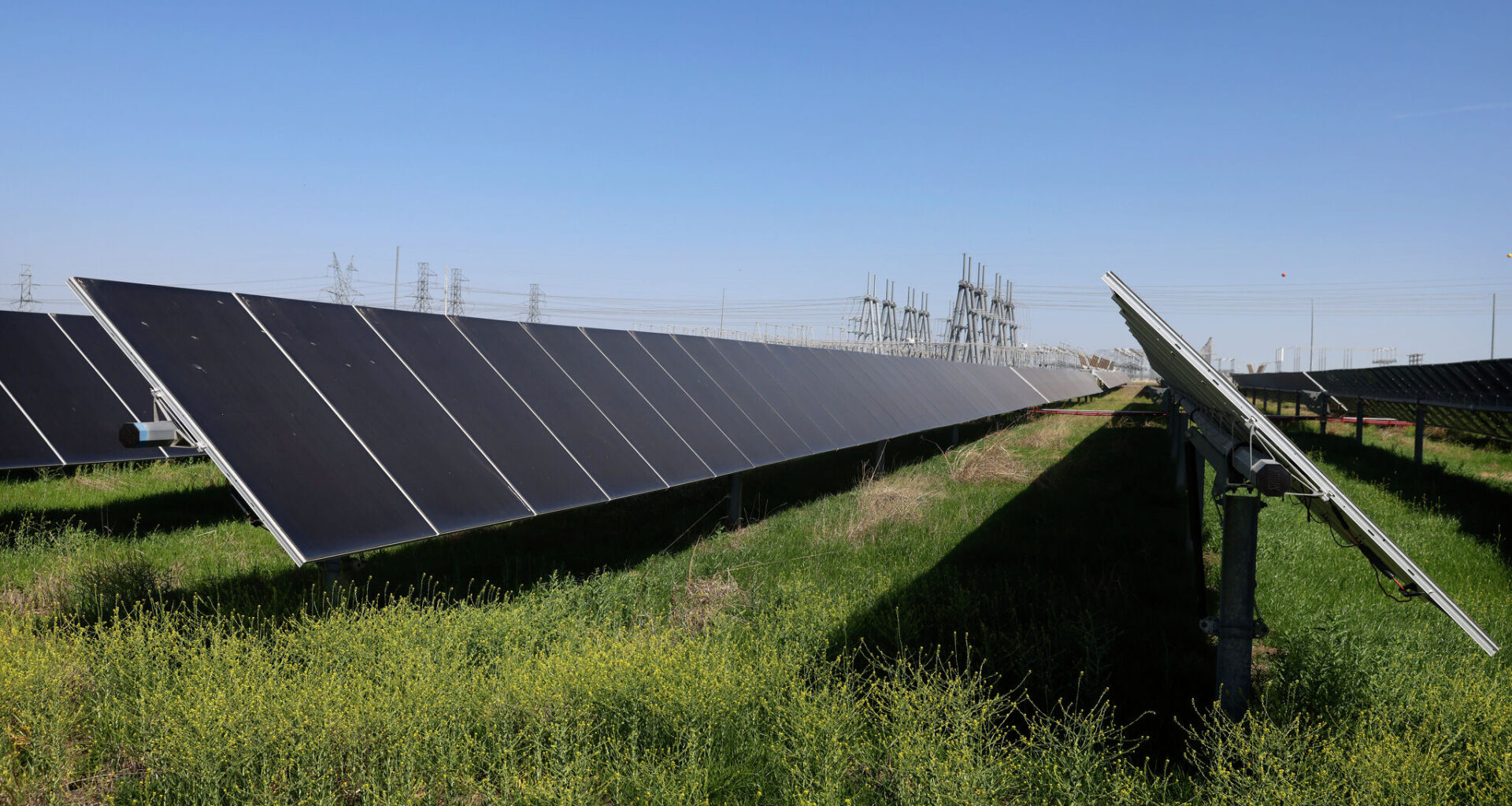
In this photo, Noble Solar and Storage solar panels line a field near Krum, Texas. The state’s commitment to harnessing the free energy of the sun is saving Texans money on their electricity bills and continuing the state’s legacy as the energy capital of the world, writes Tim Pawlenty.
Tom Fox/Dallas Morning News
America faces a simple challenge: We need more energy, and we need it quickly. Few states are better positioned to meet that challenge than Texas, which has become the nation’s leading example of how solar and storage can support economic growth, strengthen grid reliability and keep energy affordable.
As energy demand skyrockets around the country and in Texas in particular, the Lone Star State’s leadership on solar and storage is blazing a path for all other states to follow.
The market is sending a clear signal. In the first quarter of this year, solar and storage accounted for 91% of all new power added to the U.S. grid. No state is building new solar and storage at a faster rate than Texas.
Article continues below this ad
On any given afternoon, Texas gets as much as 40% of its electricity from solar power, and the state has set eight daily solar output records this year alone. Texas ranks second among all states with 29.2 gigawatt-hours of battery storage. This momentum shows no signs of stopping — the state is expected to install over 39 gigawatts of new solar over the next five years, the most of any state.
This commitment to harnessing the free energy of the sun is saving Texans money on their electricity bills — and continuing the state’s legacy as the energy capital of the world.
Between 2000 and 2025, Texas saw the second-smallest increase in average electricity prices of all 50 states. According to the Energy Information Administration, as of March 2026, Texas’ average price of electricity is 10.01 cents per kilowatt hour (¢/kWh), far below the national average of 14.08 ¢/kWh.
To be clear, the historic buildout of solar and storage in the world’s eighth-largest economy was not the result of government intervention. Rather, it is the organic result of state leadership’s free-market energy strategy that prioritizes adding resources that are affordable and fast to build.
Article continues below this ad
And the market case for solar energy and battery storage only grows stronger by the day. Solar prices are down by 77% since 2010 and grid-scale energy storage prices by 55% since 2022. Because solar and storage have no fuel costs, they safeguard families and businesses from the wild price swings that energy markets have notoriously struggled with for decades.
Texas has also become a solar and storage manufacturing powerhouse. New factories across the state are helping strengthen domestic supply chains and ensure more of the technologies powering America’s energy future are made here at home.
The solar industry has invested over $68 billion into the state and employs roughly 8,000 Texans in family-sustaining careers. The industry is working closely with ranchers, rural landowners and local officials to bring critically needed economic investment and billions in local tax revenue to communities across the state. Continuing the state’s trajectory on solar and storage growth means that those benefits will only grow.
That’s not to say there are no challenges facing the solar and storage industry. We are currently navigating a permitting slowdown that threatens 30% of early-stage solar projects in the pipeline nationally. But I know that this industry — just like the Texans that truly make it the force that it is — has the grit, resilience and commitment to innovation needed to thrive for years to come.
Texas shouldn’t have to choose between affordability, reliability, economic growth and energy security. Solar and storage are delivering all four.
Article continues below this ad
As electricity demand rises across the country, other states face the same challenge Texas does: how to add large amounts of new energy quickly and affordably.
Texas has shown what works. The market has already answered the question about whether solar and storage have a role to play.
The real question is whether America can meet its growing energy needs without them.
Tim Pawlenty is the president and CEO of the Solar Energy Industries Association, representing 1,200 American solar and storage companies. He is the former governor of Minnesota.
Article continues below this ad
Have thoughts about this? Send a letter to the editor using our letters form or email letters@dallasnews.com. Letters should be no more than 200 words and include the first and last name of the writer and city of residence.