
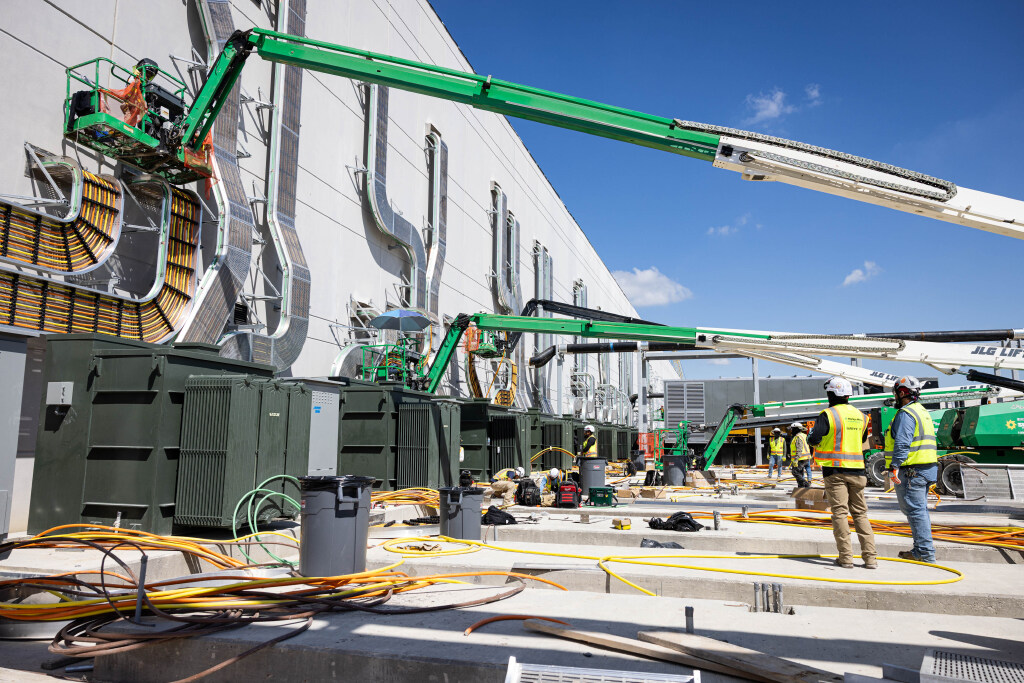
Between April 2025 and April 2026, the number of workers in the department’s mining, logging and construction sector grew 5%, to 96,500 from about 91,900 a year ago. While data specifically for the construction industry is not available for the Austin-Round Rock-San Marcos metro area, statewide numbers point to a 1.4% increase in employment for construction, according to the Bureau of Labor Statistics.
“Austin’s in a good position,” he said. “It’s just once again to create visibility. How do we get more people into the craft workforce (and) not only just to build them, but (for) long-term maintenance for the light rail? We need drivers. We need mechanics … There’s a whole litany of new jobs being created.”
However, with more projects, Trump administration crackdowns on immigration and a retiring workforce, the construction industry will need to attract almost 350,000 workers this year, according to Associated Builders and Contractors, a trade association for the industry. The Austin metro area added about 4,600 workers between April 2025 and April 2026, according to the Bureau of Labor Statistics.
“One of the things that comes up all the time from region to region is ‘What does labor look like? How much more you’re going to have to pay to get the folks to show up at your job compared to other jobs?’,” said Will Roberson, an economist with JE Dunn Construction. “Seeing some turnaround in that number (is) fantastic news (and) being able to get that labor supply in makes so many other problems easier to deal with.”
The Trump administration’s wide-ranging tariffs also are disrupting the construction industry, raising the prices of imported steel and aluminum. Such challenges mean planning and scheduling are key to ensuring projects are completed on time, Kent said.
“Workforce growth must be paired with smarter planning,” he said. “In a constrained market, how you plan matters just as much as how many people you have.”