
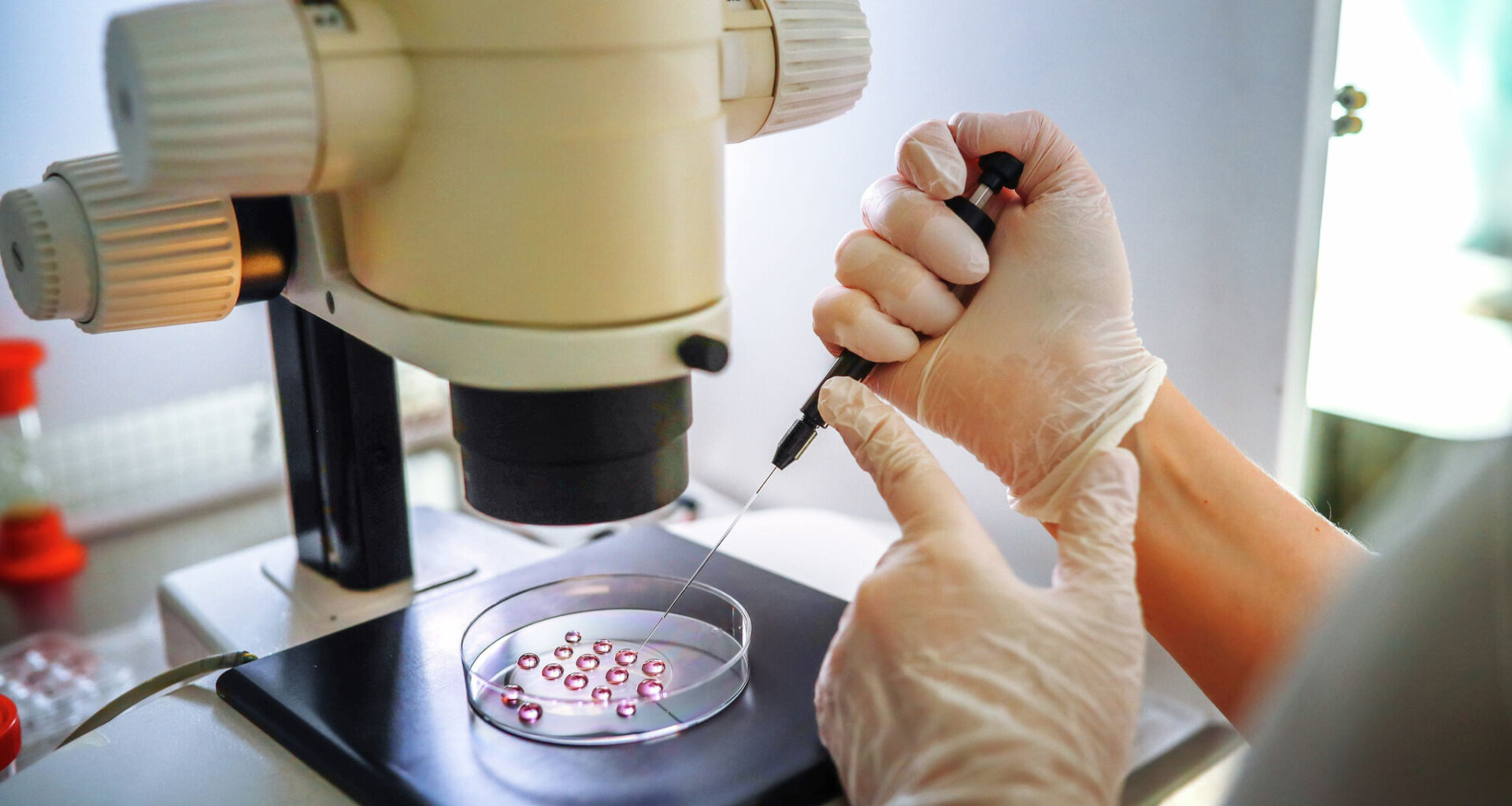
Texas GOP’s new chair says IVF benefited her personally as Republicans debate the future of fertility treatments in the state.
Natalia Lebedinskaia/Getty Images
The newly elected chair of the Republican Party of Texas is breaking with parts of her own party’s platform as she voices support for in vitro fertilization, a procedure she says helped her build her family.

“I am somebody who has benefited from IVF, so I would be a hypocrite to be against it,” said newly elected GOP Chair D’Rinda Randall in an interview with KVUE in Austin.
Article continues below this ad
“But it is something that the delegates are for, of which I am the chair, so I won’t let my personal feelings get in the way,” said Randall.
Randall acknowledged the tension between her personal views and the party’s position, saying, “I think there is a disconnect.”
“It is something that the delegates ask for in the platform, but I just don’t think there’s an appetite for IVF to go anywhere, because we are a pro-family party,” she said.
During its annual convention last month, the Texas Republican Party adopted platform language calling for protections from “destructive practices such as IVF,” reflecting concerns among abortion opponents who argue embryos are human life from the moment of fertilization.
Article continues below this ad
But with polling that shows broad bipartisan support for IVF, the issue has placed many Republican leaders like Randall and U.S. Senate candidate Ken Paxton in an increasingly uncomfortable political position ahead of the November midterms.
Just days after Texas Republicans adopted anti-IVF language in their platform, Paxton publicly distanced himself from the move, calling himself “a strong supporter of IVF” and labeling the procedure a “blessing.”
But within two weeks, Paxton’s tone shifted. In an interview with the Washington Examiner, he said IVF should face restrictions “so that we don’t lose fertilized eggs, if that’s possible.”
Article continues below this ad
(From left) Granbury Mayor Jim Jarratt and D’rinda Randall, chair of the Republican Party of Texas, listen as Hood County commissioners hold a dedication for the Charlie Kirk Memorial Parkway on Saturday, Feb. 21, 2026.
Juan Figueroa/Dallas Morning News
Religious, political implications behind IVF
A central argument among IVF opponents is that the procedure destroys embryos, placing it at odds with the growing belief that human life begins at the start of contraception.
“Because we are a pro-baby party, then having them discarded is equivalent to them letting go of life,” said Randall on behalf of anti-IVF advocates within the party.
Article continues below this ad
Religious beliefs are often at the heart of anti-IVF arguments. The Catholic Church, for example, has argued the procedure is “morally unacceptable” because of concerns over the creation, freezing and disposal of embryos.
The debate gained national attention after the Alabama Supreme Court ruled in 2024 that frozen embryos created through IVF are legally considered children, a decision that temporarily halted fertility treatments across the state and fueled debates nationwide regarding the procedure.
Texas Attorney General Ken Paxton, a U.S. Senate candidate, waves to supporters during a primary runoff election night watch party in Plano, Tuesday, May 26, 2026. The Senate hopeful has gone both ways on IVF support.
Smiley N. Pool/The Dallas Morning News
What IVF is and is not, per doctors
IVF begins with medications a woman takes that help several eggs mature at once. Doctors then retrieve those eggs and combine each with sperm in a laboratory to create embryos. After monitoring their development, the healthiest embryo is transferred to the uterus.
Article continues below this ad
Not every embryo created during IVF is transferred. Some are frozen for future use, or are donated for science or to other families. Embryos that are discarded are often those that have stopped developing on their own or are determined to be nonviable because of genetic abnormalities.
That process is frequently misunderstood in political and religious debates, according to Dr. Rashmi Kudesia, a reproductive endocrinologist with CCRM Fertility of Houston.
“The entire process is geared at giving patients the best shot at one healthy pregnancy,” said Kudesia. If doctors attempted to transfer every fertilized embryo created through IVF, Kudesia said many would never result in a pregnancy or would end in very early miscarriage.
Kudesia pushed back against claims that discarding embryos is equivalent to murder, saying those arguments often stem from misunderstandings about how IVF works.
Article continues below this ad
“People don’t make these decisions lightly, and it’s very, to me, offensive, to suggest that a couple that is so desperate to have a child is, you know, turning around to murder children, or to, you know, throw away, and destroy life,” Kudesia told Chron.
“If we truly are a society that values people building families, then we have to understand that there is a substantial proportion of would-be families that have a medical condition preventing them from doing so,” said Kudesia.