
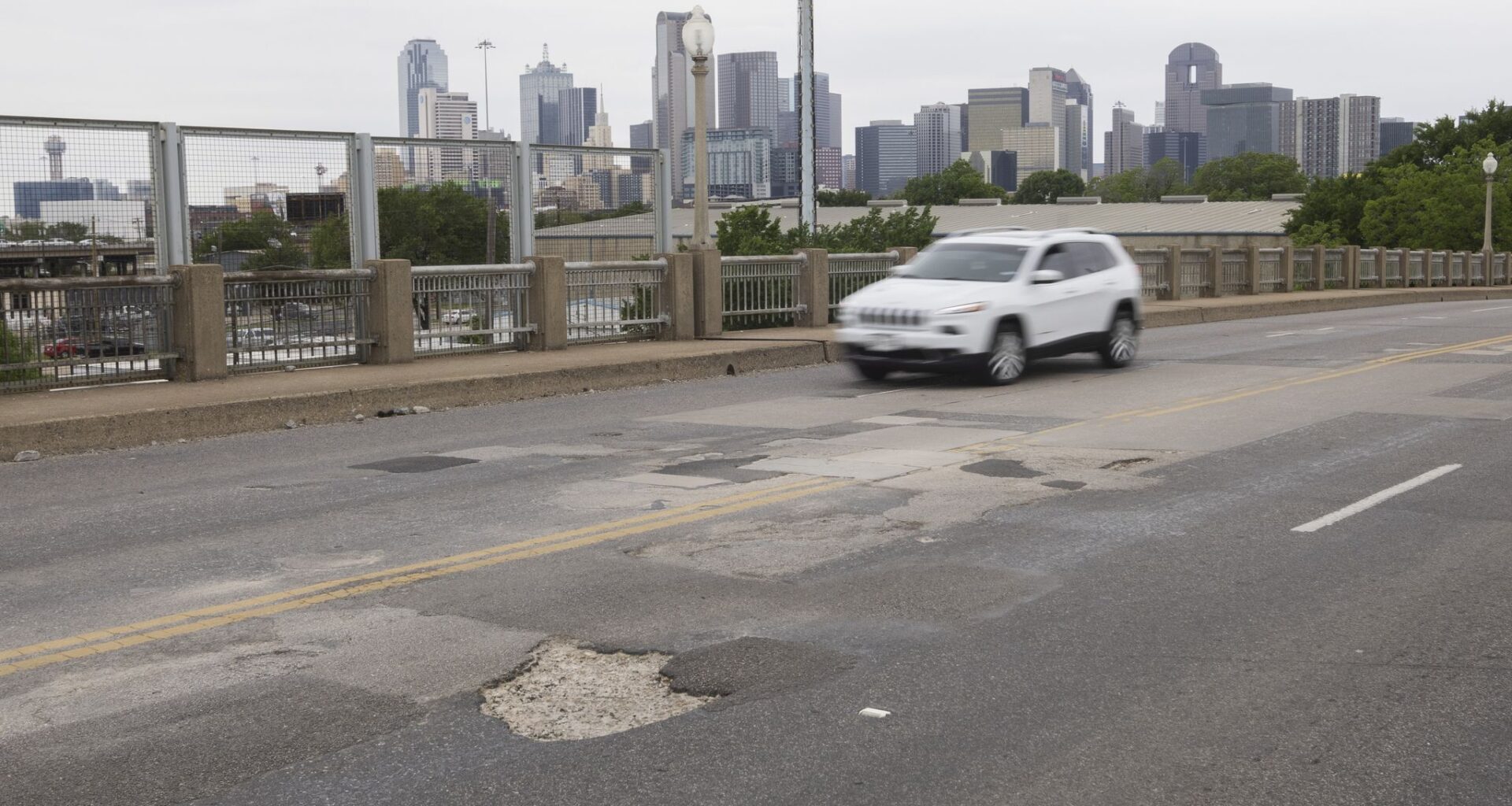
A vehicle drives over the Malcolm X Boulevard bridge in Dallas in April 2024.
Juan Figueroa/Staff Photographer
Dallas’ transportation and public works department has major gaps in how it oversees contracts, payments and other spending nearly two years after the city merged the agencies, according to a new internal audit.

The city audit found the department sometimes paid invoices before confirming work was done and had missing, hard-to-read or incomplete inspection records. The audit also identified unreliable equipment records and inconsistent overtime approvals.
City officials announced plans to merge the public works and transportation departments in July 2024, saying the combined office would improve coordination, reduce confusion, speed up decision-making and create one point of contact for transportation work.
Article continues below this ad
The latest audit echoes problems raised in a 2022 city review of road paving work, which found the then-Department of Public Works didn’t consistently monitor and inspect projects, keep reliable project records or verify some project costs.
That audit also flagged more than $200,000 in possible overbilling on one project and found six sampled projects with unexplained cost overruns.
The city said the merger would save about $1.5 million and could produce more savings later by making department operations more efficient. But the new audit found the former departments still rely on separate processes that are keeping parts of the merged department from working as one.
The audit rated several findings as “high risk,” including how the department tracks contracts, buys goods and services and approves payments for inspected work.
Article continues below this ad
Auditors found contract oversight was split among different teams, creating inconsistent reviews. They recommended putting contract management under a more centralized system with clearer rules for records, payments and approvals.
In purchasing, auditors found missing approval records and instances in which the same person had too much control over the buying process. Auditors said that can raise the risk of errors or improper spending.
The review found fleet records were unreliable, some maintenance records were inconsistent and warehouse inventory errors were tied to tracking items by hand and removing items without logging them.
Auditors issued 42 recommendations, including calls for clearer contract oversight, stronger purchasing approvals, better inspection records before invoices are paid and tighter tracking of equipment, warehouse inventory, overtime and fuel use.
City officials agreed to 40 of them.
Article continues below this ad
They didn’t commit to two recommendations involving reviews of large contractor invoices and tracking unfinished work, saying the city first needs to determine whether the proposed systems would work.
“While the Department of Transportation and Public Works acknowledges significant work remains to be done, the department has already begun implementing improvements identified through this process,” City Manager Kimberly Bizor Tolbert wrote in a response to the audit.
She said the department requested the audit, and the city hired firm Baker Tilly to conduct the review. The latest audit covered fiscal years 2023, 2024 and 2025.
Many of the department’s planned fixes are scheduled for completion or follow-up in 2027.