
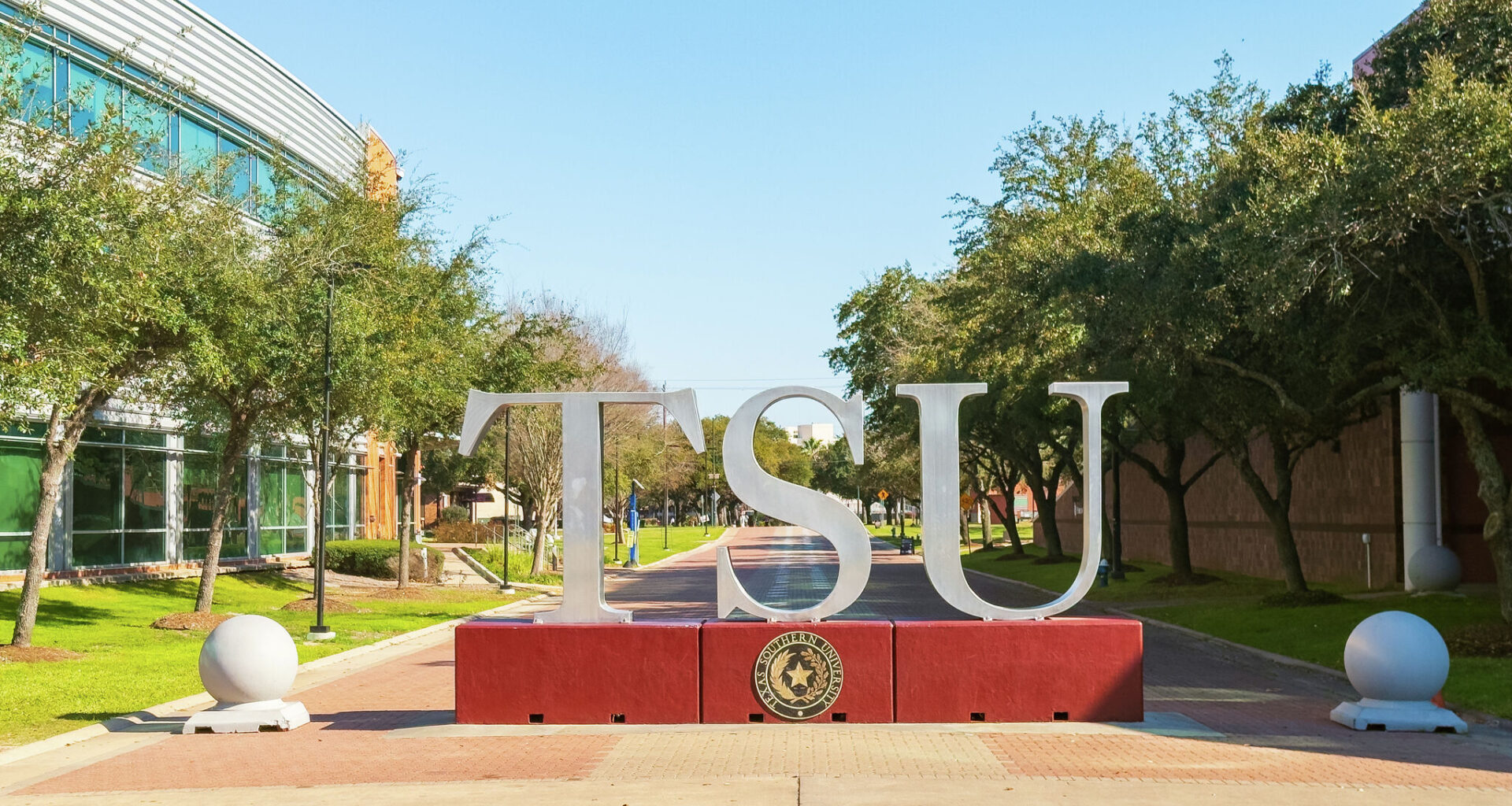
Texas Southern University has announced a comprehensive campus master plan to establish a clear framework for campus development beyond 2030 for the Houston historically Black college and university.
The plan will address campus development, facility improvements, an enhanced learning environment for students, and infrastructure investments. Over the next 10 years, the plan calls for more than 20 projects and a total investment of around $1.7 billion. The plan coincides with preparation for the Third Ward university’s centennial next year.
According to Texas Southern, the initiative provides a deliberate smart-growth strategy to enhance student achievement, employment preparation, research development, community involvement, and long-term institutional performance.
“As Texas Southern University moves forward, it is important that investments in facilities and infrastructure support projected outcomes,” President J. W. Crawford III said in a statement. “The Master Plan aligns physical development with institutional strategic priorities, providing a stable framework that can be expanded over time.”
The project goes hand in hand with the university’s Ascend 2030 strategy, which Crawford outlined in 2024 during his first State of the University address. The initiative focuses on meeting the evolving needs of students and workers, improving university efficiency, and broadening the university’s reach using market research.
Numerous TSU projects are already underway. Later this year, construction is expected to begin on three major academic and research facilities: the Health and Wellness Center, the Nabrit Science Center, and the Catalyst for Urban Transformation. All three buildings are anticipated to open during in 2027, supported by more than $95 million in state financing.
Additionally, the master plan includes a design and plan for TSU’s historic Thurgood Marshall Law Center is also currently advancing in collaboration with the Texas Facilities Commission, funded by $10 million of legislative funds. The plan aims to preserve and provide fresh designs for the Law Center, which holds such heavy historical significance in the fight against segregation in Texas.
The undertaking will not only improve the University’s functions and infrastructure but also emphasize creating spaces for students and Houston at large to feel connected to—residential and recreational amenities, student-centered facilities, and academic and research facilities that function better and look better.
“Houston and Texas continue to grow, and Texas Southern must leap ahead of that growth,” Crawford said. “Because when TSU grows, Houston gains more than square footage. It gains nurses, lawyers, researchers, entrepreneurs, public servants, educators, scientists, artists, and civic leaders.”