
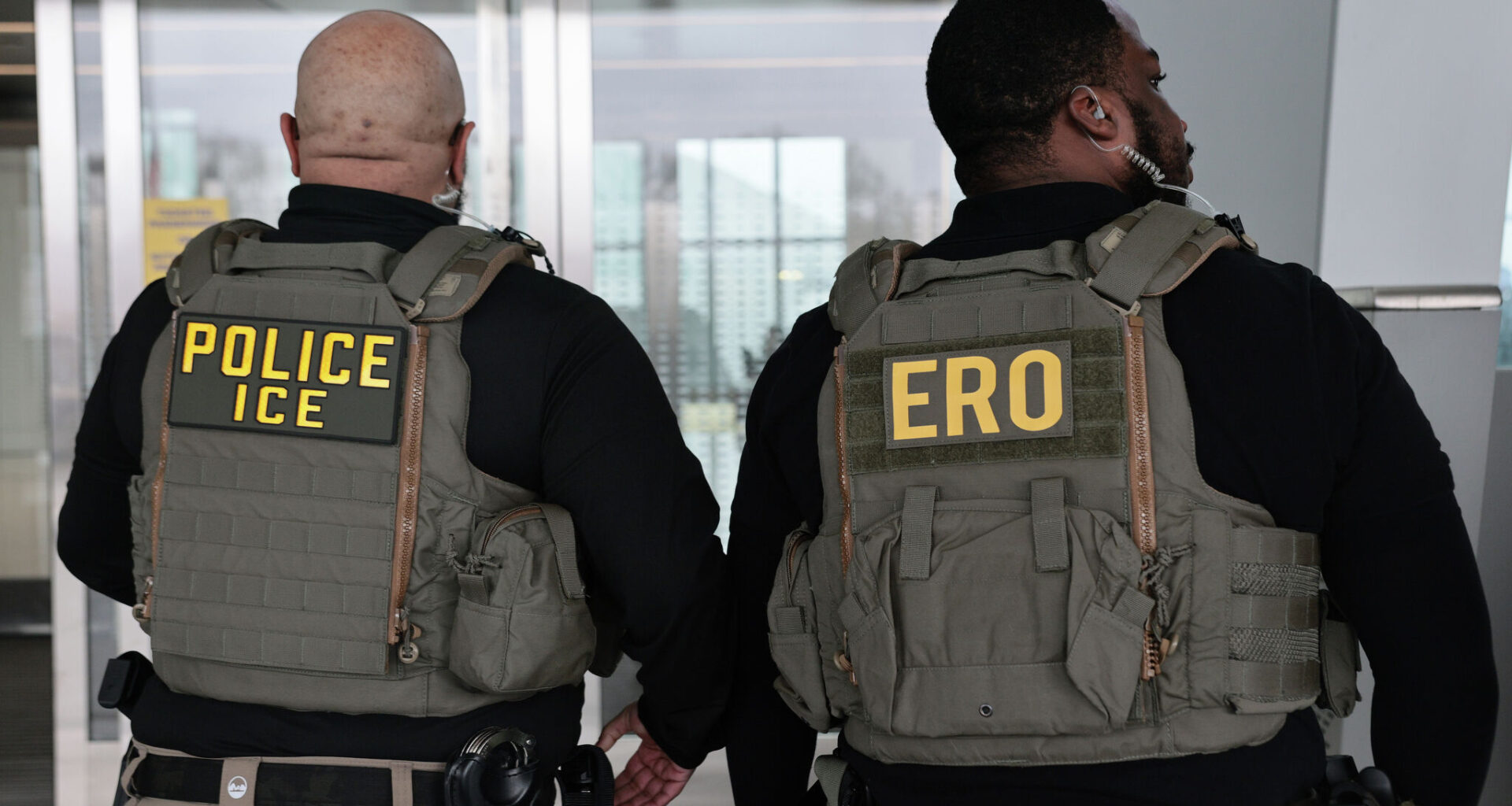
Questions remain about ICE’s actions after the fatal shooting of Lorenzo Salgado Araujo. (Photo by Michael M. Santiago/Getty Images)
Michael M. Santiago/Getty Images
UPDATE: 4:53 p.m. CST:

The Department of Homeland Security confirmed Thursday that the ICE agents involved in the fatal shooting of Lorenzo Salgado Araujo were not wearing body cameras, answering one of the biggest lingering questions surrounding the case.
Article continues below this ad
In a statement to KHOU 11, a DHS spokesperson blamed the lack of cameras on “back-to-back Democrat shutdowns,” saying the agency’s effort to purchase and distribute body-worn cameras to every ICE field office was delayed by lapses in federal funding. According to DHS, body cameras have been deployed to more than half of ICE’s field offices, with the remaining offices expected to receive them within the next 60 days. The agency said it is accelerating the rollout following what it described as a sharp increase in assaults on ICE officers.
In the days since a U.S. Immigration and Customs Enforcement agent fatally shot Lorenzo Salgado Araujo in east Houston, one question has remained unanswered:
Article continues below this ad
Were the agents involved wearing body cameras—and does video exist that could show what happened?
Despite growing calls from community leaders, elected officials and immigration advocates for transparency, ICE has not said whether the agents involved in the July 7 shooting were equipped with body-worn cameras or whether any footage has been preserved.
Demonstrators gathered for a candlelight vigil for Lorenzo Salgado Araujo on Tuesday night.
Macy Meinhardt
Chron reached out to ICE asking whether the agents involved in the shooting were equipped with body-worn cameras and whether any footage exists. The agency has not yet responded.
Article continues below this ad
ICE policy requires body cameras in many situations
That uncertainty comes as ICE has a policy requiring agents to use body cameras during many enforcement operations.
ICE Directive 19010.3, which took effect in February 2025, instructs ICE law enforcement officers and agents to activate body-worn cameras at the beginning of enforcement activities and deactivate them once those activities conclude. Officers who do not activate cameras are required to provide a written explanation.
A Homeland Security vehicle is parked outside the Eldon B. Mahon U.S. Courthouse during a trial for nine people connected to a 2025 shooting outside an ICE detention facility, in Fort Worth, Texas, Thursday, March 12, 2026. (AP Photo/Tony Gutierrez)
Tony Gutierrez/AP
The directive covers activities including arrests, searches, warrant executions, brief investigative detentions and interactions with the public during enforcement operations.
Article continues below this ad
But the policy also comes with a major limitation: not every ICE agent has a camera. When ICE announced an updated body-worn camera policy, the agency acknowledged it still does not have enough resources to equip all law enforcement personnel.
“ICE is working to secure resources required to ensure full implementation of the new policy,” the agency said on August 6, 2025.
Mike Fox, a legal fellow with the Cato Institute’s Project on Criminal Justice, said the lack of information makes it impossible for the public to know whether video exists.
“The short answer is that unless ICE or DHS tell us whether the Houston agents were wearing body cams—and we’re willing to take them at their word—there’s no way of knowing,” Fox said.
Article continues below this ad
Fox said that while ICE has a policy requiring cameras during enforcement activities, implementation has been inconsistent.
“From February of 2025, they get instructed to wear body cameras during enforcement operations,” Fox said. “That said, to be fair to the agents, they can only wear a body camera to the extent that they’re provided body cameras.”
ICE account remains disputed
Federal officials have said Salgado Araujo was killed during a targeted enforcement operation after he attempted to evade arrest and used his vehicle against an ICE officer. His family and advocates have disputed that account, saying he may not have realized the people attempting to stop him were federal agents.
Article continues below this ad
Family members of Lorenzo Salgado Araujo, including his son, speak during a press conference Thursday, July 9, 2026, calling for answers after his fatal shooting by an ICE agent in east Houston.
Macy Meinhardt
So far, no body camera footage, surveillance video or other recording has publicly confirmed or contradicted the agency’s account. Fox said a grainy video circulating online does not show the shooting itself.
“There’s nothing that depicts the actual shooting,” he said. Without video evidence, Fox said the public is left relying on competing accounts.
“Whether it’s justifiable or we don’t know, I would guess it’s not, but we wouldn’t know that until we actually see the video and the impartial investigation is done,” Fox said.
Article continues below this ad
The family of Lorenzo Salgado Araujo, including his son, addresses reporters Thursday after the Houston man was fatally shot by an ICE agent during an immigration enforcement operation.
Macy Meinhardt
Will the public ever see ICE body camera footage?
Even if cameras were rolling, the release of footage is not guaranteed. Federal agencies typically control evidence collected during investigations involving federal officers, making it difficult for local officials to obtain records without cooperation.
Fox said body cameras only provide accountability if there are mechanisms requiring agencies to release footage and discipline officers who fail to follow policies.
Article continues below this ad
“Having body cameras themselves—one of my concerns is always you had a lot of Democrats in Congress who were like, ‘We need better policies on body cameras,'” Fox said. “Well, that’s wonderful. But the problem is, if there’s nothing to enforce, what does it matter?”
Fox said requiring cameras without meaningful oversight can become “a weightless, worthless endeavor.”
Houston officials call for answers—but who is investigating?
While calls grow for an independent review of the shooting, it remains unclear what role Houston officials will play in investigating the death of Salgado Araujo.
Article continues below this ad
Houston Mayor John Whitmire has called for a transparent investigation but has repeatedly emphasized that the city does not control federal immigration enforcement or have jurisdiction over ICE agents.
Meanwhile, Harris County District Attorney Sean Teare’s office has taken steps toward reviewing the shooting, though officials have said federal authorities remain in control of the primary investigation.
Harris County District Attorney Sean Teare is shown during a media conference at Crime Stoppers of Houston, 3001 Main St., Tuesday, Feb. 18, 2025, in Houston. An update was provided on the search for the University of Houston sexual assault suspect Eric Brown.
Melissa Phillip/Staff Photographer
In an interview with Charlie Mechling on Houston Public Media’s “Hello Houston,” Teare said his office has already begun looking to other jurisdictions for guidance. Teare said he has been in contact with prosecutors in Hennepin County, Minnesota, where ICE fatally shot Renée Good earlier this year, to discuss their experience and how it could inform any local action in Houston.
Article continues below this ad
“I have been in communication with the Hennepin County District Attorney’s Office, Minneapolis—because no one is more familiar with these kind of situations than them, Teare said. “We’re going to continue to lean on them to see how they have navigated this.”
“Anytime a community member loses their life at the hands of law enforcement, I think those are the most critical cases to handle properly so that we can retain the trust of the community,” Teare added.