
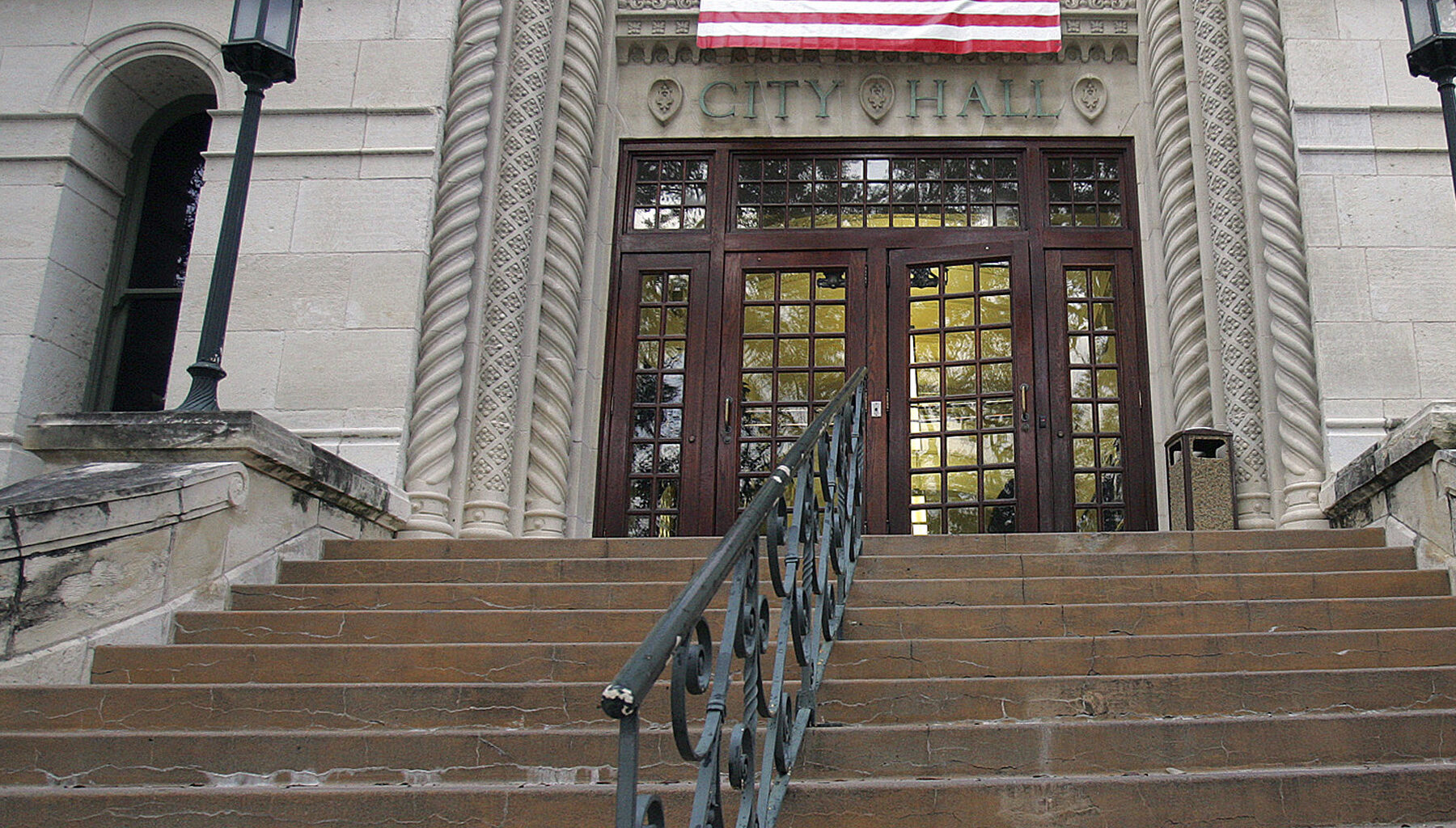
San Antonio is having a healthy debate about city and county funding and spending priorities. Let’s keep that conversation going.
JERRY LARA/SAN ANTONIO EXPRESS-NEWS
The political philosopher John Rawls wrote how democratic societies thrive when differing viewpoints and doctrines collide in productive ways. He called this “reasonable pluralism.”

Unfortunately, of late, we have seen collisions of various doctrines in unproductive ways. We have developed competing ecosystems that have shaped our views against each other rather than constructively offering alternative visions and approaches.
Article continues below this ad
This environment is fraught with political and cultural differences, now infected by the real threat of political violence. As a result, many people enter a fog of unsettling dissonance, allowing the bastions of the extreme to dominate. All this only exacerbates societal division, discord, ignorance, disillusionment and cultural fragmentation.
Nevertheless, I have been encouraged by the discourse in the local media regarding ways to address the looming city budget deficit. We have recently read thoughtful essays by former Texas Secretary of State and San Antonio mayoral candidate Rolando Pablos in the San Antonio Express-News and Philip Reichert, editor-in-chief of the Civic, a local platform founded by Lew Moorman (and for which I am a founding charter member).
Both posit important questions as to whether we should raise taxes to make up for the city budget shortfall or tighten the belt at City Hall — they emphasize the latter approach.
There has been important pushback against this path, as well as the argument of promoting growth primarily through economic development rather than investment in the community. We have seen this from Zack Lyke, who served as chief of staff for former Mayor Ron Nirenberg and made this argument in the San Antonio Report. Nirenberg has chimed in on a variety of mediums.
Article continues below this ad
I listen closely to all of them, not just because they are good friends, but because they are informed voices in the city offering reasonable ideas to deal with San Antonio’s challenges.
During the first five years of Nirenberg’s tenure as mayor, I organized and moderated brainstorming sessions for him to discuss pertinent issues facing the city. I invited energetic thinkers first and foremost, who happened to be businesspeople, academics and community leaders from across the political spectrum. We had robust but respectful discussions. It was civil discourse at its most productive, and Nirenberg embraced it, listening to all sides.
That has happened across the print and social media platforms in recent weeks. We are seeing a communal brainstorming session on how to handle the city budget dilemma.
As a nation, as recently at the mid-1990s, we used to differ over the nature of taxes, the role of government, foreign policy doctrines and models of economic growth. The debates were robust, and often we resolved them with bipartisanship.
Article continues below this ad
Since that era, we have focused more on identity issues that have polluted the political environment. We have become tribal, retreating into our sectarian fortresses for comfort and perceived safety.
But it does not have to be this way. Just as competing factions in the country have done in the past, it is time to realize the sky is not falling when the opposite party is in power. It is about realizing there is adequate space to live and prosper when the other guys are running the show — or not being threatened when you are in power by those who disagree with you.
A culture of blame will not move us forward. A culture of considering new ideas and a willingness to listen to others will. Most Americans — and San Antonians — can agree to live together within this paradigm of productive collisions. Sometimes you win, sometimes you lose. But a culture of mutual respect and civil discourse means you will always be heard.
I don’t have the answers to the city budget problem. Personally, I don’t know how or when not raising the property tax for the past 33 years became so sacrosanct. Prices are rising across the board, including for water and energy, due to population growth, economic expansion and climate change. Perhaps not getting into so many unnecessary wars that tend to create inflationary trends and divert resources away from more productive capacities is a start.
Article continues below this ad
There is a lot we can agree on.
I suspect the answer to our projected city budget deficit will include a mix of revenue-raising and belt-tightening. I am reasonably confident that the public dialogue we are having will form the foundation of, if not generate, an acceptable solution. We are not calling each other names, we are not denigrating those with whom we disagree, we are not dismissing ideas based on their origin.
Let’s keep this up. Here is a chance for San Antonio to be a model of political cooperation, and visionary thinking and action to deal with real-world problems. Let’s take it.
Article continues below this ad
David W. Lesch is the Ewing Halsell Distinguished Professor of History at Trinity University.