
Key points
Texas A&M researchers are sending hundreds of grape seeds to the International Space Station for a six-month mission to study how exposure to cosmic radiation affects their growth and genetic expression after returning to Earth.
Researchers say the findings may support the development of new grape varieties while advancing knowledge about growing crops during long-term space missions.
After returning to Earth, the study’s seeds will be planted alongside control seeds, with researchers hoping to harvest fruit — and potentially produce wine from the vines — within four to five years.
Researchers at Texas A&M AgriLife are sending hundreds of grape seeds to the International Space Station (ISS) to study how cosmic radiation affects their growth — research that could one day produce new grape varieties and inform how crops are grown during future space missions.
The seeds will spend six months aboard the ISS before returning to Earth to be planted. Researchers hope to eventually harvest fruit — and perhaps even produce wine — from the resulting vines.
The future of farming in space
The experiment is part of Texas A&M’s Aegis Aerospace Multi-Use Space Platform Integrating Research and Innovative Technology (TAMU-SPIRIT), a research initiative designed to serve as a “satellite campus in space.” Researchers say this experiment will help them better understand the impacts of radiation on food grown in space — research we will need if and when humanity wants to spend more time off planet Earth.
“Horticulture’s role in space exploration — whether for producing food or oxygen or contributing to an astronaut’s overall wellness — sparks the imagination,” Amit Dhingra, a professor of integrated systems genomics and translational biotechnology, shared in a statement. “Plants will be a necessity, and that is exciting for us.”
Related: Scientists Are Trying to Grow Mushrooms in Space — Here’s Why That Matters
“This project connects the past and the future of horticultural sciences, and how our research can impact growers here and now but also help humanity reach for the stars — and establish roots there, too.”
Protecting the seeds in orbit required its own engineering challenge: Exposed to too much radiation, the seeds might not germinate. Exposed to too little, the desired genetic mutations might not occur. Coby Arnold and Arvind Subramanyam, students in the Texas A&M Department of Aerospace Engineering, worked with AgriLife Extension viticulture specialist and associate professor Justin Scheiner to solve the problem, designing a carrier that will let in the right amount of radiation exposure.
Tried-and-true Texas seeds
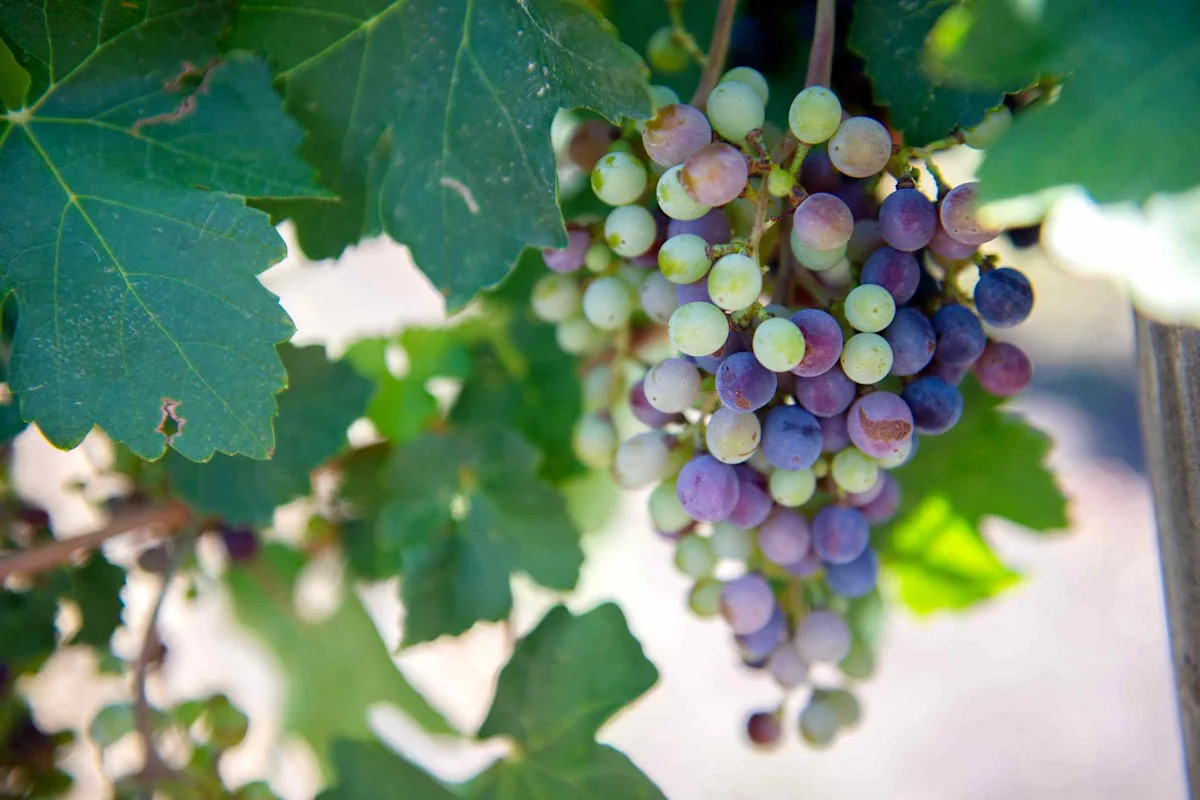
The research team chose three grape varieties with deep Texas roots. Among them is Lomanto, a Texas cultivar developed by horticulturist T.V. Munson in the early 1900s. Munson is widely credited with helping save the global wine industry by developing disease-resistant rootstock that helped vineyards recover from the phylloxera epidemic.
“These grape varieties are tried-and-true for Texas,” Scheiner said in the same university statement. “From a research standpoint, we want to see how being in space might influence these varieties. For the wine geek in me, it would be very interesting if these seeds show some random positive mutation has occurred that represents the single point of origin for a new variety.”
Related: The History of American Wine in 25 Bottles
Once the seeds safely return, they will be planted at the AgriLife Research vineyard at Thomas Ranch in Texas, along with identical control seeds to measure the differences through their life cycle. Researchers expect the vines to produce fruit within four to five years — and hope to eventually make wine from grapes grown from the space-traveling seeds.
“The research will help us understand how different levels of radiation impact the seeds and their varietal genetic expression once we grow them, but there is also the novelty that in several years we will potentially be bottling wine from seeds that left Earth,” Scheiner explains. “The science is interesting from a research perspective, but the cool factor will be this full-circle moment for this historic Texas variety and producing wine that is literally out of this world.”
Read the original article on Food & Wine