
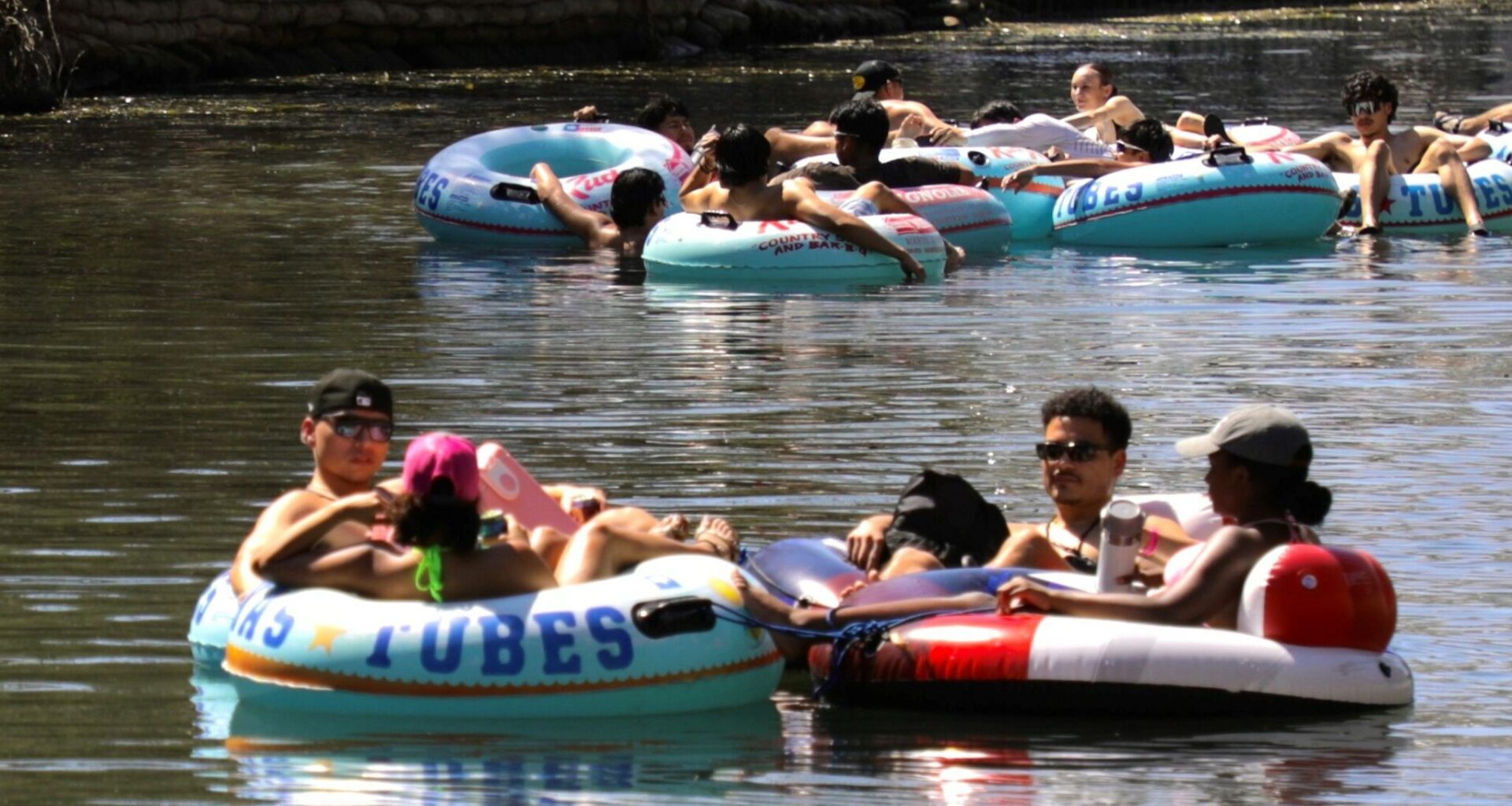
Tubers floating the Comal River in New Braunfels.
Emma Weidmann for MySA
For generations, the Comal River has drawn Texans to New Braunfels for its clear, spring-fed waters and one of the state’s most popular tubing experiences. But during a year marked by heavy rain, temporary river closures and changing water conditions, some residents and visitors have questioned whether the river has changed.

According to New Braunfels River and Watershed Manager Amy Niles, much of what people notice after storms is a normal response to rainfall rather than a lasting change to the river itself.
Article continues below this ad
“Anytime it rains, in a watershed, everything that is on the ground gets washed into drainage areas, and all those drainage areas will eventually lead to lakes and rivers in your area,” Niles told MySA. “When that runoff drains down to the Comal River, it can bring additional sediments, litter, bacteria, things like that.”
New Braunfels tube chute.
Warren Brown
That runoff is also what causes the river’s normally clear water to temporarily turn brown.
“There’s different areas where the water will come in from out of town, and it brings a lot of sediment with it,” Niles said. “And so that’s what causes that water color to change.”
Article continues below this ad
Because stormwater can carry bacteria and other pollutants into waterways, Niles said visitors should avoid getting into the river immediately after significant rainfall.
“It’s always wise to exercise caution right after a storm event before you get in any open bodies of water,” she said.
Heavy rainfall has forced the closure of a popular tube chute in the Comal River in New Braunfels, Texas.
Courtesy of New Braunfels Parks and Recreation
The city also monitors river conditions throughout rain events. Niles said officials closely watch the Comal’s flow and water level, and when flows reach about 550 cubic feet per second, water begins moving over the Tube Chute dam.
Article continues below this ad
“That’s when we would designate the Comal River as unsafe for tubing and close our river access points,” she said.
While muddy water often follows storms, Niles said cloudy conditions seen during dry weather have a different cause.
“We’ve been in a long multi-year drought, and it’s been a very severe drought, and so with that comes less river flow,” she said. “The water clarity has not been as good as it normally would be because the river flow was well below average.”
The Comal River flows through New Braunfels, Texas. City officials reopened the popular tubing spot after a temporary closure caused by heavy rainfall, elevated flows and debris.
Courtesy of The City of New Braunfels
Lower flows also meant more people were walking through shallow portions of the river, stirring up sediment from the riverbed. Recent rainfall, however, has helped improve conditions by increasing recharge to the Edwards Aquifer, which feeds the Comal Springs.
Article continues below this ad
“We’ve had some rain lately, which has caused the aquifer to increase and it has more water in the Comal, so that water clarity has really improved outside of those rain events,” Niles said.
Niles also pushed back on the idea that New Braunfels’ rapid growth is responsible for recent changes in spring flow.
People observing the Comal River after severe storms on June 12, 2025.
Nicholas Hernandez/MySA
“I think people don’t realize that the amount that’s pumped today is no more than the amount that was pumped ten years ago- ,” she said, noting groundwater withdrawals from the Edwards Aquifer have long been capped through state legislation and managed by the Edwards Aquifer Authority.
Article continues below this ad
Instead, she said, one of the biggest factors affecting spring flow over the past several years has been drought.
“We were just under a very serious multi-year drought,” Niles said. “There was very little recharge going into the aquifer in comparison to what the average amount would be.”
As Central Texas heads deeper into peak tubing season, Niles said the city continues balancing recreation with conservation through watershed protection efforts, habitat conservation programs and ongoing monitoring of river conditions.