
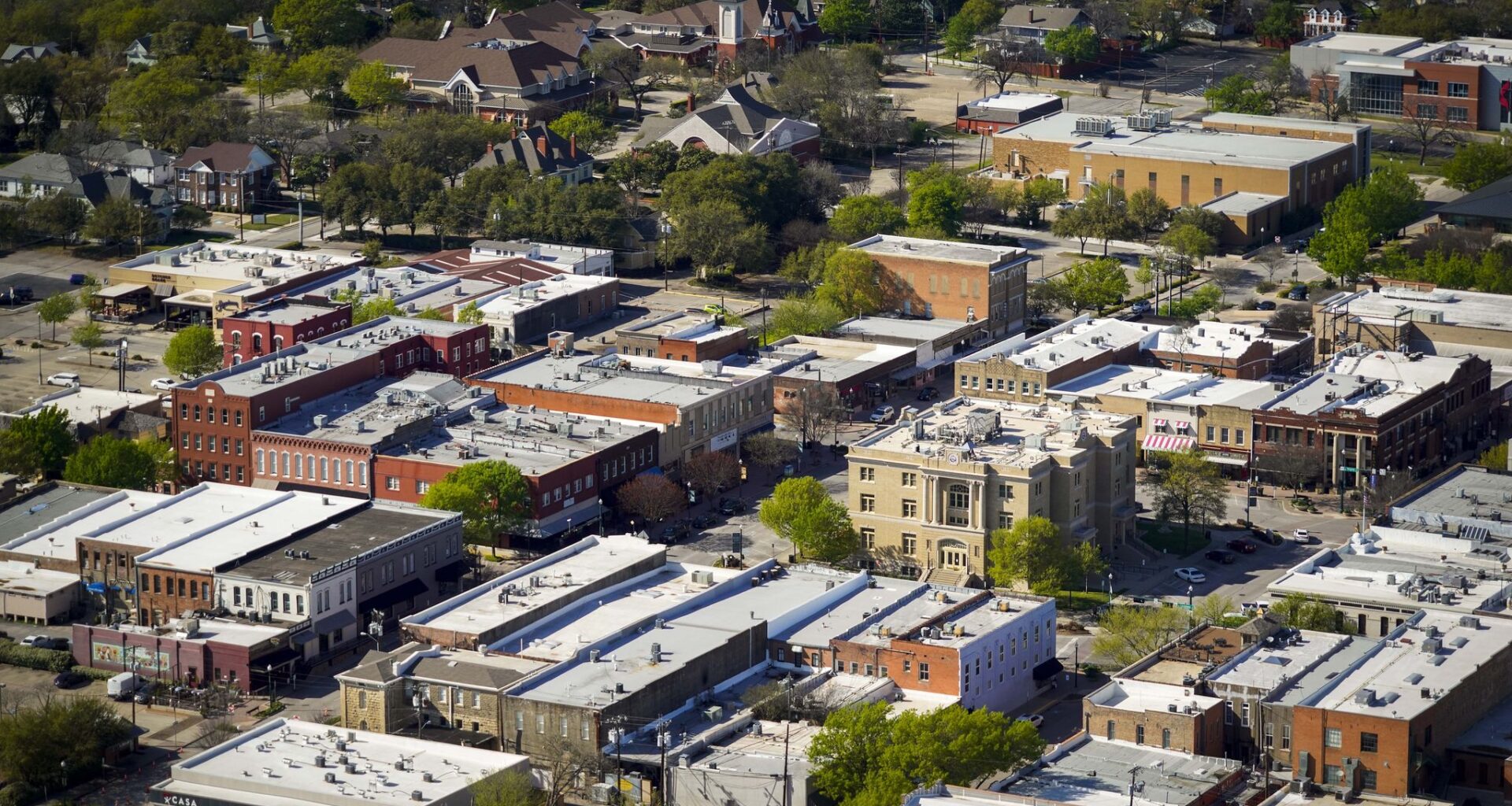
For more than 150 years, McKinney has been the heart of Collin County.

The historic county seat was an early agricultural and commercial center for the region long before Dallas suburbia stretched north into Collin County. North Texas’ wider growth has reshaped the city, bringing tens of thousands of people to McKinney and hundreds of millions in investments. Even so, the city was named the most affordable city in the country at the end of 2025, making it a popular destination for those moving to D-FW.
Related: This North Texas city was named the country’s most affordable. Some were surprised
Here’s your guide to McKinney:
Article continues below this ad
Fast facts
Population: 227,515
Median age: 38.8
Median income: $124,177
Unemployment rate: 4.2%
Race / ethnicity
One race, white: 52.3%
One race, Black or African American: 10.3%
One race, American Indian or Alaska Native: 0%
One race, Asian: 19.6%
One race, Native Hawaiian: 0%
One race, some other race: 3.9%
Two or more races: 12.7%
Hispanic or Latino origin (of any race): 16.5%
White alone, not Hispanic or Latino: 48.5%
Educational attainment
For ages 18-24 (roughly 7.2% of the population)
Article continues below this ad
Less than high school degree or equivalent: 7.2%
High school graduates (or equivalent): 12.1%
Some college or associate’s: 37.8%
Bachelor’s degree or higher: 21%
For ages 25+ (roughly 69.4%)
High school graduates (or equivalent): 13.4%
Bachelor’s degree: 34%
Graduate or professional degree: 22.8%
Housing
88,397 units; 85,091 occupied (96.3%)
Article continues below this ad
53,793 Owner Occupied
31,298 Renter Occupied
61,208 1-unit detached
3,286 1-unit attached
23,000 multi-unit
903 mobile homes
Median home value: $555,800
Median rent: $1,900
Compiled by staff researcher Rachel Friend. Data from U.S. Census Bureau, American Community Survey 2024 1-Year Estimates Subject Tables, Tables S0601, S1501, S1903, S2301, DP04
Article continues below this ad
The historic downtown McKinney in 2025.
Shafkat Anowar/Staff Photographer
A brief history
McKinney was founded in 1848, when the state Legislature chose it as the Collin County seat because of its proximity to the geographic center of the county, according to the city’s website. The following year local landowners William and Margaret Davis donated 120 acres for the townsite. The town was incorporated in 1849, and re-incorporated 10 years later.
Growth was slow initially, but accelerated with the arrival of railroads, particularly the Houston and Texas Central Railroad in 1872. This promoted agricultural development in McKinney and the area became a significant cotton producer with four cotton gins by 1876, according to the city’s website. Beyond cotton, the region also produced wheat, corn and oats in large quantities.
For most of its history, McKinney was the commercial center of Collin County, according to the Texas State Historical Association. Beyond its agricultural prominence, the town also had banks, churches, schools, newspapers and an opera house by the 1880s. It added a telephone exchange in 1883 and electric lights in 1889, according to the city’s website.
Article continues below this ad
McKinney grew slowly for much of its first 100 years, only reaching a population of around 10,000 by 1950. By 1970, Plano overtook McKinney as the county’s largest city as it emerged as a leading Dallas suburb. Frisco had also overtaken McKinney in population by 2020.
Still, McKinney remains the center of Collin County today and, much like Plano and Frisco, the city’s population has exploded in recent years. McKinney has gone from a population of just over 20,000 in 1990 to more than 225,000 today.
All that growth has brought some grand plans to McKinney including the commercialization of McKinney National Airport, the multiuse Cannon Beach development and a 20,000 seat open-air amphitheater.
Adriatica is an imitation Croatian village in McKinney, Texas.
Mark Lamster
Notable landmarks
Historic downtown McKinney: As the longtime Collin County seat, downtown McKinney is home to some of the oldest buildings in the region. Today, the area is a thriving district with more than 120 unique shops and dozens of restaurants.
Article continues below this ad
Adriatica Village: This 45-acre Croatian-inspired village is part of the Stonebridge Ranch development. The area features shops, dining and even a bell tower and the lakeside Bella Donna Chapel.
Michelin-recommended Harvest in McKinney serves grass-fed filet.
Jason Janik/Special Contributor
Things to do
Bars and restaurants
Cadillac Pizza Pub
Fontina Ristorante
Harvest at The Masonic
Hutchins BBQ
Local Yocal BBQ and Grill
One & Only Burgers & Fries
Rick’s Chophouse
The Guava Tree Cuban Cafe & Cantina
The Yard
TUPPS Brewery
Union Bear Brewing
Parks and trails
McKinney has more than 50 parks and around 80 miles of hike and bike trails throughout the city. Here’s a look at some:
Bonnie Wenk Park
Erwin Park
Forest Ridge Park
Gabe Nesbitt Community Park
Gray Branch Parkland and Trail
Prestwyck Park
Robinson Ridge Park
Rowlett Creek Park
Towne Lake Park
Scottie Scheffler prepared to hit from the 18th tee during the final round of the CJ Cup Byron Nelson golf tournament May 4, 2025, in McKinney.
Smiley N. Pool/Dallas Morning News
Sports and entertainment
Museums
Chestnut Square Historic Village and Museum
Collin County History Museum
Heard-Craig Center for the Arts
Heard Natural Science Museum & Wildlife Sanctuary
Shopping
Adriatica Village
Downtown McKinney
McKinney Farmers Market at Chestnut Square
The McKinney National Airport is set to become North Texas’ third commercial airport by the end of 2026.
Jason Janik/Special Contributor
A fun fact
McKinney National Airport (TKI) is set to become North Texas’ third commercial airport by the end of 2026, joining Dallas Fort Worth International (DFW) and Love Field (DAL). Budget carrier Avelo Airlines is set to become the first airline operating at the small terminal, with initial flights to Las Vegas and four cities in Florida (Fort Lauderdale, Fort Myers, Orlando and Tampa).