
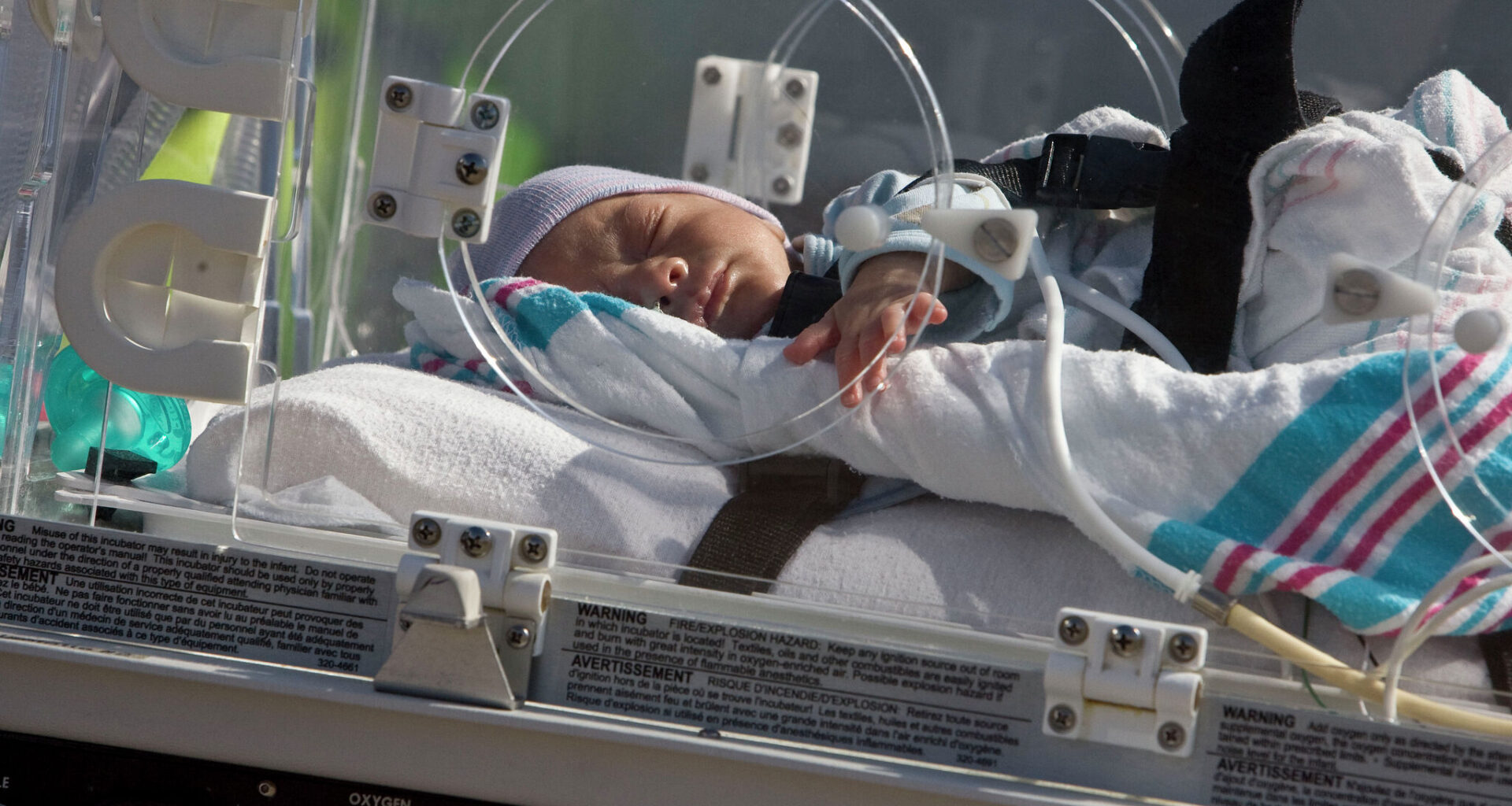
File: Baby transported in a transport incubator.
James Nielsen/Houston Chronicle
A nurse-turned-sales representative says her former employer defrauded the government, endangered children and fired her when she raised questions about its products and sales tactics.

The company, Austin-based International Biomedical Ltd., produces a variety of neonatal medical devices including transport incubators it sells to hospitals globally.
Article continues below this ad
Michelle Smith filed suit under seal last year, alleging that in 18 months working for the company, she saw company sales representatives misrepresent the abilities of its neonatal transport incubators to Texas hospitals and Defense Department medical institutions including Brooke Army Medical Center in San Antonio and Fort Cavazos, the base in Killeen now known as Fort Hood.
The former transport neonatal intensive care nurse alleges her boss was telling hospitals the incubators they sold contained servo-control units that would automatically adjust temperature and humidity for fragile neonatal patients. She said they didn’t.
The units cost between $350,000 and $500,000, according to the suit.
In its response, International Biomedical said Smith was confusing two product models and denies making any false claims. Attorneys for the company did not respond to requests for comment.
Article continues below this ad
In her complaint, Smith said that children were having bad outcomes because of the company’s claims. In one instance, she said she was confronted at a conference by a nurse about the alleged failure of a transport incubator sold with the claimed functionality.
“The nurse angrily informed Ms. Smith that she and other nurses had relied on the representation that Defendant’s incubators were servo-controlled while treating infant patients, and that these patients were harmed based on this misplaced reliance,” her suit says.
She said Children’s Health in Dallas bought six servo-controlled transport incubators and that the control function did not work as marketed. International Biomedical confirmed it sold the units to the Dallas hospital but denied they did not function correctly.
After that May 2023 conference, Smith said she consulted the company’s lead engineer, who confirmed the units her boss described were not servo-controlled. She attempted to file complaints and raise the issue with managers and executives about her supervisor’s “unethical and illegal behavior,” she said, but was shrugged off.
Article continues below this ad
Her supervisor continued to misrepresent the incubators’ functionality to make sales, she said, and pressed her to do so. When she attempted to correct him, she was reprimanded and threatened and her Christmas bonus was withheld. She said she was terminated three months later as retaliation.
The company said in court documents it was true that Smith and another sales associate did not receive Christmas bonuses that year, but that she lost her job because her position was eliminated, not in retaliation for raising questions about the company’s products and practices.
Her suit was filed as a qui tam action — a lawsuit on behalf of the U.S. government under the False Claims Act. Such suits allow for relators, or whistleblowers, to come forward with evidence of fraud against the government and sue for a hefty amount of the recovery.
Such cases often drive regulatory action and accountability. Last year, a record 1,297 qui tam cases were filed and judgments and settlements from them saw $5.3 billion recouped by the government, according to the Justice Department.
Article continues below this ad
The government chose not to intervene in Smith’s case, though, a decision that unsealed the case earlier this year.
Not having the government as a partner was a major setback for Smith’s fight with International Biomedical, but she is carrying on.
“They are huge. I mean, the government will litigate the case,” said Sara McLean, an attorney who spent 26 years enforcing the False Claims Act at the Justice Department.
Had the U.S. joined, Smith and her attorneys could have essentially sat back and waited for the government to litigate the claims, then taken up the retaliation cause. In addition to depriving Smith of government resources — expert fraud litigators and resources — McLean said the government’s decision might leave an impression with a judge that the case lacks merit.
Article continues below this ad
“Officially, it’s not a comment on the merits but a lot of times the merits may be the reason why it was declined,” McLean said.
Since the government’s decision, Smith has amended her complaint to focus solely on retaliation under the False Claims Act.
An analysis published in the Northwestern University Law Review of 4,000 qui tam cases between 1986 and 2011 found that 94% of money recovered — about $24 billion — came from cases where the government intervened. The remaining 6% came from cases where it declined to intervene. The analysis notes that cases not taken up by the Justice Department are far less likely to succeed.
Article continues below this ad
According to Smith’s suit, the military was going to expand the use of neonatal transport units globally in 2024, spearheaded by Brooke Army Medical Center doctors, which is the largest Army and Air Force joint-service Neonatal Intensive Care Unit. A recent federal contracting notice said Brooke Army Medical Center planned to purchase two additional neonatal transport systems.