
Dominic Anthony Walsh/Houston Public Media
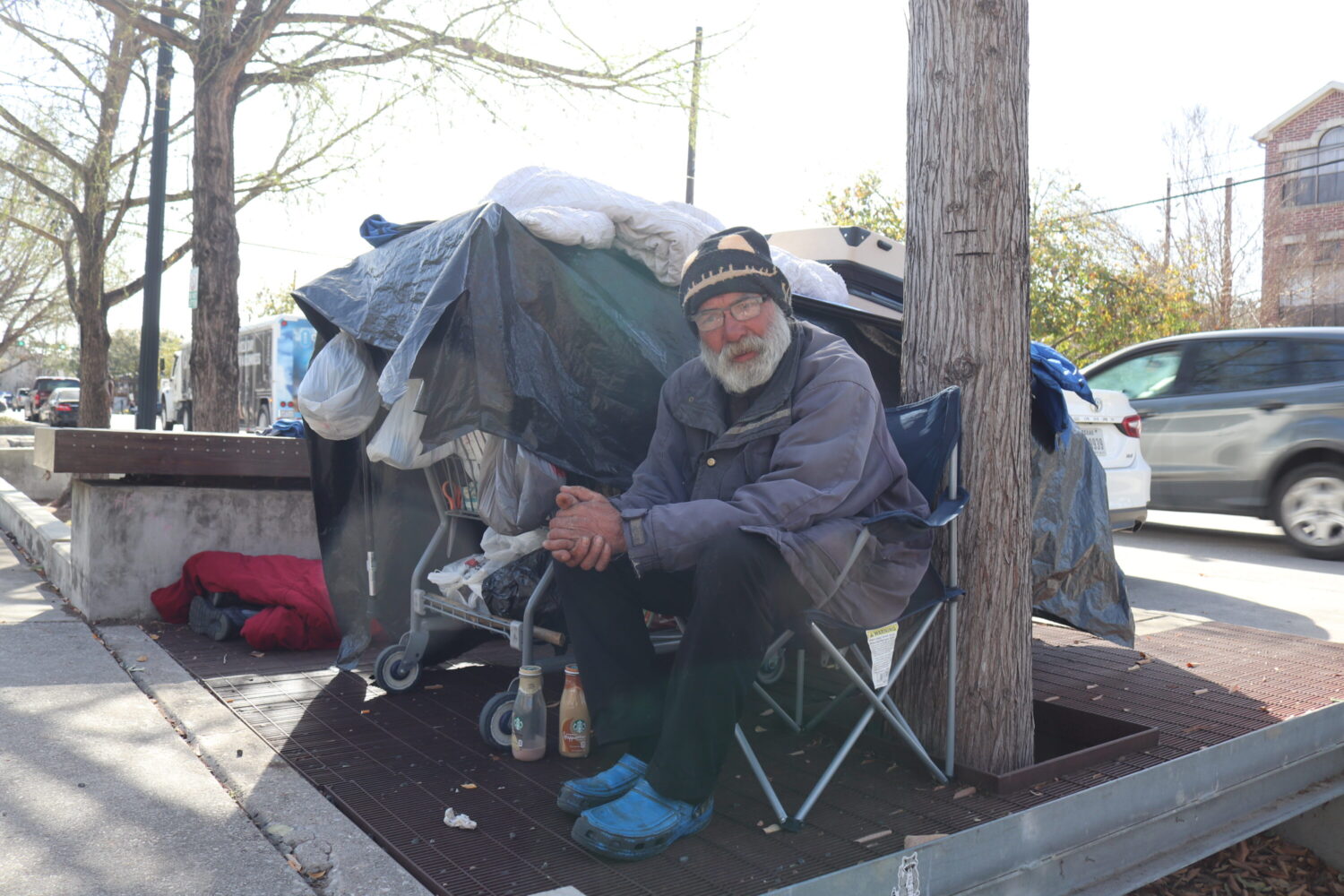
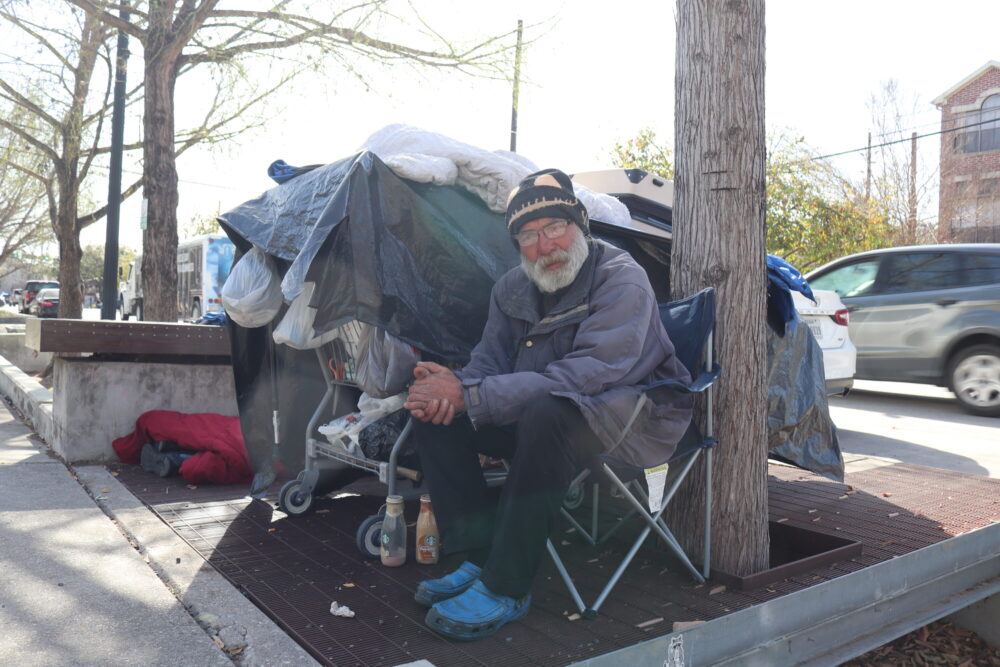
Dave, a homeless man, sits along Bagby Street next to another sleeping homeless man in Midtown in March, 2025. Midtown is one of the 12 areas in Houston where such behavior is illegal during daylight hours.
As city officials prepare to open a large homeless services center in Houston’s East Downtown, the city council on Wednesday temporarily delayed a measure that would effectively prohibit homeless people from sidewalks in a sprawling area around the planned facility.
The proposal came after some residents of East Downtown and Second Ward spoke out against the service center, which could temporarily shelter up to 320 homeless people at a time as they’re referred to services and housing.
The addition of a new zone to the so-called civility ordinance across the Greater East End would mark the third expansion of the rule over the past year. The consideration comes as citations dramatically outpace the number of people moved into housing, despite efforts from Mayor John Whitmire’s administration to permanently move people off the street.
As the no-go zones expand, citations soar
In November 2024, the city council banned homeless people from sitting, lying down or placing personal possessions on sidewalks during the day in the Magnolia Park neighborhood, making it the 12th such zone. In July, at the administration’s request, council members approved making the rules apply 24/7 in downtown and East Downtown.
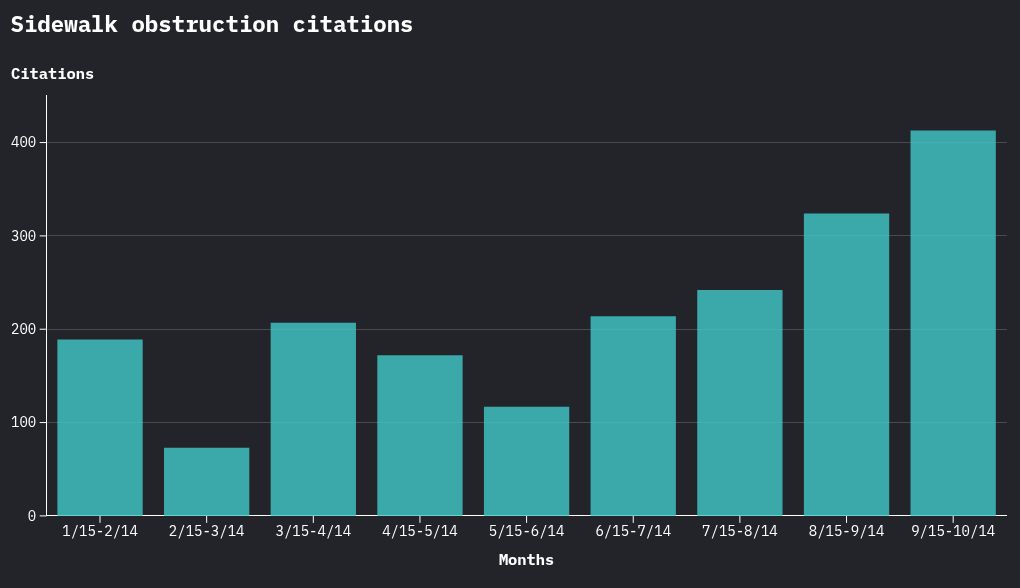
Since mid-July, citations for sidewalk obstruction have soared with nearly 1,000 tickets issued, according to municipal court data obtained by Houston Public Media. The citations included violations of both the civility ordinance and another more general rule prohibiting sidewalk obstructions. The vast majority of tickets were issued to homeless people. In some cases, individuals received two citations at once for violating both rules.
In the third month of the expansion, from mid-September to mid-October, the Houston Police Department issued more than 400 tickets to homeless people for sidewalk obstruction — marking the highest level since Whitmire took office nearly two years ago.
Despite the data, Whitmire on Wednesday denied there had been a spike in citations, calling it “major misinformation,” and he said “ticketing really serves very little purpose.” A spokesperson for Whitmire did not immediately respond to a question about whether he will ask HPD to cut back on citations once he sees the enforcement data.
Whitmire’s director of public safety and homeland security, Larry Satterwhite, told the city council’s quality of life committee in October that “things like number of citations issued, number of arrests (for civility ordinance violations) — those have gone up. There’s no doubt about that.”
In at least 75 cases over those three months, fines were waived due to time served — meaning individuals spent time in jail.
Whitmire’s administration and its partners have moved 204 people into housing over the past year, according to city officials.
Council member Tiffany Thomas, chair of the city council’s housing committee, expressed skepticism about the most recent expansion in mid-July but ultimately voted in favor.
“My hesitation was more so, like, is this a slippery slope, and then where do we stop, especially if our continuum is not operating on all cylinders,” Thomas told Houston Public Media. “If we are going to just simply remove people from an intersection, a sidewalk with their belongings, and we’re not offering them a place to go, case management for housing, or returning them back to their family, then it’s all for naught.”
Expansions come without resident petitions
Civility ordinance expansions typically require a petition from residents and a public hearing over the course of multiple months. In this case, the proposal came swiftly — within weeks of discussions tied to the upcoming homeless services center.
Absent a petition, city code requires an expansion to be based on “evidence, substantiated by the police department, that a particular area within the city exhibits a significant incidence of the kinds of conduct” addressed by the civility ordinance, “the kinds of conduct and adverse impact on use of the sidewalks and adverse impact on adjacent properties” the rule is intended to curtail.
The administration appended data to the agenda item showing crime data in the new zone over the past 21 months, in which there were about 1,000 cases of robbery, intimidation or assault; 1,500 property crimes, including more than 400 thefts from vehicles, more than 200 cases of burglary and nearly 400 cases of destruction, damage or vandalism; and nearly 600 cases of crimes against society, including more than 200 trespassing violations and 240 drug violations.
There were also nearly 4,000 calls for service, including nearly 1,400 reporting suspicious behavior.
Sarah Grunau/Houston Public Media
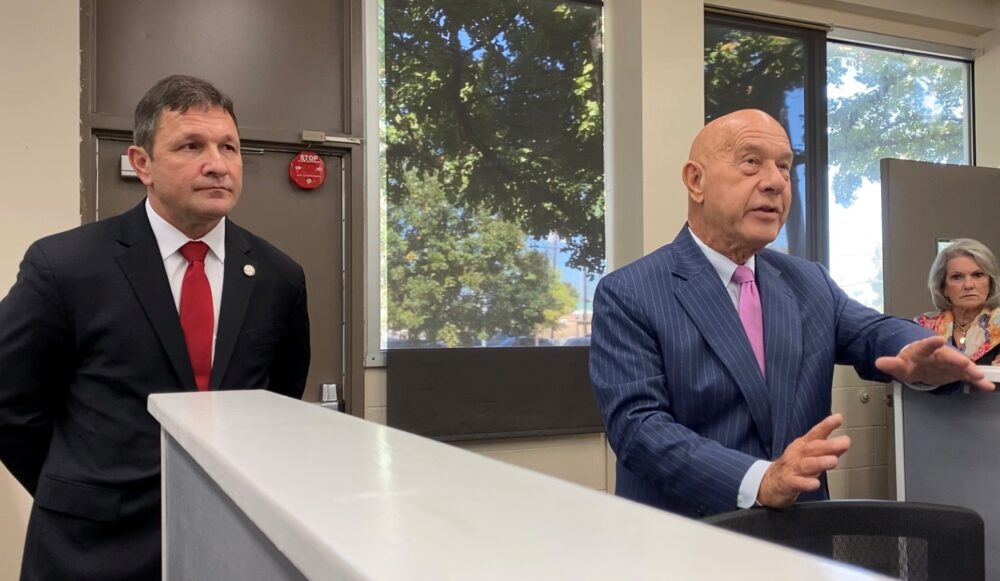
Houston Mayor John Whitmire, right, speaks during a tour of a proposed homeless resource facility at 419 Emancipation Ave. on Monday, Oct. 20, 2025. At left is Larry Satterwhite, the mayor’s director of public safety and homeless security.
Before the city council approved the $16 million purchase of what will become the services facility at 419 Emancipation Ave., city officials attempted to alleviate resident backlash by promising the civility ordinance expansion during a set of community meetings.
While the proposed expansion is primarily intended to address future conditions related to the upcoming homeless services center, council member Mario Castillo argued it’s needed now.
“We already have this problem here,” Castillo told Houston Public Media. “We have homeless folks at parks. We have them sort of throughout the day. So is this going to make it worse? Is this going to bring even more?”
Asked by city council member Letitia Plummer how many homeless people live on the streets within the boundaries, Whitmire was unable to answer. A spokesperson for Whitmire did not immediately respond to a request for information.
Veronica Chapa Gorczynski, president of the East End District economic development agency, spoke in favor of the measure during the city council’s meeting on Wednesday.
“I think the challenge that we are having is that we are having people that we don’t recognize as coming from our community,” she said, pointing to the recently relocated Greyhound bus station. “We had to pick up on the transient that came with it, including some of the crimes. And then, as we’ve had changes downtown, for example, and there has been an effort to clean up or push — when they get pushed, people get told that they can’t be there … but they can cross the street. Well, we’re across the street.”
Multiple council members, including Castillo, tagged the item as the administration prepares to present more information on the proposal. The city council will reconsider the measure at its meeting next week.